

POSTS BY AUTHOR

PNG Haus Bung
 NASFUND CONGRATULATES BSP GROUP ON 2021 RESULTS
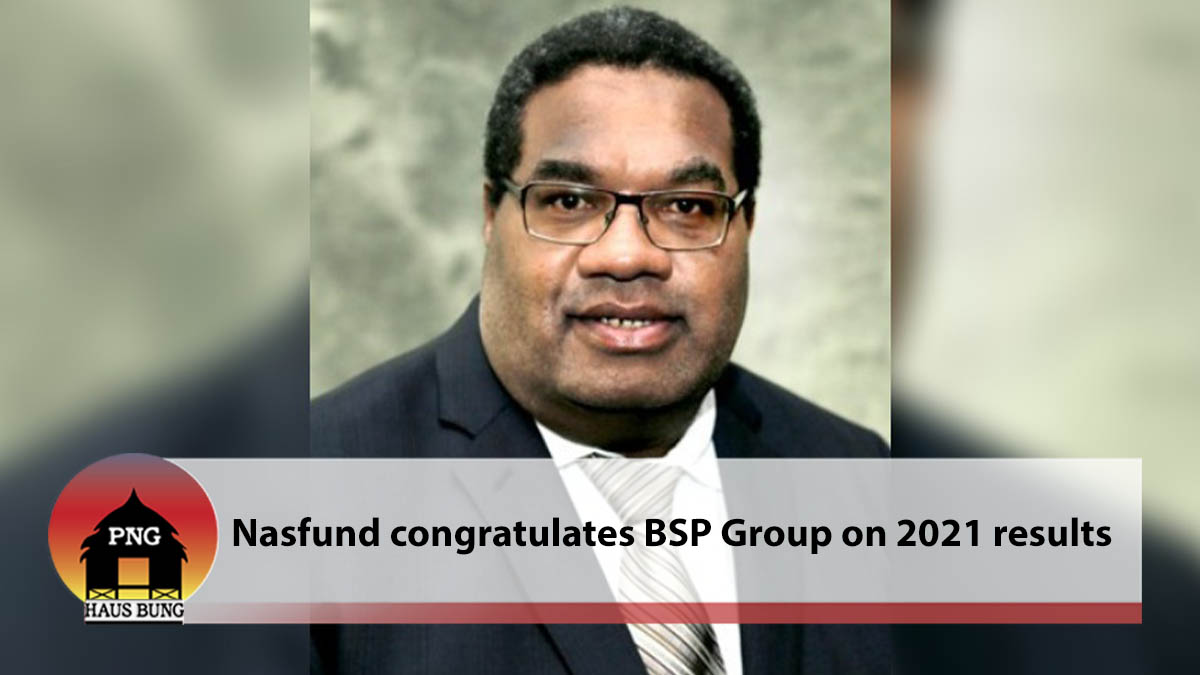
National Superannuation Fund (Nasfund) has congratulated Bank South Pacific Group on its’ 2021 performance.
The 2021 Full Year Results, announced to the market this week, includes a Net Profit After Tax of K1.075 billion, and a dividend payment of K1.34 per share.
Nasfund owns 9.7% of the largest and fastest-growing bank in the Pacific Region.
Commenting on these results, Nasfund Chairman Charles Vee commended BSP Chairman Sir Kostas Constantinou & the Board, Group CEO Robin Fleming, Management and Staff for delivering sterling results for the 2021 year, in a challenging economic environment.
“As one of the top 5 shareholders of the Bank, Nasfund is pleased with the achievements of this investment, and looks forward to continued positive returns.
In the last 5 years, the Fund has received K275million in dividends from BSP, representing on average 14.78% of the Fund’s cash income. BSP continues to be Nasfund’s best performing investment in terms of yield (dividend) and capital value.
These results continue to contribute significantly to Nasfund’s income stream and profitability.
As a major shareholder, we are pleased with this performance for the 2021 Financial Year.
These results auger well for the Fund, as some of these earnings will be passed on to our members, when the Fund announces our interest crediting rate to members in the coming weeks.
We remain committed to supporting BSP in its role in providing efficient banking services to its customers, the majority of which are also our members.”
Published on February 26, 2022
 CALL FOR MORE INVOLVEMENT OF CORPORATES IN MENTAL HEALTH AWARENESS
Founder of a local mental health awareness organisation Changing the Narrative is calling for more recognition of mental health issues by Papua New Guinea’s corporate community.
Gaironedi Lavett, says that stigma is so big in the country that we feel anger and aggression instead of compassion towards those that are mentally ill.
Lavett believes that the business community must take into account the fact that there may be employees suffering from mental health issues that they are not aware of.
“Business houses must not treat their employees like robots; they need to be aware that sometimes performance is hindered because people are struggling mentally”, she said.
Stigma around mental illness in Papua New Guinea, has become a norm within communities due to the level of awareness on mental health. Papua New Guineans need to know the harm caused by disparaging language and actions toward those living with a mental illness.
With all the uncertainty brought on by the covid-19 pandemic, global suicide rates have increased significantly, and no doubt the effects of the situation have been taking their toll locally as well.
The common age group that is impacted by mental illness ranges between 15 and 29 with the main causes being depression and drug use, stated by Dr Losavati Daugunu, CEO of the Laloki Psychiatric Hospital.
The effects on individuals who experience trauma through all forms of violence, harassment or bullying can be seen through behavior. Mental illness in PNG is also viewed at a cultural perspective which could be a challenge for the awareness, diagnosis and treatment process (The History of Mental Health in Papua New Guinea, 2017).
Lavett uses the example of a campaign led by Canadian electronics company, Bell Canada, which has united millions of people across Canada in promoting mental health awareness through an initiative which has also reached the international community.
Since the inception of the “Bell Let’s Talk” campaign in 2010, an incredible $155m has been committed to organisations to provide support and services for mental health.
In partnership with more than 1,300 organisations, Bell Let’s Talk has been able to support 5.5 million Canadians with access to mental health services and changed attitudes as reported by 82
percent of Canadians. Furthermore, the campaign has been the single largest corporate commitment in the country’s history.
Central to the campaign are four guiding pillars; anti-stigma, care and access, research and workplace leadership.
Guided by these pillars, the campaign’s main methods or outlets are social media, post-secondary outreach, community fund grants and celebrity support. The amount of attention this campaign has gained has led to its success to date, and should be an example for other nations.
There is an opportunity for corporate organisations to consider, as in the case of the Bell Let’s Talk initiative, a way to contribute as part of their corporate-social responsibility.
Stigma often worsens the condition of a person with a mental illness and is a major concern because of the barrier it builds, hence, this is the silence that the awareness campaign seeks to break.
Alleviating stigma, supporting establishments focused on mental health and investing in proper research, paves way for a healthier population.
Bell Canada saw the potential of initiating an influential campaign on mental health resulting in the immense support returned to the country.
A better future and stability of PNG is resting in the hands of its people and through knowledge and awareness, this stability and future can be achieved.
Published on February 25, 2022
 INVESTIGATION ON FOREIGN CONSULTATION PAYMENTS ONGOING
The investigation into a report about foreign consultants engaged by the National Judicial Staff Services receiving millions of kina worth of payments is ongoing and has not yet been completed.
Justice Minister Bryan Kramer revealed the status of the investigation upon a series of questions by Rabaul MP Dr Allan Marat during Question Time in Parliament yesterday.
On January 27 this year, Minister Kramer released a statement regarding payments worth millions of kina being paid in Australian dollars to foreign nationals employed as consultants by the NJSS.
It was alleged that some are paid K200 million a year and receive twice to trice the salary of National and Supreme Court judges as well as the government ministers, including the Prime Minister.
Dr Marat asked Mr Kramer if the investigations have commenced and for its outcome if it has been completed.
He further questioned if the payments are consistent with the Government of PNG’s salary scale and whether or not the relevant government agencies are doing anything to address it.
Minister Kramer in response said the investigations are ongoing to determine whether administrative and legislative guidelines are complied with in accordance with the awarding of the contracts.
“Investigations are not complete as yet but once it is done, the decision will be made as to what course of action will be taken,” Mr Kramer said.
Published on February 25, 2022
 OVERCHARGING OF PROJECT FEES ILLEGAL.
Overcharging of school project fees is deemed illegal and school principals or teachers issuing these charges will face suspension if found to be practicing these.
Education Minister Jimmy Uguro gave this undertaking in parliament yesterday when responding to Moresby North East MP John Kaupa to clarify on the project fees component required of parents.
“For 2022, projects fees are allowed for parents and only the authorities concerned which are the National Education Board and Provincial Education Boards are responsible for that,” Mr Uguro said.
“Schools and their principals are not the ones to charge project fees.”
“Overcharging of project fees is illegal and not allowed.” said Minister Uguro.
He said last year school principals and teachers who were investigated on this issue where suspended when they were identified.
“I have instructed the Teaching Service Commission and National Education Department that school inspectors are the only legitimate authority to charge teachers and principals who do not follow the Education Act.”
Published on February 25, 2022
 SCHOOL PROJECT FEE AMOUNTS FIXED
The project fee this year for elementary schools is K20.00, primary schools K60.00, secondary schools K220.00, vocational schools K200.00, Special Education K40.00 and K20.00 for each subject for FODE programs.
And the amounts remain the same for all the schools in the National Education System in the country.
Education Minister Jimmy Uguro said the amounts mentioned is what the Provincial Education Board is supposed to apply in schools all over the country.
Responding to a supplementary question in parliament yesterday on whether the fee amounts are the same in all the schools around the country, Mr Uguro said the project fees are paid using a guideline.
“There are three set of guidelines used to determine the amount of the project fees,” Mr Uguro said.
“Number one, the school must have a School Learning Improvement Program (SLIP) Plan, where parents, teachers and the school’s board of management discuss together and design a project.
“Number two, there must be a project plan and number three, the school must have a scope and budget for that particular project.”
He further said the SLIP Plan and the two other guidelines must then be approved by the authorities which is the Department of Education before it goes to the Provincial Education Board to apply charges.
Published on February 25, 2022
 RUSSIAN FORCES ATTACK UKRAINE FROM THREE SIDES
Russian forces have launched a major assault on Ukraine, firing missiles on cities and military targets.
The invasion by land, air and sea began after a pre-dawn TV address where Russian President Vladimir Putin demanded that Ukraine's military lay down its arms.
Initial reports of casualties included Ukrainian civilians and soldiers, and Russian troops.
Ukraine's leader said his country "won't give up its freedom".
"Russia has embarked on a path of evil, but Ukraine is defending itself," President Volodymyr Zelensky tweeted.
Ukraine has declared martial law and severed all diplomatic relations with Russia. It says weapons will be given to anyone who wants them.
In the capital Kyiv, home to almost three million people, warning sirens blared out as traffic queued to leave the city and crowds sought shelter in metro stations. "We don't understand what we should do now," one woman called Svetlana told the BBC. "We're now going to a place where we can be safe and we hope we can leave safely."
Mark, a 27-year-old sales executive, said he was ready to be called up to fight. "We don't have another way," he said.
Several neighbouring countries have begun preparations to take in a large number of refugees. Moldova alone said more than 4,000 people had come over the border from Ukraine.
Thursday's invasion followed weeks of escalating tensions, as Russia massed troops along Ukraine's borders.
The UK, EU and other Western allies have vowed to impose tough new sanctions to punish Moscow, but say they will not send in troops.
"These are among the darkest hours of Europe since the Second World War," EU foreign affairs chief Josep Borrell said.
Dozens of people have been killed, including about 10 civilians. Six died in an air strike in Brovary near the capital Kyiv. A man was also killed in shelling outside the major north-eastern city of Kharkiv.
A Ukrainian presidential adviser said that more than 40 soldiers had died and many more were wounded. Ukraine said it had killed 50 Russian troops and shot down six Russian aircraft, but this has not been verified.
Published on February 25, 2022
 P’NYANG JOINT VENTURE AND PAPUA NEW GUINEA SIGN P’NYANG GAS AGREEMENT
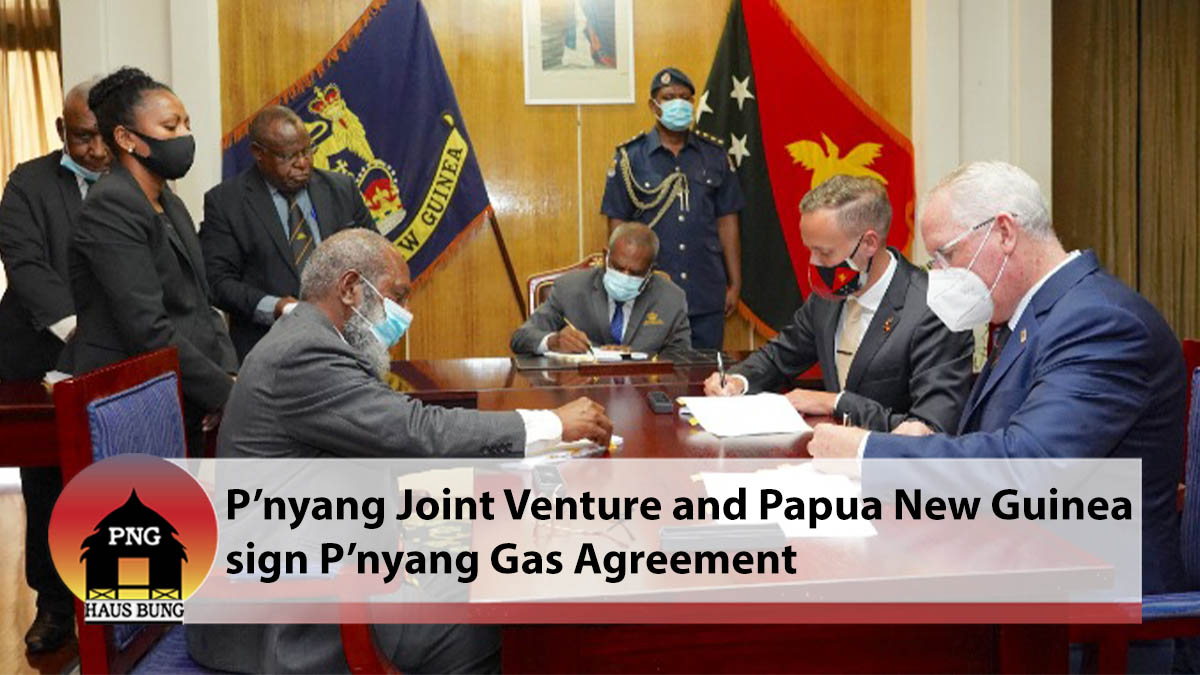
On 22 February 2022, the Independent State of Papua New Guinea and the P’nyang Project co-venturers, including Esso PNG P’nyang Limited and Ampolex (Papua New Guinea) Limited together with affiliates of Santos and JX Nippon, signed the P’nyang Project Gas Agreement for the proposed development of the P’nyang LNG Project.
Key takeaways:
Gas Agreement execution provides a firm framework towards the P’nyang Project’s future development
Gas Agreement reflects the Government’s desire for phased development of the Papua and P’nyang projects and its focus on provincial and national benefits
The proposed ExxonMobil-operated P’nyang Project would deliver LNG by constructing new upstream facilities in Western Province linked to existing infrastructure. Subject to a final investment decision by the P’nyang Project co-venturers, the P’nyang development is proposed to commence after the Papua LNG Project in support of ongoing economic development in Papua New Guinea.
The P’nyang Project would be an independent project, with landowner benefits to be provided under a
future benefit sharing agreement to be negotiated by the State in accordance with the Oil and Gas Act.
“The P’nyang Project Gas Agreement supports the Government’s vision to promote long term development in the country and for our people,” said Prime Minister James Marape.
“On behalf of the country and our people, I am both pleased and proud to mark this milestone. ExxonMobil has demonstrated its continued commitment to Papua New Guinea through the outstanding operatorship of the PNG LNG project, and we look forward to continuing our partnership well into the future with the P’nyang Project.”
Speaking at the conclusion of the signing ceremony, Minister for Petroleum Kerenga Kua noted that “the P’nyang Project is a key part of the Government’s integrated development strategy. We appreciate ExxonMobil’s collaboration and look forward to seeing benefits flow to the people of Western Province as well as the nation.”
“On behalf of Esso PNG P’nyang Limited and the other co-venturers, I want to thank Honourable Prime Minister James Marape, Honourable Minister for Petroleum Kerenga Kua, the Western Province Governor Honourable Toboi Awi Yoto, the Gulf Province Governor Honourable Governor Haiveta and all of the members of the State Negotiating Team for their leadership and collaboration, ” said Peter Larden, Chairman of Esso PNG P’nyang Limited.
“The execution of the P’nyang Project Gas Agreement marks a significant milestone and provides a clear framework towards the P’nyang Project’s future development.”
The P’nyang Project would provide some four years of additional construction activity after Papua LNG, with this multi-billion Kina investment driving continued economic growth for the nation as well as provinces involved in the project. Infrastructure tax credit (ITC) projects in support of infrastructure needs in Western province and other involved provinces are expected to commence this year.
Upon completion, the P’nyang Project would make available up to five percent of gas produced to the Western Province or another agreed location to support the government’s electrification efforts.
The focus on national content would support local job creation in the Western province and other involved provinces, with the Papua New Guinean workforce and local businesses benefitting from economic opportunity as well as training and skills development programs.
In parallel, social investment initiatives in collaboration with the provincial and national governments as well as
community stakeholders are designed to further enhance community livelihoods.
The P’nyang field is located within Petroleum Retention License 3, which covers 105,000 acres (425 square kilometers). The field is estimated to have 4.36 trillion cubic feet of gas.
Esso PNG P’nyang Limited, a subsidiary of Exxon Mobil Corporation, operates the license and, together with Ampolex (Papua New Guinea) Limited, has a 49 percent interest. Affiliates of Santos and JX Nippon have a 38.5 percent interest and 12.5 percent interest respectively.
Published on February 25, 2022
 PMV STRIKE AFFECTS COMMUTERS IN NCD
Public Motor Vehicle (PMV) buses designated to route 7 and 9 in NCD, went on strike yesterday leaving many commuters despaired and stranded.
Many city residents were forced to walk from their place of work to their homes yesterday.
The route 7 and 9 busline connects Gordons, Boroko and Gerehu for thousands of city residents.
Acting Admin Sergeant Frank Sau attached to the Office of the Commander NCD Central led a police team in a mediation with the
disgruntled PMV operators at Waigani yesterday.
The strike occurred after police acted upon a barrage of public outcry by impounding several buses after they charged K2 for bus fares.
The PMV operators said inflation affected their business and compelled them to impose the increased fare without the permission and consent of the Road Transport Authority.
The authorised bus fare gazzetted by the NCD Road Transport Authority is K1 across NCD.
Acting Sergeant Sau told the disgruntled PMV operators to resume operations and take up their grievances with RTA.
Some of them resumed operations late in the evening while most of them agreed to take their grievances to the responsible authorities.
Published on February 25, 2022
 SEMO HEALTH CENTRE UPGRADE
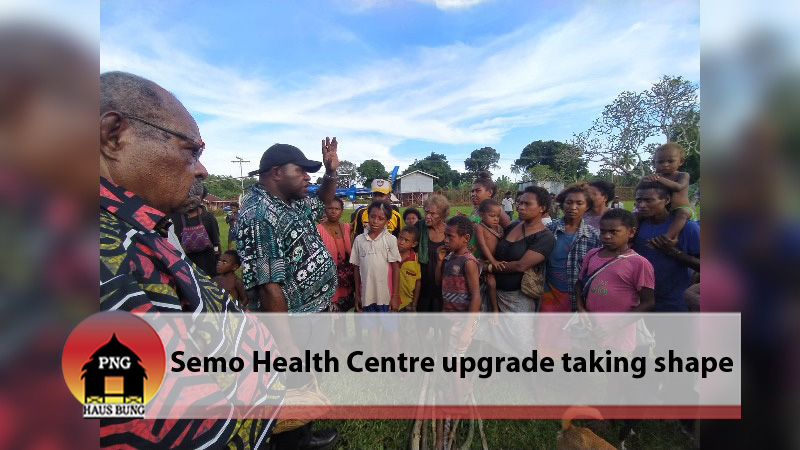
Work has commenced on the construction of a steel framed building at Semo Health Centre in Siassi LLG of Tewai-Siassi District Morobe Province.
Tewai-Siassi MP Dr. Kobby Bomareo visited Semo Health Centre over the weekend and was impressed with the progress of work.
The main outpatient and priority building is a steel structure funded by the Tewai-Siassi District Development Authority.
Semo Health Centre is run by the government and serves thousands of people in the Kovai area of Siassi.
“This will be a five years upgrade starting with the fencing and main outpatient building and will continue until 2026,” said Dr Kobby.
The former medical doctor says health is an important sector in development and so his DDA has been allocating funding to ensure health facilities in the district are operational.
“Our job at the district level is to ensure health facilities are operational, conducive and safe for the people to use.
It is the prerogative of the Morobe Provincial Health Authority to ensure these facilities are staffed with specialties and adequate supplies of medical drugs and equipment.”
Many of these health facilities have been neglected for many years by successive governments and some have become non-operational.
“We are catching up on 40-years of neglect in service delivery to our people. We are delivering fairly across all our LLGs in Sialum, Siassi and Wasu."
Published on February 24, 2022
 DR YENNIE REMAINS AS NCDPHA CEO AFTER COURT DISMISSES REVIEW
An application to judicially review the decision of the Governance Board of NCD PHA in appointing Dr. Steven Yennie as the CEO for NCDPHA has been dismissed by the National Court yesterday afternoon.
Acting Judge, Justice Emma Wurr presided over the case and read a lengthy judgment highlighting the preliminary issues, facts surrounding the case and applied the relevant laws to make the decision.
The Board appointed Dr. Steven Yennie as the permanent CEO for four years (2021 – 2024) on the 9th of September 2021.
The appointment was challenged by Dr. Maru Garo who filed a judicial review last year. Dr. Maru Garo, another contender for the CEO’s position, disputed the Board’s decision and challenged the decision in court.
Acting Judge Emma Wurr relied on a case precedent set by the Western Provincial Health Authority when handing down her decision.
Justice Wurr said the Board is the only governing authority to be involved in revoking or appointing the CEO and it is not up to the National Department of Health nor the Department of Personnel Management to make that call.
The Acting Judge stressed that the appointment of the Chief Executive Officer was based on a merit-based process allowed by law with guidance and advisory support necessary to assess applicants and recruit the best candidate for the job, was provided by Department of Personnel Management and the National Department of Health Justice Wurr further mentioned that the provisions in the Public Service Management Act and the Regulatory Statutory Authorities (Appointment of Certain Offices) Act used by the plaintiff’s lawyer do not apply in this case.
She said the only law applicable in this case is the Provincial Health Authorities Act.
Meanwhile Dr. Yennie expressed relief outside the courthouse that the matter is now settled, and he is ready to work with partners to deliver the much-needed health services in the National Capital District.
Published on February 24, 2022
 ASIA-PACIFIC COUNTRIES POISED TO TRANSFORM AGRIFOOD SYSTEMS THROUGH INNOVATION AND DIGITAL TECHNOLOGIES – FAO READY TO SUPPORT MEMBERS IN THE REGION
The current nutrition situation in Asia and the Pacific is difficult in many areas across the region.
About 40 percent of its inhabitants cannot afford a healthy diet, and in some areas the fight against hunger has seen reversals rather than advances.
Progress toward meeting the Sustainable Development Goals (SDGs) of defeating both poverty (SDG 1) and hunger (SDG 2) has been thrown off track amid the COVID-19 pandemic, which has devastated both lives and livelihoods.
Luckily, the picture is not all bleak and there are signs of optimism and dynamism. Advances in the region’s agrifood systems are changing the ways in which food is sustainably produced, marketed and consumed. This transformation reflects a greater awareness by Asia-Pacific producers and a growing demand from consumers for healthier, more nutritious foods.
Crop and livestock farmers, fishers, pastoralists, other producers and retailers – large and small – are successfully turning to innovative ideas and digital technologies. These improvements in production and sustainable resource management keeps more money in their pockets, while also helping to reverse environmental degradation.
All this is helping to create a paradigm shift that is taking shape in other parts of the world too. In Asia and the Pacific, there is a clear and growing movement toward innovation and digitalization along the entire agrifood value chain.
Retail grocery and food shopping is an important example. This is not only a phenomenon of well-developed economies, with four out of five sales of online food and grocery purchases taking place in the Asia-Pacific region.
This is just one aspect of the agrifood systems overhaul that is reshaping countries rapidly across Asia and the Pacific, from West Asia, all across South Asia, Southeast Asia and East Asia to the Pacific island countries.
In the Pacific’s Small Island Developing States (SIDS), grassroots entrepreneurs are increasingly stepping forward. Their innovative smart phone apps help producers and consumers to make informed, nutritious choices.
The private and development sectors are also leveraging increasingly available data to make the supply chain of agricultural commodities to markets more efficient and timely, and to map areas vulnerable to extreme weather events.
Several of these innovations were showcased at the ‘SIDS Solutions Forum’, the first of an event to be held biennially, co-convened in August 2021 by the Food and Agriculture Organization of the United Nations (FAO) and the Government of Fiji.
There are still some challenges in accessing data on demand and without interruption, as we saw when Tonga’s undersea communications cable was severed during the eruption of the Hunga Tonga–Hunga Haʻapai volcano. But these setbacks will bring forth the new ideas needed to overcome them!
At FAO, we are working with our Members across Asia and the Pacific region to transform agrifood systems to be MORE efficient, inclusive, resilient and sustainable - to the benefit of all. Through the Hand-in-Hand Initiative, we are assisting policy makers in their plans to further leverage data, technology and innovation to meet the SDGs targets by 2030.
We are proactively identifying and supporting digital villages across the region as part of FAO’s 1,000 Digital Villages Initiative. We are continuing to nurture and promote country-led SIDS solutions and Hand-in-Hand partnerships, which includes advising on climate event mitigation and adaptation, and helping to overcome the damage caused to lives and livelihoods by the pandemic and the climate crisis.
These are among the topics that will be discussed at the 36th Session of the FAO Asia and the Pacific Regional Conference in Dhaka, Bangladesh, from 8 to 11 March. FAO Members from the region – 46 in total – will come together to build on the transformational agenda and actions under the FAO Strategic Framework 2022-31, along with the recommendations of the UN Food Systems Summit 2021.
FAO is leading in hosting the recently established Coordination Hub for the follow up of the Summit, which will support countries in further developing and implementing national pathways towards agrifood systems transformation in line with national priorities.
Working with our Members in Asia and the Pacific, we will create even stronger partnerships with academic and research institutions, civil society organizations, cooperatives, parliamentarians and the private sector, with the inclusion of women and youth, as part of our commitment to the global efforts to build back better.
FAO is supporting the region to think big and act concretely. We are providing a constructive hand, but we need many more hands to reach our collective goals. For a better world with a better future for our children, we need better production, better nutrition, a better environment and a better life for all – leaving no one behind.
For this, we need strong political will and efficient, effective and coherent multilateral actions.
Published on February 23, 2022
 U.S. COAST GUARD CUTTER STRATTON (WMSL-752) VISITS PORT MORESBY
On February 24, U.S. Coast Guard Cutter Stratton (WMSL-752) will arrive in Port Moresby for a port visit.
During Stratton’s visit, U.S. and Papua New Guinea officials will meet to discuss a bilateral Ship Rider agreement through which the United States and Papua New Guinea will cooperate to jointly combat illegal maritime activity in Papua New Guinean waters.
At the end of the port visit, Stratton’s crew will host PNG government representatives for an underway exercise demonstrating how a joint patrol would be conducted under the Ship Rider agreement.
The bilateral Ship Rider agreement will be a force multiplier for both Papua New Guinea and the United States because it will allow Papua New Guinean maritime law enforcement personnel to observe, protect, board, and search vessels suspected of violating laws or regulations within Papua New Guinean waters with the support of U.S. Coast Guard personnel and vessels.
Stratton has been underway in the Pacific for approximately two months combating illegal, unreported, and unregulated (IUU) fishing. Prior to PNG, Stratton conducted a joint patrol under the existing Ship Rider agreement between the United States and Fiji. The Coast Guard’s mission to combat IUU fishing is essential in protecting maritime governance and a rules-based international order to ensure a free and open Indo-Pacific.
Before visiting Fiji, Stratton’s crew worked with British, Australian, New Zealand, and French allied naval forces as well as the U.S. Navy in support of the Tongan government following the volcanic eruption on Jan 15th.
Stratton is a 418-foot national security cutter capable of extended, worldwide deployment in support of homeland security and defense missions. National Security Cutters routinely conduct operations throughout the Pacific and Atlantic oceans; their unmatched combination of range, speed, and ability to operate in extreme weather provides the mission flexibility necessary to conduct vital strategic missions.
Published on February 23, 2022