

POSTS BY AUTHOR

PNG Haus Bung
 FENTANYL- A KILLER DRUG'S TRAIL OF DESTRUCTION
Fentanyl is a deadly, synthetic opioid, 50 times more powerful than heroin. Americans are dying from it at such an alarming rate, that the US has approved the sale of naloxone - an overdose-reversing drug - without a prescription. But fentanyl's trail of destruction begins further south.
Manzanillo is on the fentanyl frontline.
This pretty, seaside town on Mexico's Pacific coast was made famous in the 1970s when Bo Derek ran along its sandy beaches in the Hollywood movie, 10. But today it lives in the shadow of cartel violence.
Manzanillo is home to Mexico's largest port, the third busiest in Latin America - nearly 3.5 million containers from across the globe arrived there last year.
All sorts of cargo pass through, including the chemicals that come mostly from China and India that are used to produce organised crime's most lucrative earners - synthetic drugs like fentanyl. As a result, the port has become the primary source of bloodshed and strife in Colima state.
In 2022, this small western state had the highest per capita murder rate in Mexico, with the Sinaloa and Jalisco New Generation cartels fighting for dominance.
"Recently we made a seizure of propionyl chloride that's used in the synthesis of fentanyl. That's one of many precursor chemicals we see coming into Manzanillo," says the Naval Commander in charge of security at the port, who must remain nameless for safety reasons.
The Mexican government put the Navy in charge of all seaports in 2021 in an attempt to reduce the endemic corruption that facilitates organised crime.
Now, there's a sophisticated system of checks in place to monitor everyone working in the port of Manzanillo, and the businesses that trade in chemicals. But there's another obstacle - some ingredients are legitimately used in the manufacture of agrochemicals and pharmaceuticals.
This means there are stringent checks on paperwork, and teams of naval personnel test consignments of chemicals to ensure they conform to their labels.
There's also a sniffer dog, a Belgian shepherd - a gift from the US Embassy - trained to find fentanyl pills or powder, and some precursor chemicals.
Mexico's president, Andres Manuel Lopez Obrador, recently made headlines when he said Mexico neither produces nor consumes fentanyl. But makeshift "laboratories" have been discovered and dismantled in Mexico City and the northern states of Nuevo Leon and Sinaloa.
In Baja California, law enforcement busted two properties last year in the city of Tijuana and found large quantities of fentanyl pills and powder, with hydraulic presses to make tablets.
Tijuana is a messy, brutal city that hugs the border with the United States. It's become "ground zero" for fentanyl - for the trafficking of the drug north into California, and for local use.
"It's killing everybody - all my friends," says Smiley, a fentanyl addict who lives on the streets.
Hundreds, perhaps thousands of people live rough around the Tijuana canal, a concrete channel that cuts through the heart of the city. Many are drug users. And, as so often happens in the United States, those who overdose in Mexico don't always know they are taking fentanyl.
Due to its potency, a tiny dose of fentanyl can kill. And on both sides of the Mexico / US border, it's being cut with other drugs including cocaine, heroin and methamphetamine.
Smiley thinks he has seen more than 20 people overdose, but he has revived them all by using naloxone, a medicated nasal spray which can reverse an opioid overdose. Naloxone's now becoming widely available in the US. But in Mexico you still need a prescription - Smiley gets his supply from a local charity.
It isn't only homeless people who are affected. In 2022, the Mexican Red Cross were called to an average of 60 drug overdoses a month in Tijuana - people from all walks of life.
There have been multiple overdose events too, but we don't know how many fentanyl-related deaths have occurred because those statistics aren't collected in Mexico.
The cartels fight to dominate the mean streets of Tijuana - each block or street may be run by a different organised crime group. Competition to control the sale of drugs is violent and bloody. In January alone, there were 156 murders in Tijuana - a city of just over two million people.
Fentanyl contributes to the insecurity - and the profits from its sale are huge. It's estimated this synthetic opioid can be made for a hundredth of the cost of producing heroin.
The drug cartels no longer have to control rural communities in Mexico and the land to grow poppies - they only need to secure access to the chemicals, and engage someone with the know-how to make fentanyl. And because it's so strong, it's a narcotic that's profitable in tiny amounts, even more so once it's smuggled to the US, where its price may increase 10-fold.
"I'd wear like a Spanx - almost like a girdle, that kind of slims you down under your clothes, and I would shove [the fentanyl pills] down," remembers April Spring Kelly, when she speaks to the BBC from a US federal prison.
Other times she would traffic drugs by car.
Now April Spring Kelly is serving a lengthy sentence after admitting trafficking nearly half a million fentanyl pills plus other drugs from Tijuana into the US in 2018.
Like many Americans, she had become addicted to opioid pain relievers but then turned to heroin produced by Mexican cartels when prescribed medications became harder to obtain.
To fund her addiction, she rented an apartment in Tijuana and began moving fentanyl pills for organised crime across the border to San Diego.
Last year 70,000 Americans died of a drug overdose associated with a synthetic opioid like fentanyl. April Spring Kelly lives with immense regret - one of the fentanyl pills she trafficked was linked to a baby's death.
"It's horrible. And I hate that I was playing a part in it," she says.
More than half the fentanyl confiscated in the US is stopped at the California border. April Spring Kelly was caught at the San Ysidro port of entry, where up to 120,000 people cross in a single day.
Once across the border from Tijuana at San Ysidro, it's a 40 minute tram journey to downtown San Diego.
In 2021, 814 people died of a fentanyl-related death in the city's county - that's more than 15 fatal overdoses a week in a population of just over three million people.
"In the last couple of years, there have been so many people that died that we couldn't keep up if we did autopsies for all of those people," says the county's chief medical examiner, Dr Steven Campman. "If we did autopsies on all the people that overdosed, we'd have to hire four new pathologists," he adds.
It's overwhelming. Especially for those dealing with bereavement.
In Coronado, the pretty peninsula that sits across the bay from San Diego, Jan Baker reflects on an unforgettable morning in May, 2021 when she went to wake her 15-year-old son, Clark Salveron.
"I walked into his bedroom around 7.30, and I found him. I remember throwing Clark on the floor trying to resuscitate him, even though I knew that he was gone. His computer was open, and he passed away at his desk in his chair."
Clark died of acute fentanyl intoxication. He thought the pill he had taken was Percocet, a prescribed medication that contains the opioid, oxycodone. The fatal transaction was arranged online, says Adam Gordon, the assistant US attorney who prosecuted the case.
When Clark was found dead, his laptop was still open on his Instagram page where he and the drug dealer had been messaging. Officers pretending to be Clark set up another drug deal and arrested the dealer. Those drugs came from Mexico.
The fallout from fentanyl is incalculable - not just for bereaved relatives like Jan Baker but for the professionals who pick up the pieces.
"I worked 486 deaths in four years," says Ed Byrne, a special agent with Homeland Security Investigations. "That's a lot of scenes you go to - it's a lot of bodies."
From 2018 until last year, Ed Byrne collected evidence from the locations where someone died to try to identify the drug dealers who supplied the fentanyl.
"You can go from a tent that a homeless person lives in to $10 million homes in [expensive beachside neighbourhood La Jolla," he says.
And some of those death scenes have stayed with him. "They're like freezes in time almost, like paintings in your head."
Pictures of lives lost - too many of them. And while Mexico's drug cartels continue to make and export fentanyl, there's no end in sight to a tragedy that plays out across the United States.
Published on January 30, 2026
 NZ PILOT'S WEST PAPUAN KIDNAPPERS STILL DEMAND NEGOTIATION
Separatists in Indonesia's Papua region who took a New Zealand pilot hostage in February have told authorities to stop searching for him, and to start negotiating.
Philip Mehrtens was kidnapped after landing his plane in Papua's remote mountainous province of Nduga.
He is being held by West Papua National Liberation Army (TPNPB) fighters.
"The pilot is still with us," TPNPB spokesperson Sebby Sambom told BBC Indonesian in a message.
"The Indonesian government has to be bold and sit with us on a negotiation table and not [deploy] military and police to search the pilot," he added.
He denied reports that the group was prepared to drop a demand for the Indonesian government to recognise Papuan independence before they could consider freeing him.
The Reuters news agency reported on Thursday that Mr Sambom indicated this could be the case.
"The demand for Papua's independence has already conveyed from a long time ago. That demand will not be perished, that's the main demand of Papua nation," Mr Sambom said.
Previously a Dutch colony, Papua declared independence in 1961, but Indonesia took control two years later.
The resource-rich region has been caught in a battle for independence ever since it was brought under Jakarta's formal control in a UN-supervised vote in 1969.
Mr Mehrtens was kidnapped after his small passenger plane, which belongs to Indonesia's Susi Air, landed in Nduga in early February.
His plane had departed from the Mozes Kilangin airport in Central Papua, and was meant to return a few hours later after dropping off five passengers.
But shortly after landing, rebels stormed the single-engine plane and seized the Christchurch native.
The TPNPB later told BBC Indonesian that Mr Mehrtens had been moved to a stronghold district for the group in a remote area, and he would be used as "leverage" in political negotiations.
The group said the pilot was being held because New Zealand co-operates militarily with Indonesia.
The other passengers, who were indigenous Papuans, were released.
Around a week later the separatists released video footage of Mr Mehrtens reading a prepared statement in which he repeated the rebels' demands.
Papuan rebels seeking independence from Indonesia have previously issued threats and even attacked aircraft they believe to be carrying personnel and supplies for Jakarta.
Conflicts between indigenous Papuans and the Indonesian authorities are common, with pro-independence fighters mounting more frequent attacks since 2018.
The region is divided into two provinces, Papua and West Papua. It is separate from Papua New Guinea, which was given independence by Australia in 1975.
Published on January 30, 2026
 KENYA CULT DEATH
Kenyan police have exhumed 47 bodies near the coastal town of Malindi, as they investigate a preacher said to have told followers to starve to death.
The bodies of children were among the dead. Police said exhumations are ongoing.
The shallow graves are in Shakahola forest, where 15 members of the Good News International Church were rescued last week.
Church leader, Paul Makenzie Nthenge is in custody, pending a court appearance.
State broadcaster KBC described him as a "cult leader", and reported that 58 graves have so far been identified.
One of the graves is believed to contain the bodies of five members of the same family - three children and their parents.
Mr Nthenge has denied wrongdoing, but has been refused bail. He insists that he shut down his church in 2019.
He allegedly told followers to starve themselves in order to "meet Jesus".
Kenyan daily, The Standard, said pathologists will take DNA samples and conduct tests to determine whether the victims died of starvation.
Police arrested Mr Nthenge on 15 April after discovering the bodies of four people suspected of having starved themselves to death.
Victor Kaudo of the Malindi Social Justice Centre told Citizen TV "when we are in this forest and come to an area where we see a big and tall cross, we know that means more than five people are buried there".
Kenyan interior minister, Kithure Kindiki, said all 800 acres of the forest had been sealed off and declared a crime scene.
Mr Nthenge allegedly named three villages Nazareth, Bethlehem and Judea and baptised followers in ponds before telling them to fast, The Standard reports.
Kenya is a religious country and there have been previous cases of people being lured into dangerous, unregulated churches or cults.Source: BBC
Published on January 30, 2026
 MITI AND LDC FIRM UP PARTNERSHIP TO DEVELOP THE CATTLE INDUSTRY
The Cattle Industry in Papua New Guinea will soon experience significant growth after the Managing Director for Livestock Development Corporation (LDC), Mr. Terry Koim, met with the Minister for International Trade and Investment, Richard Maru – a move which resulted in an agreement.According to Minister Maru, his ministry and department will work in close partnership with LDC to develop their land.
“We will work very closely with LDC to develop their land at Urimo in East Sepik, Baiyer in Western Highlands, and Launa Kalana in the Central Province into large-scale economic zones to raise cattle.”
“This will be part of our Government’s drive to grow enough cattle to replace all imported beef.
“Top priority will be given to the redevelopment of Urimo Cattle Station in East Sepik where LDC has 20,000 hectares of land.”
“Additionally, LDC has 68 hectares of land located in Wariman, Wewak, where the abattoir will be.”
“There is huge potential to produce cattle in the country to replace all beef imports.”
“We are seeing 100 percent increase in the price of ox and palm due to importation of Australian beef because we don’t produce enough.”
“We are ready to support LDC in a very big way in a scheme of arrangement that is acceptable to LDC and its Board.”
Published on January 30, 2026
 STEM & NATIONAL EXAMINATION CERTIFICATES READY FOR DISTRIBUTION
The Department of Education has informed students and parents that the certificates for Science, Technology, Engineering, and Mathematics (STEM) students, grade 12 and grade 10, have been received by the Department.
The Secretary of Education Dr Uke Kombra stated that the STEM certificates have already been sent to the respective National Schools of Excellence to be given to the students.
The certificates for grades 12 and 10 are being sorted out for distribution to the provinces this week.
Meanwhile, the certificates for grade 8 students are being processed before being sent out to the provinces and distributed to the students.
Provinces have been advised to use the attainment certificates and the selection list for confirmation and enrolment in grade 9 while waiting to receive their certificates.
Furthermore, the Department of Education remains committed to the integrity of the national examination system and thanks the public for their patience as the department finalizes the distribution of these important certificates for all the students.
Published on January 29, 2026
 PNG GETS THUMBS UP FROM TOP WORLD FINANCIAL INSTITUTIONS
Papua New Guinea (PNG) has received the highest commendation from two of the worlds renowned financial institutions for its fiscal discipline and economic management, a credit to the Marape- Rosso Government’s economic policies and measures.Prime Minister James Marape was honored to receive such feedback from the International Monitory Fund (IMF) and the World Bank during the high- level meetings with global financial institutions at the recent 2026 World Economic Forum in Davos, Switzerland, where PNG’s progress in reducing its Budget Deficit was praised.
“When I told them, we are down to around a 1.1 percent deficit, they were pleasantly surprised,” Prime Minister Marape said in a press conference after returning to Port Moresby city.
He reaffirmed the Government’s commitment to delivering a balanced Budget and ending new borrowing.
“Next year, there will be no more borrowing. We will move into a balanced Budget and focus on debt repayment,” he said.
Prime Minister Marape said PNG’s Medium-Term goal is to reduce Debt-to-GDP levels below 20 percent over the coming years.
“In a world where many countries are operating with deficits above five percent and debt above 80 percent of GDP, PNG is taking a disciplined path,” he said.
He said the IMF and World Bank acknowledged PNG’s post-COVID recovery strategy and fiscal consolidation efforts.
“They encouraged us to keep producing, exporting, and growing our economy,” he said.
The Prime Minister added that this international confidence strengthens PNG’s credibility with investors and development partners.
Published on January 29, 2026
 PNGEC HOSTS WORKSHOP IN PREPARATION FOR 2027 NGE
The PNG Electoral Commission (PNGEC) is holding a week-long strategic planning workshop in preparation for the upcoming National General Elections (NGE) in 2027.
This began on Monday with training and induction for new Temporary Election Workers (TEWs) from head office who had recently signed new contracts.
Acting Electoral Commissioner Margaret Vagi when addressing the new TEWs said that apart from educational qualifications and experience, character and personality are vital in effectively carrying out your duties and making a positive impact in meeting the Commission’s goals.
“The PNGEC is a tough organization to work with in delivering successful elections but working as a team we have and can overcome the challenges,” she said.
The induction saw an introduction to the Public Service General Orders and internal PNGEC and Electoral Laws and applicable by-laws.
Meanwhile, Deputy Electoral Commissioner Kila Vaname, congratulated and encouraged staff to take time to read and understand the electoral rules and regulations that guide the work of the commission.
The induction was facilitated by the Human Resource Branch headed by Director Oscar Pomaleu.
On Tuesday, the Senior Management Team (SMT), middle management and senior officers, started the Strategic Planning workshop which will conclude this Friday.
This began with a review of the Annual Management Report and Annual Branch Activity Plans for 2026 and into 2027.
The Commissions major activity task for 2026 is the Electoral Roll update, Procurement of big-ticket items, Awareness and Training prior to the 2027 NGE.
The Acting Electoral Commissioner has aired concerns on funding that is required during the first and second quarter of this fiscal year to allow her and the Electoral Commission to prepare well for 2027 National Elections.
The procurement process takes two to four months depending on availability of required materials in country.
She said it is important that consideration be given on funding soon.
Following this workshop will be an Electoral Manager’s workshop in February 2026 to confirm strategies and implementation plan for 2026 and 2027.
Published on January 29, 2026
 AROPA AIRPORT UPGRADE WORKS PROGRESSING WELL
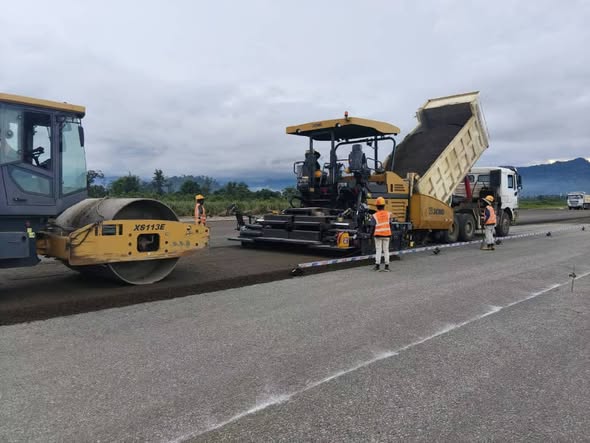
Travelers and airline operators are being advised that ongoing upgrade works at Kieta (Aropa) Airport in the Autonomous Region of Bougainville will lead to temporary operational restrictions, as the National Airports Corporation (NAC) prepares to commence Stage 4 of its Method of Works Plan (MOWP) late next week.
The airport upgrade, which began in October 2025, has so far progressed through Stages 1 to 3, achieving approximately 38% completion of both airside and landside works.
During these stages, ATR 72 and Dash 8 or similar aircraft have continued operations without interruption.
With the start of Stage 4 on 31 January 2026, the runway will be temporarily shortened from its existing 1,525 meters to 810 meters, allowing essential construction to continue.
NAC has warned that during this period, regular public transport (RPT) flights may be temporarily suspended, depending on airline operator decisions.
The full runway upgrade is expected to be completed by April 2027, covering all 10 stages, ensuring the long-term safety and continued operation of Kieta Airport.
NAC confirmed that all work schedules remain subject to weather conditions, and stakeholders will receive ongoing updates.
The Corporation appreciates the public’s understanding and cooperation during the temporary restrictions.
“We are working closely with our contractor to complete the works on time while minimizing disruption to airport operations.”
Published on January 29, 2026
 PORT MORESBY NATURE PARK TO HOST ‘REVERSE THE RED’ DAY
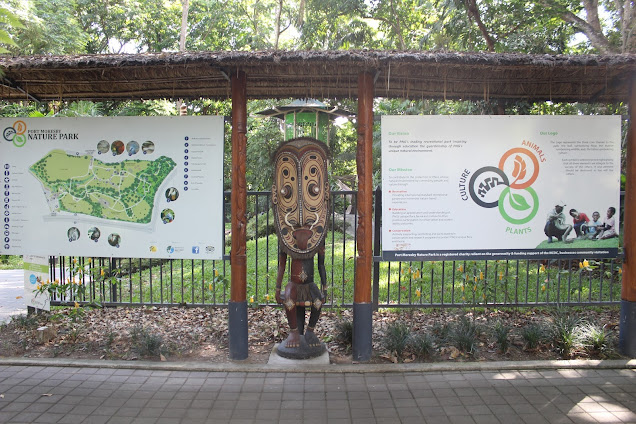
Port Moresby Nature Park will host its first-ever Reverse the Red Day on Friday, 6 February, joining a global effort to halt and reverse species extinction.This international initiative highlights successful conservation actions and raises awareness on protecting Papua New Guinea’s threatened wildlife and will showcase the Park’s ongoing biodiversity work and acknowledge the support of partners, sponsors and the local community.
PNG, as a member of the United Nations, actively participates in international agreements such as the United Nations Framework Convention on Climate Change (UNFCCC) and the Convention on Biological Diversity (CBD).
These conventions underscore the global urgency to address human impacts on climate and biodiversity.
In line with these commitments, PNG is currently reviewing its National Biodiversity Strategy and Action Plan to guide future conservation efforts.
As one of the implementing partners, Port Moresby Nature Park contributes through species recovery programs, habitat restoration across its 30-acre grounds, and public education initiatives that reach more than 35,000 students each year.
The Reverse the Red campaign aims to move species away from the International Union for Conservation of Nature (IUCN) Red List’s threatened categories towards recovery, reinforcing the message that coordinated action can secure a sustainable future for Papua New Guinea’s unique flora and fauna.
Published on January 29, 2026
 ABG REJECTS A PROPOSED PARTNERSHIP BETWEEN BCL & CMOC
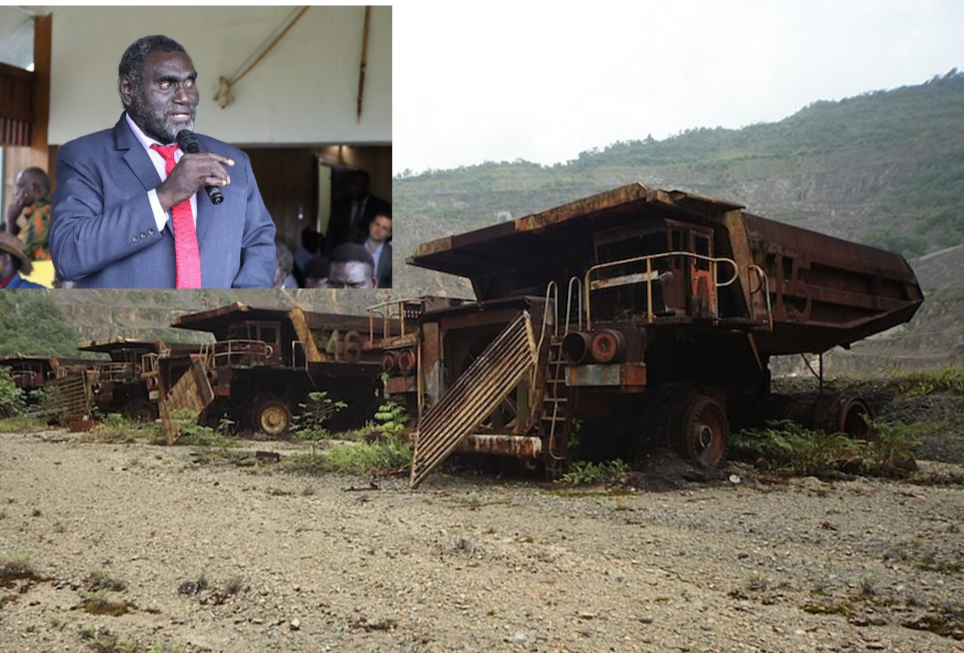
The President of the Autonomous Bougainville Government (ABG), Ishmael Toroama, has confirmed that the ABG has rejected the proposed partnership between Bougainville Copper Limited (BCL) and CMOC Group Limited in relation to the Panguna project.
This decision follows careful consideration and reflects the ABG’s position as the majority shareholder with a combined 72.9 per cent ownership in BCL. The President has affirmed that the ABG does not authorize any proposal involving equity participation or dilution of its shareholding in BCL arising from the Expression of Interest partnering process undertaken by BCL.
BCL has been directed to discontinue further progression of the CMOC proposal and the related partnering process and to instead pursue engagement with Lloyds Metals & Energy Limited as the ABG’s preferred partner under a contract mining or services partnership model, which should not affect BCL’s EL01 license standing or ABG’s shareholding in BCL.
This direction reflects ABG’s policy position that Bougainville is to retain ownership and control while engaging experienced operators through clearly defined contractual arrangements.
The ABG remains committed to progressing the Panguna project in a lawful, transparent, and orderly manner that serves the long-term interests of the people of Bougainville.
Published on January 29, 2026
 RESEARCH VITAL TO GROW PNG'S AGRICULTURE SECTOR
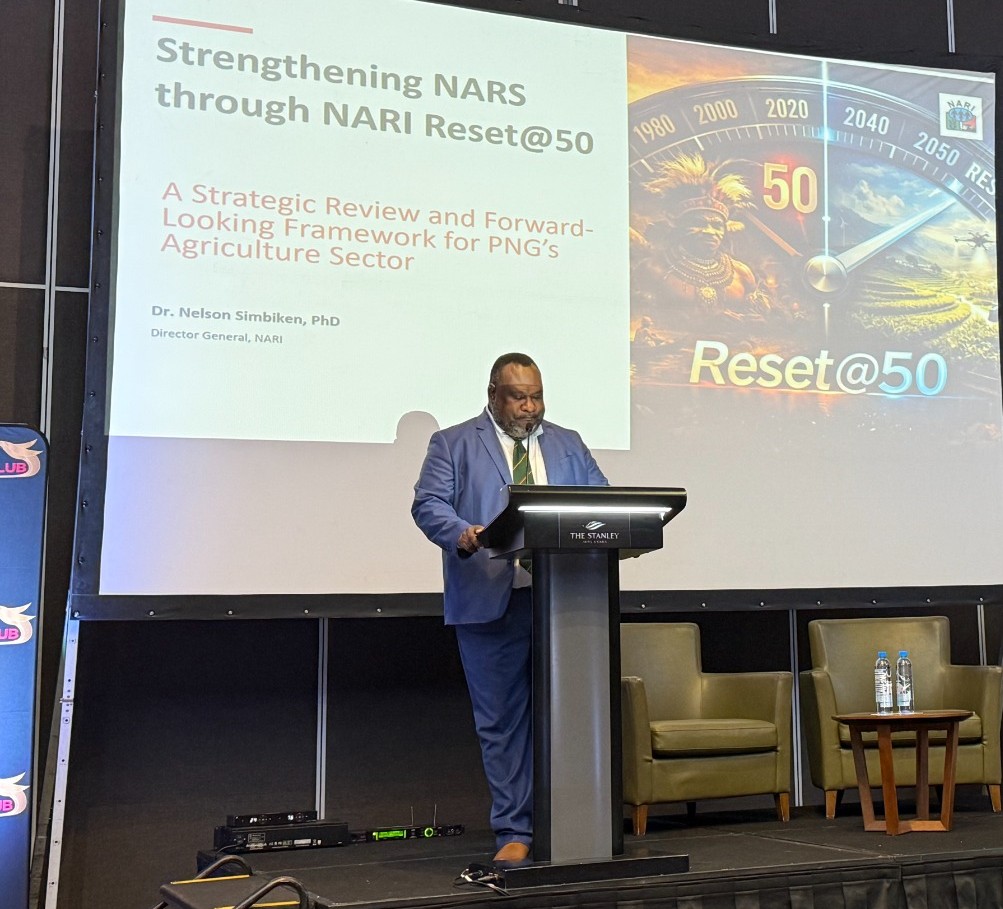
Agricultural research must play a central role in transforming Papua New Guinea’s farming sector from subsistence-based production to a commercially competitive industry according to National Agricultural Research Institute Director General Dr Nelson Simbiken.
Dr Simbiken said research is not an academic exercise but a practical necessity that directly addresses the challenges farmers face from production to market access.
He said strong research systems are critical for improving crop productivity, reducing post-harvest losses, increasing value addition and ensuring agricultural products meet quality standards required for domestic and export markets.
Established in 1996, NARI’s mandate is to enhance productivity, efficiency, stability and sustainability within the smallholder agriculture sector, which supports the majority of Papua New Guinea’s rural population.
Dr Simbiken said over the past three decades, NARI has built a strong technical foundation, releasing more than 27 improved crop varieties including taro, rice and banana varieties that are now being adopted by farmers and commercialized.
He said these innovations have contributed to improved food security and better livelihoods for rural communities across the country.
However, Dr Simbiken acknowledged that having technology at the farm gate is only the first step, and that significant gaps remain in post-harvest processing, value addition and market access.
“The challenge now is to transform these innovations into high-value products that reach the kitchen table and the global market,” he said.
To address this gap, Dr Simbiken stressed the importance of public-private partnerships, saying the private sector has a key role to play in processing, logistics and market development.
He also highlighted the need for stronger government support, describing agricultural research as a public good that requires state intervention to de-risk innovation and encourage private sector investment.
Dr Simbiken said NARI is advocating for the establishment of a national agricultural innovation grant scheme, which would provide targeted funding to support research, development and commercialization.
He said strengthening research investment is essential if Papua New Guinea is to achieve long-term goals under the National Agriculture Sector Plan, including food security, job creation and the transformation of subsistence farmers into tax-paying commercial producers.
Dr Simbiken said Reset 50 represents a long-term commitment to turning research into tangible economic outcomes and building a resilient and prosperous future for rural communities.
Published on January 29, 2026
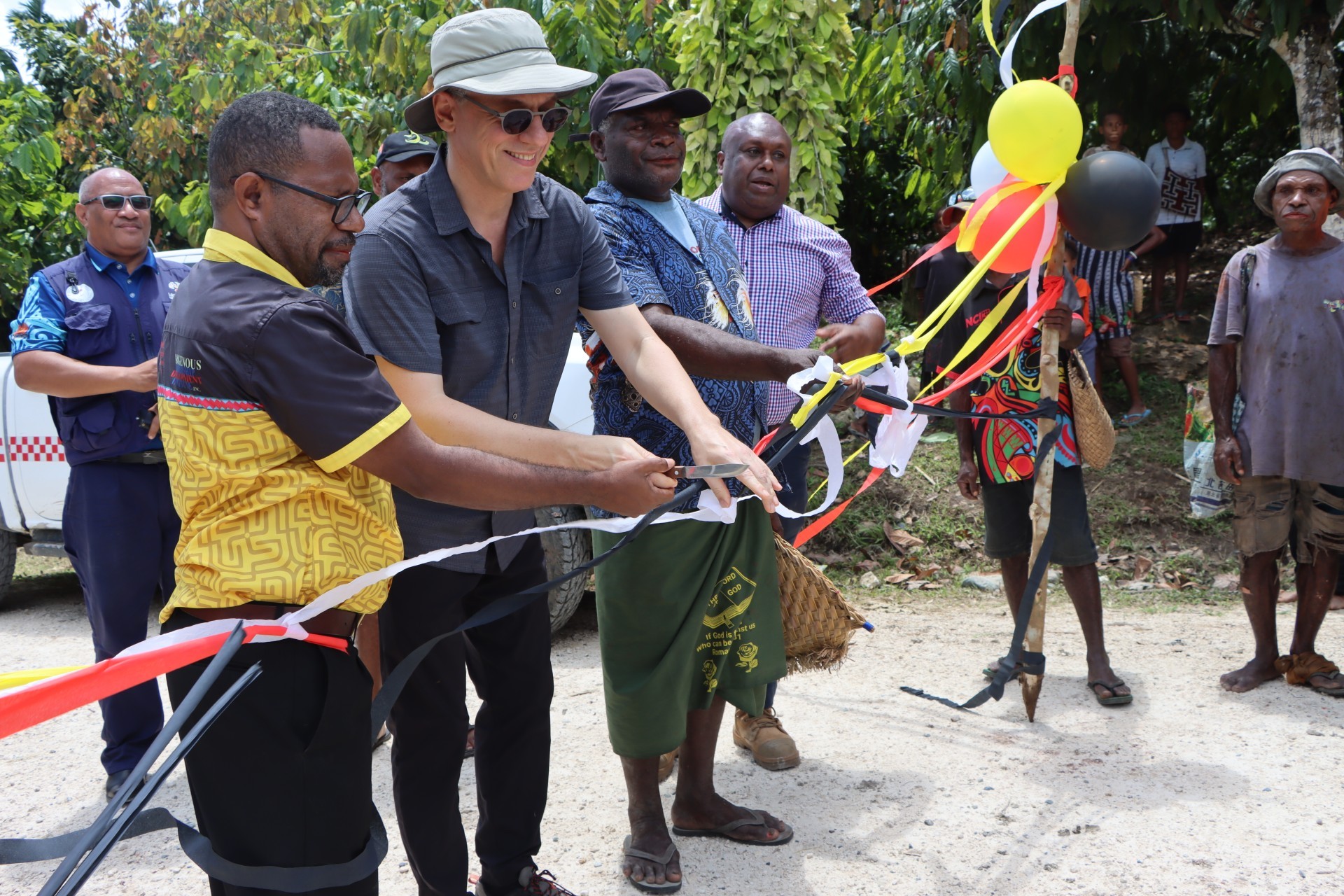 KULUNGERE ROAD OPENS, LINKING COCOA FARMERS TO ESSENTIAL SERVICES
Communities in Kulungere of Evon Gore area in Sinivit Local Level Government (LLG), Pomio District, of East New Britain province, now have improved road access to essential public services and market access.
Thank you to the National Government, supported by the World Bank through the PNG Agriculture Commercialization and Diversification (PACD) Cocoa Project.
The 4km road was officially opened on Monday 26th of January 2026 by the East New Britain Governor Michael Marum, Cocoa Board of PNG Chief Executive Officer (CEO) Jesse Tukup Anjen, and World Bank Division Director of Papua New Guinea, Solomon Islands and Vanuatu Han Fraeters.
Road contract was awarded to Kokopo Plant Hire Ltd in February 2025 and was completed last December for a contract value of K5.7 million.
Kulungere feeder road serves more than 2,000 people of the Upper Evon and Kulungere Communities.
Of these, almost 250 households benefited from the PPAP Project under the Growers Partnership under Call 1.
Senior Engineer Raymond Paulias highlighted key components of the rehabilitation works.
He said the scope of works involved rehabilitation the existing dilapidated road to all weather condition to ease market access constraints for the Cocoa growing community.
The community had struggled for many decades without this road access and is extremely pleased with the road and World Bank for providing loan finance to the National Government for it to be rehabilitated.
The works included the installation of the following:
· 2 Concrete Causeway Crossings over 2 existing rivers.
· 3Km of Longitudinal roadside Lined Drains.
· 18 No. Cross Drainage Culverts.
· 800m of 150mm depth x 3m wide concrete pavement on critical steep sections; and
· 200mm depth of road base pavement layer.
“The rehabilitated road now enables vehicle access to the community not only for cocoa market access but also for improved access to education and medical facilities- particularly for medical emergencies,” noted Mr. Paulias.
“It opens more economic opportunities, as evident with locals erecting new trade stores and kiosks along the road since works commenced.”
Meanwhile, CEO Jesse Tukup Anjen, encouraged communities to protect the new road and continue expanding cocoa production.
He urged the communities to embrace this road, look after it and do maintenance so that the road will last long.
He thanked the World Bank and the National government for believing in these partnerships and the continuous working collaborations and now they are here to see the money being materialized and our people get the direct benefit.
Furthermore, Governor Marum echoed similar sentiments, thanking the World Bank and National Government for their partnership in ensuring local farmers can bring produce to market more efficiently.
The Kulungere Road is one of three Agriculture Roads rehabilitated under the Component 2 - Agriculture Roads of the PACD Cocoa Project.
Published on January 28, 2026