

POSTS BY AUTHOR

Aseneth WAIDE
 ADDRESSING SEXUAL REPRODUCTIVE HEALTH, YOUTH & INCLUSION
A panel discussion under the theme, “Equity through Generations” was held at the Moresby Arts Theatre tackling issues around sexual reproductive health and rights (SHRH), disability inclusion, youth empowerment and the evolving role of technology in rural outreach.
Panelists included, Dr. Rena Dona, Deputy Representative and Head of Programme UNFPA PNG Country Office, Gerald Bengesser, General Manager of Cheshire Disability Services PNG and Ivy Karue, Marketing & Communications Manager of Marie Stopes Papua New Guinea.
Each panelist described what equity meant to them and explained how it was applied in their organization.
Ivy Karue, Marketing & Communications Manager of Marie Stopes Papua New Guinea described equity as everyone starting from the same point regardless of disadvantages.
“Equity means creating a level playing field. Not everyone starts with the same access or ability to use services, and equity is about bridging those gaps—social, physical, or systemic.”
“In Marie Stopes, inclusion is essential. Family planning isn’t only for able-bodied people—it’s for everyone.”
“We even have a GEDSI Coordinator focused on gender equality and inclusion, making sure our service providers can cater to all individuals.”
Gerald Bengesser, General Manager of Cheshire Disability Services PNG, emphasized that physical infrastructure is only part of the solution.
“It begins with accessibility. For example, even if a school has a lift, if the road leading to it is rough and inaccessible for someone in a wheelchair, that service is still out of reach.”
“Equity sounds good, but we’re still far from achieving it. We need to be honest about the journey. It’s long and requires thoughtful steps forward.”
He recounted stories from Cheshire’s Young Voices program, where young people living with disabilities identify their own technological needs and explore creative solutions using accessible tools like mobile phones.
Representing the UN, Dr. Rena Doner underscored the importance of listening to young people and to not make assumptions on their needs.
“There are so many misguided assumptions. For example, ‘Young people are prioritizing careers over family’, which leads to blaming them for low fertility rates.”
“This can lead to making policies that worsen the situation.”
She also emphasized on the risks digital spaces have on sensitive topics such as sexuality and GBV.
“Digital spaces can also fuel gender-based violence and misinformation, which we must address alongside the benefits.”
Reflecting on their outreach work with YWAM and Marie Stopes, both Bangeza and Carwin noted a cultural shift in how communities engage with sensitive topics.
“In 2011, we had to separate men and women during SRHR talks.”
“But last year, we sat with an entire village, men included, to talk openly about contraceptives and side effects.”
Bangeza added that in the early 2010s, community reactions to puberty education were awkward and shy.
Now, with mobile phones widespread even in remote areas, youth are often exposed to adult content without context or guidance.
“We’ve essentially given fire to communities without teaching them how to use it.”
The panel concluded with a strong call for collaboration across sectors.
Published on July 7, 2025
 GOVT UNLOCKS K1.5MIL IN FUNDING FOR GBV RESPONSE NETWORK
The Community Development, Youth, and Religion through the National Gender-Based Violence Secretariat, has committed K1.5 million to Civil Society Organization grants – specifically designed to support organizations working to respond to and prevent gender-based violence in line with the National Gender- Based Violence Strategy.
The announcement was made by Minister for Community Development, Youth and Religion Jason Peter at the official launch of the National Safe House Mapping Report and rebranded Civil Society Organization GBV Grants Mechanism, held at the Airways Hotel in Port Moresby.
“These grants represent our commitment to strengthening the capacity of CSOs throughout Papua New Guinea.”
The CSO GBV Grants are designed to finance community organizations across the country who provide vital services to survivors of violence.
“We recognize that effective partnerships between government, donors, private sector and civil society is essential in realizing our shared goals of having a society free from gender-based violence.”
With K1.5 million committed under the National Gender-Based Violence Secretariat, the funding is expected to bolster capacity, improve outreach, and support sustainability in service delivery.
Unlike previous approaches, the new grant mechanism introduces transparent and accountable guidelines for application, selection, and disbursement.
It aligns with the PNG National Strategy to Prevent and Respond to Gender-Based Violence, which envisions a coordinated and inclusive approach to tackling GBV.
The launch also saw the unveiling of the National Safe House Mapping Report, a document that identifies the location, capacity, and operational status of safe houses across the country.
For policymakers and funders, the report provides a data-driven foundation for targeted investment and long-term planning.
By 2027, the government aims to support 80 safe houses under its Medium-Term Development Plan (MTDP).
Published on July 7, 2025
 MAHOGANY FINANCE EXPANDS SERVICES IN MOROBE PROVINCE
Mahogany Finance has expanded its footprint in Papua New Guinea with the opening of a new branch in Lae, Morobe Province.
The move marks a significant step in the company’s mission to deliver accessible, innovative, and client-focused financial services across the country.
The new branch, located at Unit 18, Central Arcade Building, Top Town, Lae, will begin operations on Monday, 7 July 2025.
It will provide a full suite of financial products, including Equipment and Vehicle Finance, Lease Finance, Term Deposits, Insurance Premium Finance, and Interest-Only Loans.
These services are designed to support both individuals and businesses with diverse and evolving financial needs.
Known for its fast approvals, competitive interest rates, and personalized customer service, Mahogany Finance aims to raise the standard of financial service delivery in the region.
The Lae branch is expected to make significant contributions to the economic development of Morobe Province by supporting the province’s business landscape.
Ms. Nathalie Kaman has been appointed as Relationship Manager for the Lae branch. With extensive experience in the financial services sector and a deep understanding of the local market, Ms. Kaman will lead the branch in delivering tailored financial solutions and building strong community connections.
Chief Executive Officer, Mr. Terry Hall, expressed enthusiasm about the company’s latest milestone:
“Our entry into Lae marks a significant moment in Mahogany Finance’s growth. We’re here not just to do business, but to become a trusted financial partner to the people of Lae.”
“We’re excited about the opportunities this vibrant region offers and are committed to contributing to its continued development.”
Mahogany Finance invites residents and businesses across Lae and the wider Morobe region to visit the new branch and experience the difference of working with a dedicated, community-focused financial partner.
Customers in Lae can reach the Mahogany Finance team by phone at (675) 7065 3470 or (675) 8137 2757, or via email at LaeRM@mahogany.com.pg.
For more information, visit www.mahogany.com.pg
Published on July 5, 2025
 SAFEHOUSE & GRANTS TO SUPPORT GBV SURVIVORS
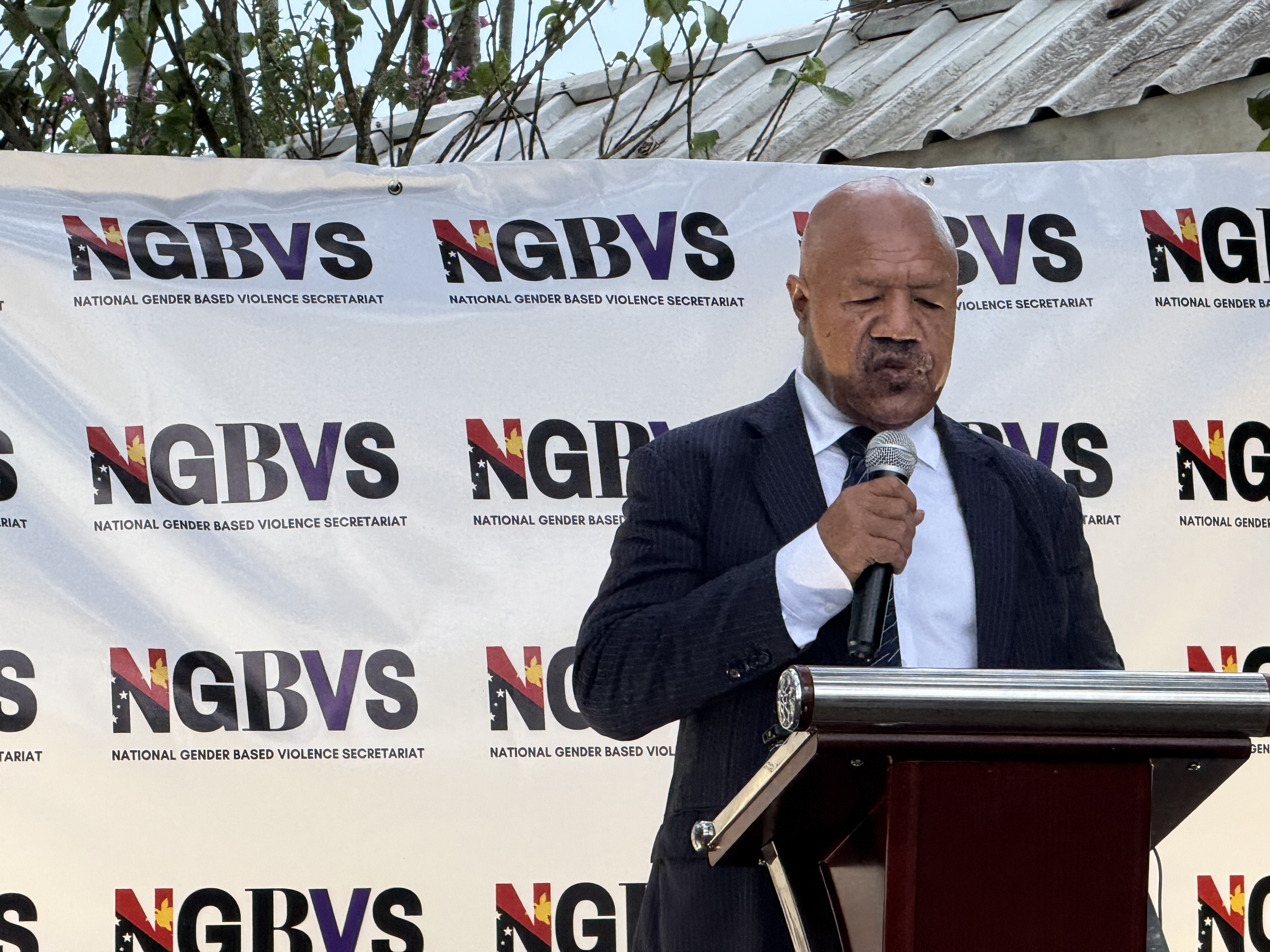
Papua New Guinea (PNG) has taken a step in its fight against gender-based violence (GBV), with the launch of the National Gender-Based Violence Secretariat Safehouse Report and a new K1.5 million Civil Society Organization (CSO) GBV Grants Program.
The momentous event marks a renewed commitment to protecting survivors and strengthening support systems across the country.
Speaking at the launch, NCD Governor Powes Parkop, Chair of the PPC-GEWE (Parliamentary Partnership Committee on Gender Equality and Women’s Empowerment), described the occasion as a “monumental step forward” in the country’s journey to end GBV.
“Today’s launch is more than a ceremony – it is a declaration of hope accountability, and action.”
The Safehouse Report, presented alongside the launch, revealed that as of 2025, PNG has only 51 formal safe houses and 74 Family Support Centers (FSCs) – far below what is needed, especially in rural and remote areas.
With nearly 7 in 10 women expected to experience violence in their lifetime, and predictions estimating almost 8 million women affected by 2046, the social and economic cost is great.
Approximately, 6.2% of PNG’s GDP, is lost yearly due to GBV.
In response, the government is introducing a new National GBV Strategy (2026-2035), grounded in survivor-centered care, national accountability, and local leadership.
The strategy outlines measurable targets including:
Halving the rates of GBV prevalence by 2035
Achieving 100% provincial coverage of GBV secretariats
Ensuring 60% rural access to survivor services
Raising conviction rates for GBV cases to 25%
Catalyzing a generational shift in attitudes, especially among our youth
Ensuring every one of PNG’s districts has a well-resourced safehouse and FSC
A K15 million CSO (Civil Society Organization) GBV Grants Program, designed to empower civil society organizations, was also launched.
Governor Parkop praised Minister for Religion, Youth and Community Development, Jason Peter for leading the initiative and acknowledged the role of the Department for Community Development and Religion (DFCDR) in bringing transformative action.
“This fund recognizes the vital leadership of CSOs. Their work saves lives, and now they will be better resourced to continue that mission.”
The new strategy to address gender-based violence will be supported by K180 million each year. This money will come from government development funds (DSIP/PSIP) and a proposed 2% tax on resource extraction industries like mining and logging.
To make sure the funds are used appropriately, and the strategy is working, there will be a National GBV Dashboard to track progress in real time, along with regular reviews through quarterly meetings (Policy Labs) and yearly audits.
Governor Parkop also acknowledged the active role of Diane Kambanei, Director of the National GBV Secretariat, in delivering the report and shaping the strategy.
He then ended his address with a call for unity across all sectors.
“The road ahead will not be easy, but our resolve is strong. Together, we can create a safer, more just, and more unified Papua New Guinea for generations to come.”
Published on July 4, 2025
 WOW AWARDS SPARK NATIONAL PRIDE
From the Highlands to the islands, Papua New Guineans have rallied to recognize the powerful contributions of women leaders through the 2025 Westpac Outstanding Women (WOW) Awards.
After a five-year hiatus, the return of the WOW Awards has ignited a wave of national pride, with nominations flooding in from many centers — including rural and remote communities.
In a sign of how far the movement has spread, 40% of nominations came from outside major towns and cities, proving that leadership, strength, and resilience are thriving in every corner of the country.
For many, the WOW Awards represent more than recognition: they are a mirror reflecting the courage, talent, and determination of Papua New Guinean women.
Michelle Hau’ofa, a public health and community development consultant as well as a judge for this year’s awards echoed this sentiment.
“These nominations are not just entries – they are declarations of courage, community, and conviction.”
Dame Meg Taylor, also a judge and former Pacific Islands Forum Secretary-General, described the awards as a platform that not only celebrates women but inspires the next generation.
The awards come with more than just a title. Each category winner will receive K5,000 and enter a year-long mentorship program designed to build leadership skills and expand professional networks.
As the judging panel begins its work, excitement builds toward the WOW Awards Gala this month, where PNG’s top women change-makers will be celebrated in style.
More than just an event, the return of the WOW Awards marks a turning point in the national conversation on gender, leadership, and recognition — showing that when women rise, so does the nation.
Published on July 4, 2025
 AIR NIUGINI BACKS PNG FOOTBALL CAPTAIN ON GLOBAL LEADERSHIP JOURNEY
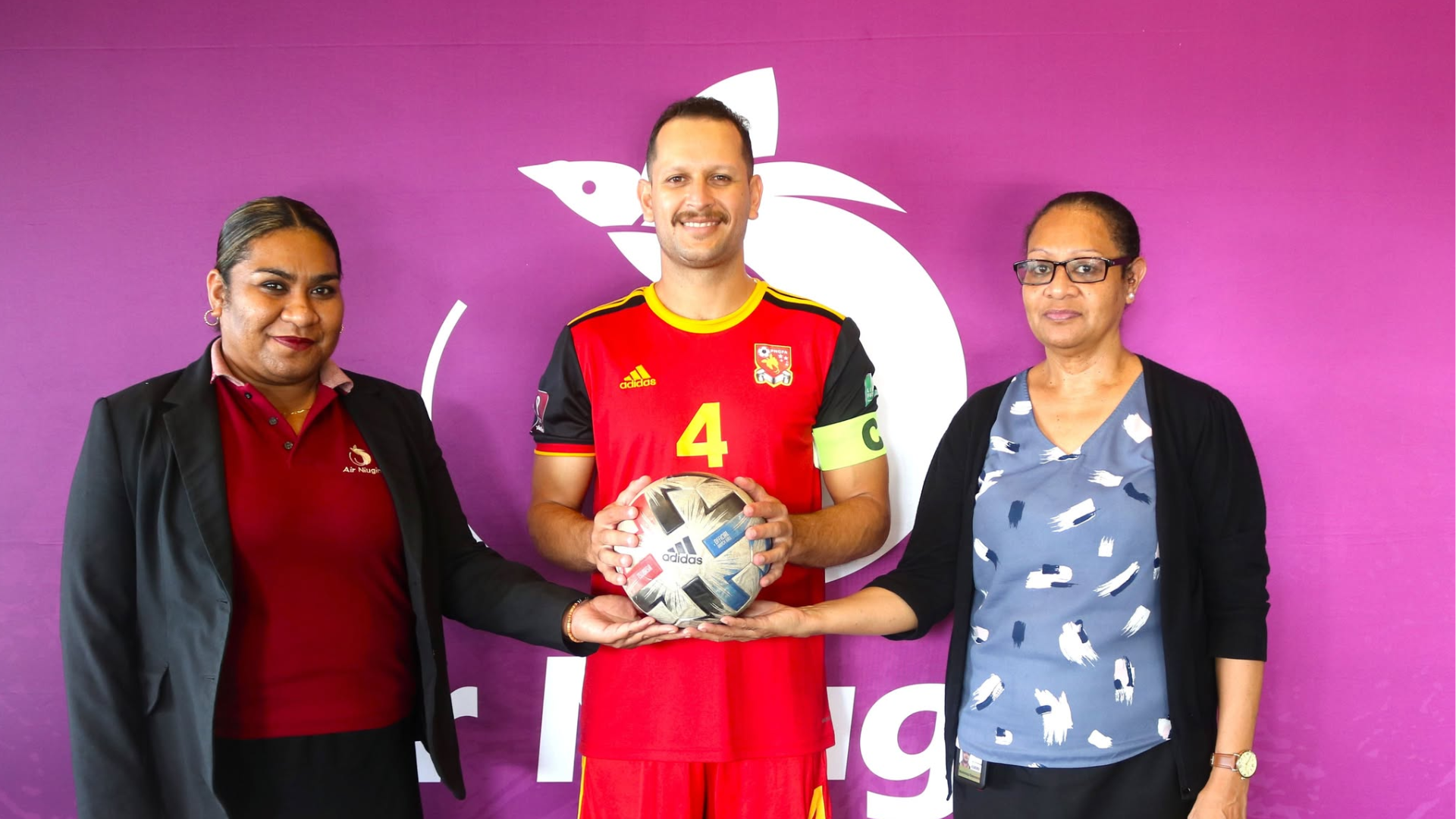
Air Niugini has proudly announced its support for Papua New Guinea Men’s National Football Team captain, Alwin Komolong, as he embarks on a significant global leadership program through the FIFA Player Executive Programme.
Komolong has been selected, becoming the first Papua New Guinean and the only participant from Oceania and the Asia-Pacific region in the 2024/2025 cohort.
This initiative aims to equip former and current footballers with the skills and experience to take on leadership roles within global football governance.
The program includes modules in Rio de Janeiro, Los Angeles, and New York, where participants will interact directly with FIFA officials and international sports leaders.
In addition to his selection, Komolong has also been awarded a full scholarship to pursue the FIFA Master in Sport Management, Law, and Humanities, a highly regarded academic course that will take him across the UK, Italy, and Switzerland starting this September.
As PNG’s national carrier, Air Niugini is providing vital travel support, covering flights between Port Moresby and Singapore, ensuring the sportsperson’s smooth transition during his international engagements.
Air Niugini CEO Mr. Gary Seddon said the airline’s support reflects its commitment to youth development and nation-building through sport.
“We believe in the power of sports to inspire, unite, and empower communities across PNG.”
“By supporting athletes like Alwin, we are investing in the youth of this country — nurturing talent, building confidence, and fostering national pride.”
Komolong expressed his gratitude for the backing.
“Thank you, Air Niugini, for supporting this journey. My goal is to transition from player to leader, and bring back global expertise to develop our football, create opportunities for local athletes, and grow the game from the grassroots up.”
Air Niugini’s partnership with Komolong highlights its continued role in promoting excellence and raising PNG’s profile on the global stage — not only in aviation, but also in sport and leadership.
Published on July 4, 2025
 5 WAYS ILLEGAL ALCOHOL IS HURTING PNG’S ECONOMY
A new report by FTI Consulting shows that illegal alcohol now makes up 71% of all alcohol sold in PNG, doing serious damage to our health, our community, and even the country’s economy.
K2.59 billion in Lost Revenue
In 2024 alone, Papua New Guinea’s Government lost approximately K2.59 billion in revenue due to illegal alcohol trading – money that could have funded healthcare, education, and infrastructure.
Spirits Are the Biggest Offender
Illicit spirits caused the highest financial damage, contributing the largest share to the total lost government revenue (K1,476.97 million).
National GDP Takes a Hit
Illegal alcohol is not only a law enforcement issue but an economic one. The country’s GDP has dropped by 0.7% in the short term. If left unaddressed, this could increase to 8% in 10 years.
Fewer Jobs, Lower Incomes
Illicit alcohol weakens legal businesses (For example: SP Brewery) that employ thousands and pay taxes. The result? Reduced employment, lower household incomes, and decrease in national welfare.
It Undermines the Legal Alcohol Industry
Legal alcohol producers play an important role in PNG’s economy by paying excise taxes, providing local jobs, and supporting community initiatives. However, illegal competition threatens their ability to operate and contribute over the long term.
Published on July 4, 2025
 ILLICIT ALCOHOL DOMINATES PNG MARKET
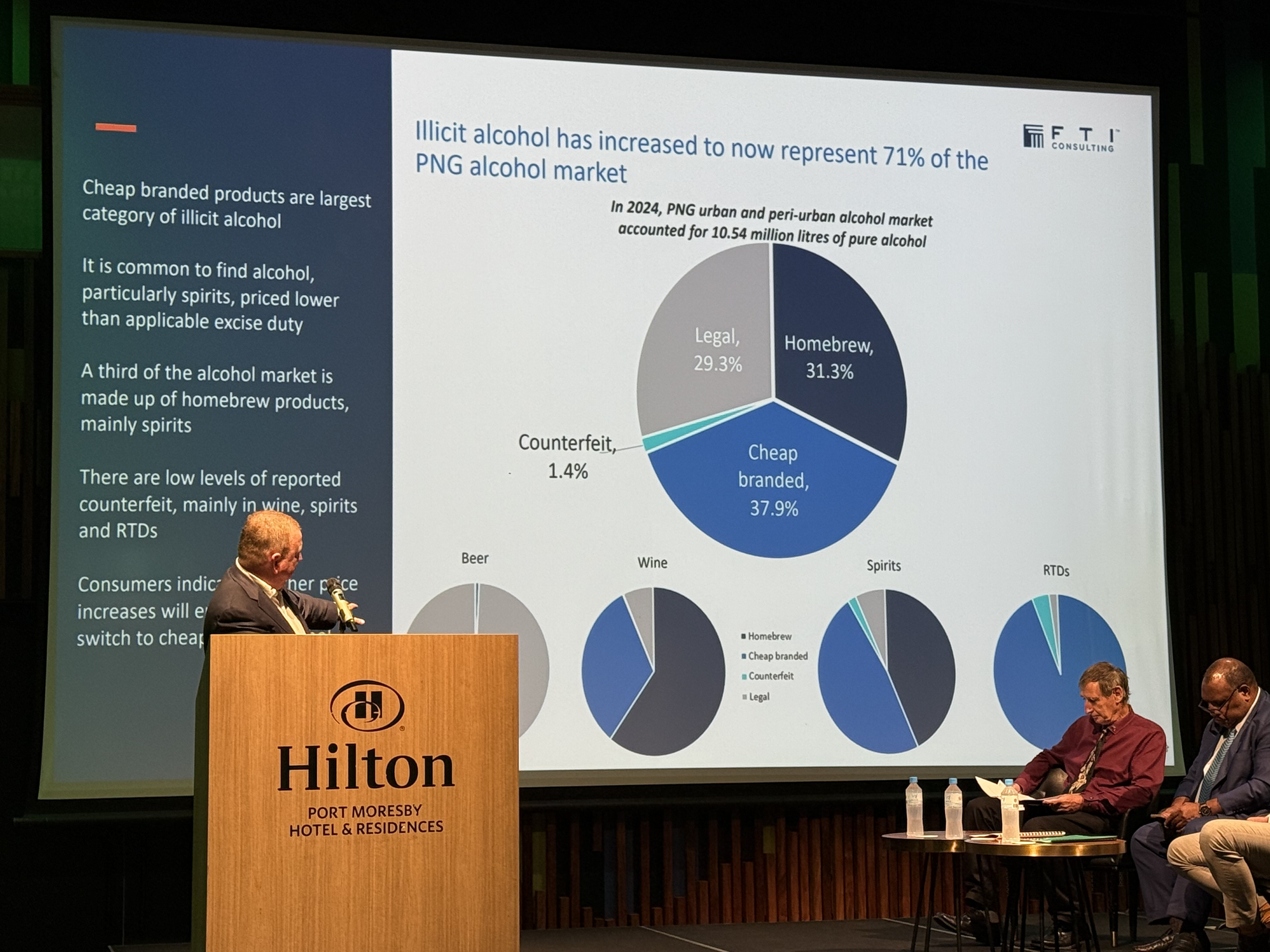
An independent study launched by FTI revealed that illicit alcohol makes up 71% of the total alcohol market in Papua New Guinea, posing serious health, social, and economic threats across the country.
Over 10.5 million liters of pure alcohol were consumed in PNG’s urban and peri-urban in 2024 – majority being unregulated, untaxed and often dangerous.
Papua New Guinea has lost significant income due to illegal alcohol consumption. The report stated that the country lost up to K2.59 billion in government revenue last year alone.
Key Findings:
Illicit alcohol accounts for 71% of consumption.
Cheap branded products are the largest category (37.9%), followed by homebrew (31.3%), and counterfeit products (1.4%).
Spirits represent the largest share of government revenue lost (K1.48 billion).
The illicit trade is reducing PNG’s GDP by 0.7% short term, and potentially 8% over the next 10 years.
Risks were also presented which included including toxic health effects, increased violence, and the funding of organized crime.
It also emphasizes the strain on genuine producers and the significant loss of employment opportunities.
To address the crisis, the study urges the PNG Government to:
Reinforce existing alcohol laws and regulations.
Increase enforcement and targeted inspections.
Educate the public about the dangers of illicit alcohol.
Work together with industry and law enforcement.
Carefully assess how raising alcohol taxes (excise) could affect consumers
Test ABV (Alcohol by Content) content of alcohol products
The report state that solving this issue will take strong government leadership, teamwork between agencies, and support from communities.
Published on July 3, 2025
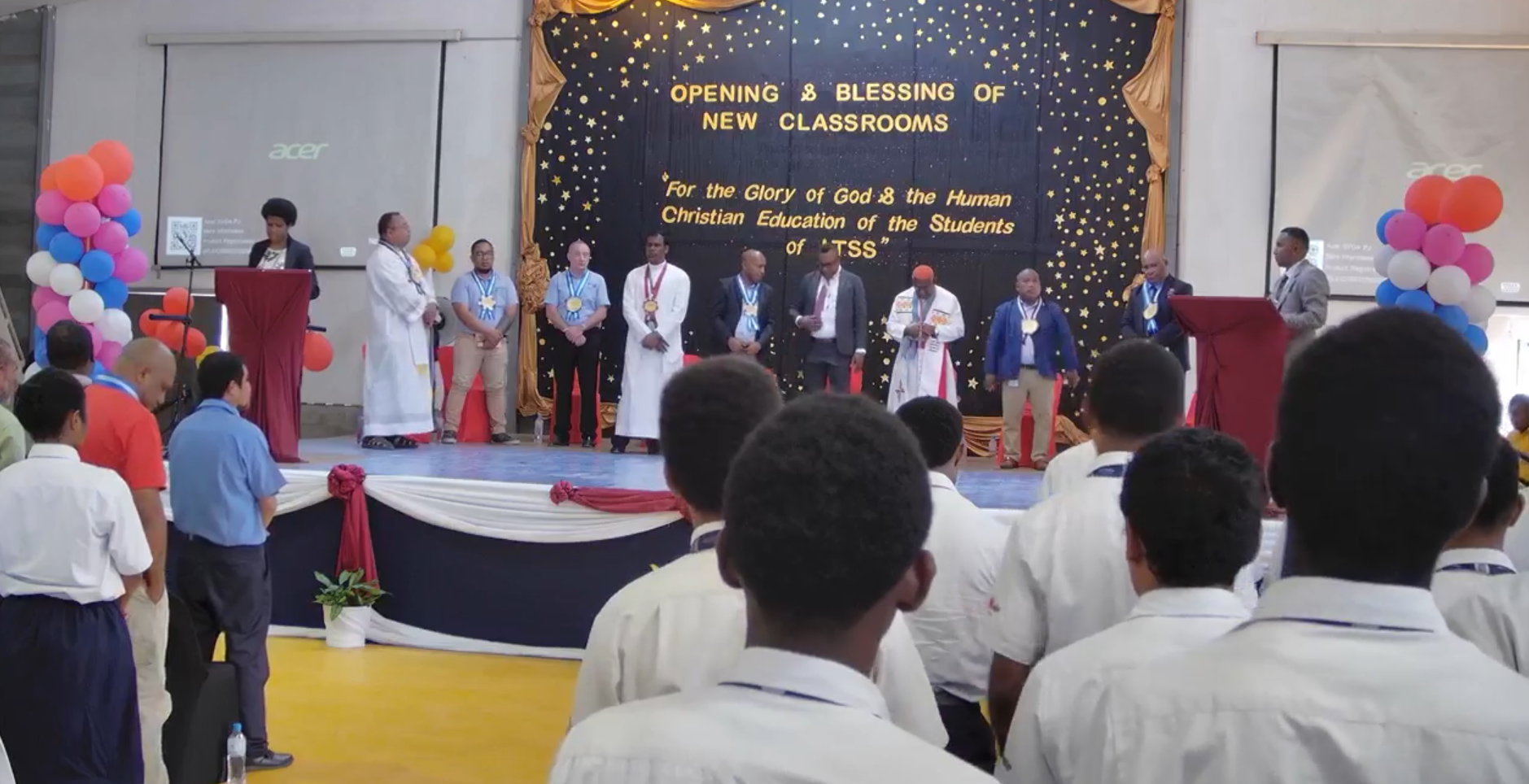 LA SALLE TECHNICAL SECONDARY OPENS NEW CLASSROOM
The La Salle Technical Secondary School in Port Moresby city on Wednesday 2nd July officially opened a new 8-in-1 classroom building to cater for its large number of students, reaffirming the school's commitment to providing a conducive learning environment for the students.
A generous funding of K600, 000 from the Department of National Planning and Monitoring greatly assisted in enabling the school to pursue this project.
Principal of La Salle, Brother Antony Swamy, extended his heartfelt appreciation tọ Mr. Roger Kara, Deputy Secretary of the Department of National Planning and Monitoring for the financial contribution.
"Your generous sponsorship gave us hope to start this project and has laid foundation for the school's aspirations."
"Your dedication to enhancing education, particularly for our people's secondary schools is a testament to your vision for a brighter future for our youth in Papua New Guinea."
He thanked the Department of National Planning and Monitoring for investing in La Salle Technical Secondary School.
"Thank you for allowing us to provide to them with the facility the truly deserve."
The school currently has 1, 100 students and will no doubt increase in numbers to approximately 1, 300 students by 2026.
La Salle Technical Secondary School was ranked number one in the country's Grade 10 National Examinations in 2024.
"Our commitment to academic excellence, competitive teaching methods and dedicated educators has paved the way for such an achievement."
La Salle strives to maintain its position as the top performing school in both Grade 10 and 12 National Examinations as well in 2025.
Published on July 3, 2025
 K3MIL IN NEW CLASSROOMS FOR KANDRIAN GLOUCESTER| LELANG
Minister for Rural and Economic Development and Member for Kandrian Gloucester, Joseph Lelang, has presented cheques totalling nearly K3 million for the construction of new classrooms across the district, in West New Britain.
This marks another key milestone in his long-standing commitment to improving education in the electorate.
Minister Lelang also highlighted the district's student scholarship scheme, which has been in operation continuously since 2013.
Over K26 million has been invested into the program over the past 13 years, benefitting more than 5,000 students.
Many recipients now work in government and private sectors, supporting their families and communities.
“This year alone we sponsored around 230 students at a cost of K2.17 million.”
“We are one of the few government agencies that truly invests in education. We do not just talk about it—we act on it.”
Lelang emphasized the government's recent education reforms, which allow Grade 10 students to continue to Grades 11 and 12, as a clear sign that greater investment in school infrastructure is now vital.
As part of this initiative, six new classroom buildings will be constructed across various schools in the district.
These include two double classrooms and four four-in-one buildings, each featuring two classrooms on both the ground and upper floors.
The four-in-one classrooms will be built at Murian Primary, Gilnit Primary, Kilenge Primary, and Gloucester Primary, across four different Local Level Governments (LLGs).
Additionally, two-in-one classrooms have been funded for Sasavoru Primary, Rilmen Elementary, Wasum Elementary, and Pomugu Primary in the Kandrian Inland LLG.
He stated that school infrastructure was one of their top priorities, as Kandrian Gloucester currently serves over 30,000 students across 206 schools but has only one secondary school, six high schools, and one vocational school.
“We have already invested K4.5 million in the vocational school at Sagsag, Ward 3, in partnership with the Anglican Church. Two million kina has already been released.”
Local construction companies, FM Building and Maintenance Construction Ltd and Tuanga Building and Construction, have been given the contracts.
FM Project Manager Jerry Sete confirmed work to begin this Friday.
“We will visit project sites, talk to community leaders, and begin awareness so nearby communities are informed and involved.”
FM Construction is known for repairing 66 police houses across Kimbe, Talasea, and Bialla.
Operations Manager Esther Maris reassured the public of the project’s completion within deadline.
“We are proud to be part of this project and we will complete the work on time and with quality.”
Meanwhile, Kandrian Coastal LLG President Allan Klosio praised the Minister’s efforts, noting his consistent support since 2013.
“This latest project will really help our students learn in better classrooms.”
He acknowledged logistical challenges, with 80 percent of roads needing upgrades, but expressed confidence in the project’s delivery.
Minister Lelang concluded by reaffirming his commitment to further investments.
“We are not stopping here. We will continue to support other LLGs as well.”
“Our students deserve the best and I will continue working to make that happen.”
Published on July 2, 2025
 HIRI-KOIARI BOXING ASSOCIATION PREPS FOR NATIONAL CHAMPIONSHIPS SELECTION
The Hiri-Koiari Boxing Association, led by President Varuko Morea, has announced that they will hold one final trial this Saturday, July 5th in the Central province, to finalize selections for the upcoming 2025 National Boxing Championships in Lae city.
This trial follows the earlier one held at Porebada junction, where officials deemed an additional event necessary to settle final selections.
The upcoming trial will take place at Lealea village, which will also serve as a fundraising event for the team’s participation in the championships, scheduled for July 24 to 27 in Lae.
The Hiri-Koiari Boxing Association, a relatively new affiliate of the PNG Boxing Union (PNGBU), is working hard to grow the sport in the Hiri region, where rugby league and netball currently dominate.
The association's efforts have been supported by the PNGBU and local officials.
PNGBU President Dr. Gideon Kendino, Secretary General Martin Liri, and Referees and Judges Director Kazu Temu were all in attendance at a recent event in Porebada village, where they donated essential boxing equipment including gloves, head guards, and pads.
As part of their ongoing efforts to develop boxing in Hiri-Koiari, Morea explained that the association is drawing from several villages in the region, including Gaire, Koderika, Porebada, Tubusere, Lealea, and a team of Mekeos from the surrounding areas.
These villages are actively participating in the trials, which will ultimately select a team of 10 to 15 boxers and officials to represent the region at the national level.
In parallel, the association has been collaborating with the National Capital District and Central Province’s boxing associations, inviting them to attend a coaching clinic hosted by national coaches Peter Morrison, Mark Keto, and Jack Willie.
The clinic, organized by the PNG Boxing Union (PNGBU), will take place on Tuesday at the Sir John Guise Stadium.
It will also showcase boxing equipment donated by the Australian High Commission, a key supporter of PNGBU’s programs.
The fundraising efforts are already in full swing, with local boxers going fishing to sell their catch at local markets.
Hiri-Koiari MP Keith Iduhu has been a strong supporter of sports events in the region, and the association plans to approach his office for further backing.
Morea also called on companies operating within the Hiri region to consider supporting the young men and women participating in the trials – some of whom will be travelling out of Port Moresby for the first time.
The Morobe Provincial Government is expected to assist with the championships, and other sponsorships are being pursued with announcements expected in the coming weeks.
For those interested in supporting the Hiri-Koiari Boxing Association or for further information, contact Varuko Morea at 82177090 or Martin Liri at 73334390/82392000.
Published on July 1, 2025
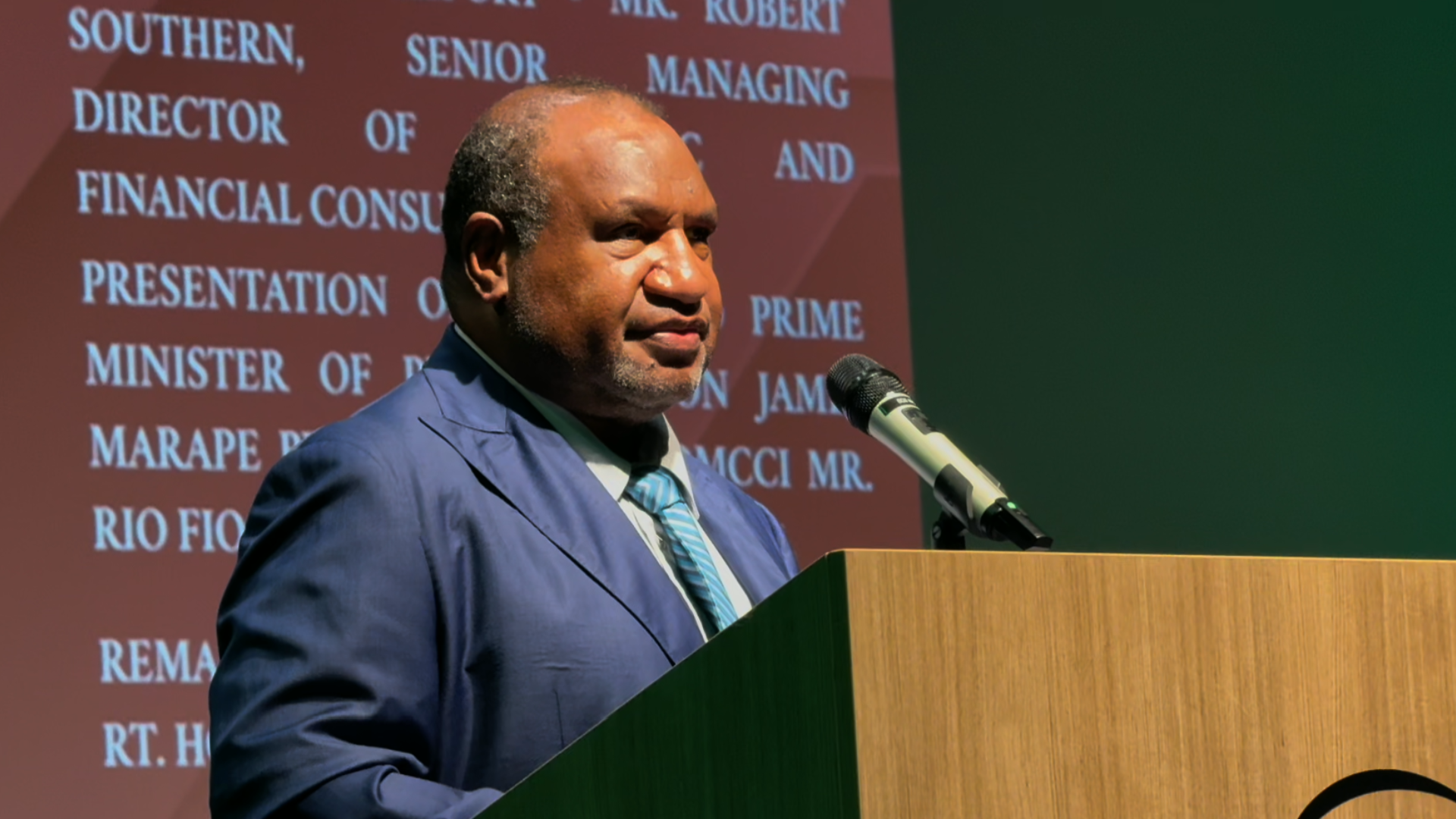 PM PLEDGES GOVT’S COMMITMENT TO COMBATTING ILLICIT ALCOHOL
Prime Minister James Marape has pledged the government's strong commitment to addressing the growing problem of illicit alcohol in Papua New Guinea.
During the official launch of the FTI Report on Illicit Alcohol in PNG this morning (01/07/2025) at Hilton Hotel, Port Moresby city, he called for a collaborative effort between government agencies, industry leaders, and the community to tackle illegal trades that are harming public safety and the nation's economy.
The Prime Minister began by highlighting the importance of proper regulation in alcohol production, warning of the public health and safety risks posed by unregulated and illegal products.
“We must ensure that those legally operating in the alcohol industries are doing so safely and contributing fairly to the economy through taxes.”
“We cannot allow illegal black-market alcohol to harm our citizens or steal from our economy.”
The Prime Minister was particularly concerned about the dangers of illicit alcohol, including homebrews and unregulated alcohol, which he noted pose serious health risks to consumers.
He emphasized that such products often contain toxic substances, putting individuals and communities at great risk.
"Illegal alcohol is not only dangerous to the consumer but also to the broader society.”
“We must ensure that alcohol consumed in our country is produced and distributed under strict safety regulations. Illegal alcohol destroys lives, and we must address this head-on."
Marape shared his vision for a more prosperous Papua New Guinea, one that can rely on a stable and thriving legal business sector.
He highlighted the government’s goal of growing the economy to 200 billion Kina by 2029 or 2030, which would allow for lower taxes, improved business conditions, and better regulatory oversight of key industries, including alcohol.
“We are working hard to stabilize our economy. Once we hit the 200 billion Kina mark, we will be in a better position to reduce taxes and allow businesses to flourish.”
“But first, we must ensure the legal sectors, like alcohol are operating in a safe, regulated environment.”
Prime Minister Marape also shared that the government plans to reach a balanced budget by 2027, followed by tax reductions in 2028.
As part of the broader strategy to regulate alcohol, the Prime Minister emphasized the need for better controls on where and how alcohol is sold.
He called for stricter licensing regimes for restaurants and other establishments, to ensure that alcohol is only available through legal means and not on the street as an everyday item.
“Alcohol should not be sold casually on the streets. It must be regulated through proper outlets, such as licensed restaurants and bars, where it can be safely consumed.”
Prime Minister Marape made it clear that the government will continue to work closely with industry stakeholders, including the Manufacturing Council and other relevant agencies, to ensure that both alcohol and tobacco production and consumption are safely managed.
He called for stricter penalties for illegal alcohol and tobacco producers, as well as for those who consume unsafe, illicit products.
“It’s not just about penalizing illegal operators but ensuring that the entire system operates legally and responsibly.”
In closing, Prime Minister Marape reaffirmed his commitment to a safer, more economically stable future for Papua New Guinea.
He expressed confidence that with continued collaboration between the government, industry, and the public, the country could overcome the challenges posed by illicit alcohol and create a more prosperous, law-abiding society.
“I look forward to working with all of you to regulate and ensure the safe production and consumption of alcohol in our country.”
Published on July 1, 2025