
NEWS SPORTS BUSINESS ENTERTAINMENT
Posts by Jordan VELA | PNG Haus Bung
POSTS BY AUTHOR
Jordan VELA

Jordan VELA

SABURUKA YOUTH TOURNAMENT UNITES COMMUNITIES THROUGH SPORT SABURUKA YOUTH TOURNAMENT UNITES COMMUNITIES THROUGH SPORT
Young people from across the Saburuka community came together through sport as the Saburuka Youth Unity Soccer and Volleyball Tournament concluded successfully after five days of competition from June 29 to July 3.Supported by the Australian Government's Pilai Long Stap Wantaim program through Team Up, the tournament brought together eight men's soccer teams and seven women's volleyball teams to promote peace, unity, teamwork and social cohesion.The tournament was organised by CARE Bougainville through youth leader Starford Gami, whose organisation received funding under the Pilai Long Stap Wantaim program to deliver the community initiative.Throughout the five-day event, players demonstrated teamwork, discipline, and respect while building stronger relationships among young people from different communities.The tournament also provided a safe and inclusive environment for youth to participate in positive activities, encouraging healthy lifestyles, leadership, and community engagement.Community leaders, parents and supporters welcomed the initiative, saying it strengthened relationships between communities and created opportunities for young people to interact in a peaceful setting.They also acknowledged the support of the Australian Government, the Pilai Long Stap Wantaim program and Team Up for investing in youth development and community-building activities.Organisers said the success of the tournament demonstrates how sport can be used to strengthen unity, promote peaceful engagement, and empower young people to become positive contributors within their communities.CARE Bougainville thanked the Australian Government, Pilai Long Stap Wantaim and Team Up for supporting the initiative and reaffirmed its commitment to delivering more youth-focused programs across Bougainville.
Published on July 8, 2026
POLICE COMMISSIONER WARNS ELECTION SECURITY WILL TEST RPNGC LEADERSHIP POLICE COMMISSIONER WARNS ELECTION SECURITY WILL TEST RPNGC LEADERSHIP
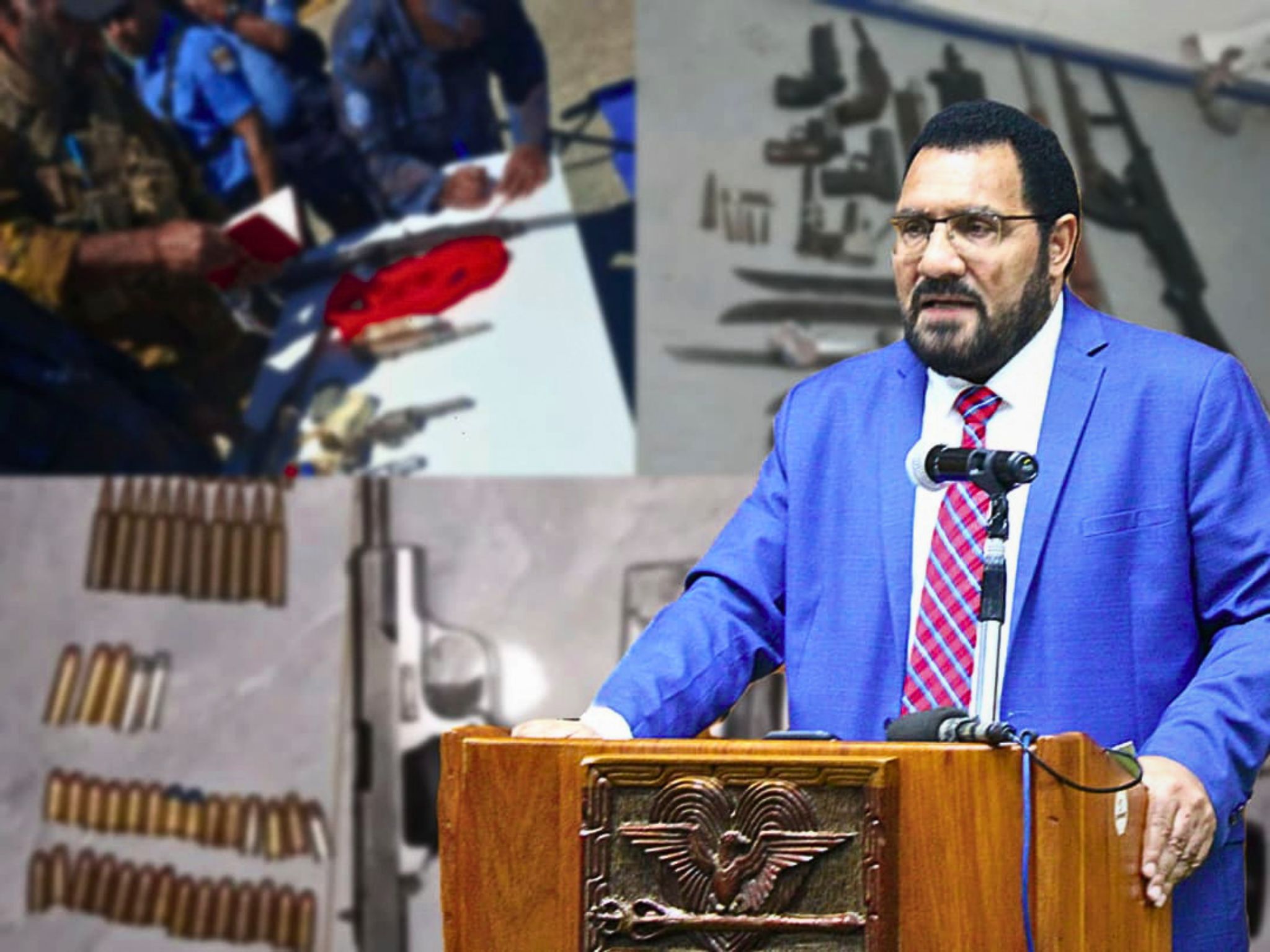
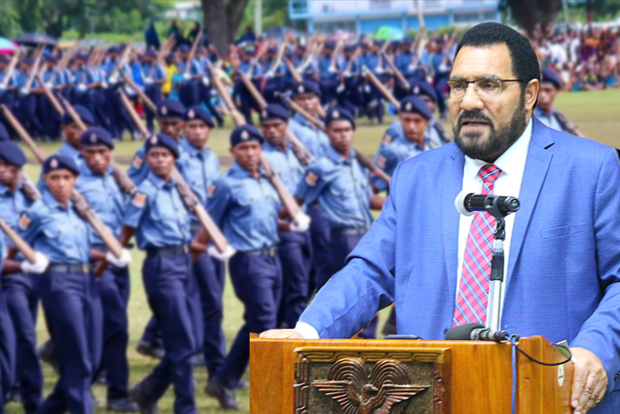
Commissioner David Manning has warned senior police officers that the upcoming National General Election will be one of the most demanding security operations the country has faced, requiring strong leadership, careful planning, and strict commitment to neutrality.Speaking at the 2027 RPNGC National General Election planning meeting, Commissioner Manning said election security was not a new responsibility for the Constabulary, with many senior officers involved in the room having previous experience managing election operations.However, he said the operating environment had changed significantly since the 2022 National General Election, with the country facing a growing population, an increased number of electorates, and greater logistical and security demands.Manning said the role of police during elections was clear to provide a safe and secure environment that allows citizens to exercise their democratic rights."Our policy is to provide an environment that is safe and secure to conduct elections. It is our responsibility to allow an opportunity or enable people to exercise their rights to cast their votes," he said.The Commissioner stressed that police must remain independent and neutral, saying the RPNGC’s role was not to influence election results or determine how elections should be conducted."It is not for us to determine outcomes. It is not for us to determine how elections should be conducted. Ours is a neutral and enabling partnership with electoral commission ," he said.Commissioner Manning said lessons from the 2022 National General Election must be openly examined, including concerns and allegations of impropriety raised against different agencies involved in the electoral process.He said those discussions were necessary to identify weaknesses and strengthen preparations for the next election."The truths and conversations from our previous debrief are things we need to discuss fully again," Manning said.The Commissioner also highlighted the importance of a strong working relationship between the RPNGC and the Electoral Commission, particularly following the appointment of a new Electoral Commissioner.He said early communication between police planners and electoral officials would be critical to ensuring both institutions understand each other's responsibilities, capabilities and limitations."Open communication lines between yourselves and your Electoral Commission counterparts ensure that there is clarity in what we plan to do, but most importantly ensuring that we understand each other, our capabilities and our constraints," he said.Manning said failures in coordination during the 2022 election created operational difficulties, particularly in parts of the Highlands, where decisions by electoral officials and police counterparts were not always aligned with broader security plans.He warned that similar situations must be avoided through stronger planning from the beginning."Greater alignment in what the Electoral Commission wants to do and how we plan to support that needs to be determined from day one," he said.The Commissioner acknowledged that preparing for the election would place significant pressure on RPNGC resources, including personnel, logistics and funding.He said the Constabulary was working closely with government agencies, including Finance and Treasury, to address resource challenges ahead of the election period."Nine months away is far from a comfortable position. I am well aware of the timelines and what you need on the ground," Manning said.He warned commanders that election operations would test not only their ability to manage large deployments but also their judgment and leadership."I remind you, one bad decision by one of you in this room can have catastrophic results," he said.Manning urged provincial commanders, directors and senior officers to rely on their experience and expertise, saying the election period was not the time for inexperienced leadership.He also cautioned officers that police would face intense public scrutiny during the election period, including allegations of bias, corruption or interference.The Commissioner said accountability would be a key focus, with senior officers expected to uphold leadership standards and demonstrate that the Constabulary remains committed to a credible and democratic electoral process."As far as expectations are concerned, next year will be slightly different. Accountability will be critical," he said.Commissioner Manning said the success of the 2027 National General Election would depend on cooperation between institutions, proper resourcing, and the professionalism of those entrusted with protecting the country's democratic process.
Published on July 7, 2026
BORDER COMMAND FLAGS SIGNIFICANT CHALLENGES AHEAD OF ELECTION BORDER COMMAND FLAGS SIGNIFICANT CHALLENGES AHEAD OF ELECTION
The Royal Papua New Guinea Constabulary’s (RPNGC) Border Command is prioritizing mobility, manpower and logistics planning as preparations intensify for upcoming national security operations linked to the electoral period.Acting Assistant Commissioner of Police for Border Command, Steven Francis, said the main challenges facing the command are mobility, manpower and funding on elections period.At Border Command level, which covers Western Province and parts of the Pacific and Indonesia border areas, Francis said all Provincial Police Commanders have already developed their election security plans.However, he said terrain and access remain the biggest operational obstacle.“Our major challenge will be mobility. In our Border Command area, most of our locations are along the Fly River and Sepik River systems. So in terms of mobility, that is my number one challenge,” he said.He said planners must first determine which polling areas are accessible and what form of transport will be required.“I have to ensure I have the right logistical support. I have to find out in all those districts, LLGs and wards, which polling areas are accessible. What means of transport will it be? Will it be by boat, air or land? That is the most important thing,” Francis said.He said operational planning is heavily dependent on mobility mapping before deployments can be finalised.“My planning will revolve around mobility. So, identifying those locations is my first challenge,” he said.Francis said manpower allocation is the next major concern, particularly in ensuring adequate personnel are deployed to remote polling locations.“Once I identify how many wards and polling stations there are, my other major challenge is ensuring I have the personnel, the manpower, that I have to deploy according to those polling places,” he said.He said additional personnel will be required from other police sectors and provinces to support operations.“Our provinces will be supported by additional manpower from police sectors or from other provinces in terms of our response. So those are my two main challenges, personnel and mode of travel,” he said.Francis said funding availability and timing will also be critical to ensure deployments are carried out effectively.He also reflected on lessons learned from the 2022 National General Election, where more than 10,000 security personnel were deployed nationwide.“Based on the 2022 general election, I was part of the planning coordination section. We had roughly 10,000 plus security personnel deployed,” he said.He said a similar number is expected for future operations, involving personnel from the Royal Papua New Guinea Constabulary, the Papua New Guinea Defence Force and Correctional Services under the Joint Security Task Force framework.Francis said effective coordination, timely funding and reliable transport logistics will be key to ensuring successful operations in difficult and remote terrain across the Border Command area.However, he said one of the biggest operational challenges remains access to remote polling locations.“our major challenge will be mobility. In our Border Command area, most of our locations are along the Fly River and Sepik River systems. Mobility is my number one challenge,” he said.He said planners must determine which polling areas are accessible and what transport systems will be required.“I have to ensure I have the right logistical support. I have to find out in all those districts, LLGs and wards, which polling areas are accessible, and whether transport will be by boat, air or land,” he said.Francis said operational planning depends heavily on identifying terrain and transport access before deployment decisions can be finalised.“Once I identify how many wards and polling locations there are, my next challenge is ensuring I have the personnel to deploy to those areas,” he said.He said manpower allocation remains another major challenge, particularly in coordinating support from other police units and security agencies.“Another major challenge is ensuring we have personnel and funding in place to deploy officers on time. Our provinces will be supported by additional manpower from police sectors and other provinces,” he said.Francis said lessons learned from the 2022 National General Election are helping guide current planning efforts.“Based on the 2022 election, I was part of the planning coordination section. We had roughly 10,000 plus security personnel deployed,” he said.He said similar numbers are expected again for upcoming operations, involving joint deployment of the Royal Papua New Guinea Constabulary, Papua New Guinea Defence Force, and Correctional Services under the Joint Security Task Force framework.Francis said effective coordination, timely funding, and reliable transport logistics will be critical to ensuring successful deployment across difficult terrain and remote communities.
Published on July 6, 2026
HULA JUNIOR HIGH SCHOOL PREPARES FOR TERM THREE UNDER EL NIÑO DRY CONDITIONS HULA JUNIOR HIGH SCHOOL PREPARES FOR TERM THREE UNDER EL NIÑO DRY CONDITIONS
As schools begin Term Three today, Hood Point Junior High School in Hula, Central Province is preparing for lessons while also awaiting further guidance on how to manage ongoing El Niño dry condition, which has already caused brown vegetation and dusty soil across the area.Speaking to PNG Haus Bung, Principal Simon Suji said the school has not yet finalised a full response plan but will work with staff and senior management to develop measures to manage the dry conditions while teaching continues.“With the second term ending, we didn’t feel much effect of El Niño. But now as we return for Term Three, we have to sit down with academic staff and senior executives of the institution and plan how we can manage the effects of El Niño while school operations continue,” he said.During Term Two, students were advised to carry water bottles due to dry conditions; a measure the principal said will continue while longer-term solutions are being developed.The school currently relies on a Southern Cross water supply system powered by solar energy, which the principal said is not sufficient for daily needs and has called for additional support.“We have only one source of power and we would like to connect Southern Cross to PNG Power so that we have water running through the staff area on a daily basis,” he said.The school has also implemented contingency measures, including three bore-water tanks to support teacher accommodation and water supply. However, with months of no rain, water levels have continued to drop.“With the last lot of rains, we experienced about two to three months back, we still had some water left and now we are down to two tanks,” he said.Principal Suji said the school’s coastal location is worsening the situation, with sandy soil becoming increasingly dry and dusty during the prolonged dry season.“With the El Niño effects, unlike other schools, this is a coastal school, and our soil is made up of sand. So now with the dry conditions the entire country is facing, we tend to have more dust around, even getting into the classrooms,” he said.He added that the dust conditions may also pose health concerns for students and staff as the dry season continues, with the school now closely monitoring the situation while developing further response plans.
Published on July 6, 2026
KUMUL ORGANICS EXPANDS INTO CITY PHARMACY TO SUPPORT RURAL COCONUT FARMERS KUMUL ORGANICS EXPANDS INTO CITY PHARMACY TO SUPPORT RURAL COCONUT FARMERS
What began as a small business idea in Madang, Wagal Settlement to help rural coconut farmers earn an income has grown into one of the country's emerging skincare brands, with Kumul Organics now becoming the latest SME to secure retail space through CPL Group's WE PNG BUY PNG program.Founded by 2020 PNG SME Award winner Tina Manamb, Kumul Organics officially launched its range of coconut oil infused skincare products at City Pharmacy's Waigani Central branch on Friday, marking a major milestone in a seven- year journey that started with training village communities to produce virgin coconut oil.For Ms. Manamb, the achievement represents more than business success. It is the culmination of years spent working with rural coconut growers and building a value chain that connects village producers directly to urban consumers."Every bottle here tells a story," Ms. Manamb said."It is a story of hardworking coconut growers in rural communities where they have the resource and they have to make money. That is where Kumul Organics goes and buys the coconut oil."She said every purchase helps support rural livelihoods while creating opportunities for families involved in coconut production."Your purchase creates income, supports livelihoods, encourages sustainable agriculture and gives hope to people in rural coconut-growing communities. I encourage everyone to buy a coconut oil from Kumul Organics and be part of us as we grow together."Originally from Madang and East Sepik and married into a family from Gulf Province, Ms. Manamb said her business was inspired by the abundance of coconuts available in rural communities and the untapped potential of virgin coconut oil."We started from Madang. We used to buy coconut oil from communities," she told PNG Haus Bung."When I did research on coconut oil and virgin coconut oil, I saw that we could create body oils, shampoos and other cosmetic products. Madang has plenty of coconuts, so I started training communities on how to produce coconut oil."She said the business first sold products at Madang's Market before securing shelf space with Madang Butchery, its first retail partners.As demand grew, Ms. Manamb relocated to Port Moresby and temporarily paused operations to better understand the capital city's market."Last year I rested the business because I had to do market research and understand how to adapt to the Port Moresby lifestyle," she said.The business resumed operations in March this year, sourcing virgin coconut oil from her husband's village in Gulf Province."I sourced the oil from my husband's village. The coconut oil travels by boat for about two hours and then by PMV for six hours to Port Moresby. We do the infusions, packaging and labelling here."Ms. Manamb credits much of the company's recent growth to social media marketing, which helped attract the attention of CPL Group."I created content on my page and advertised our five infused oil products online. The advertisement reached many people and eventually CPL reached out to us."She said discussions with CPL progressed quickly."We had our first meeting, then a second meeting, and after that they told us to come in and sign. This is a big opportunity for us because we're working with farmers and ultimately, we want our products to sell. CPL helps complete that supply chain."Under the partnership, Kumul Organics products are now available through selected City Pharmacy outlets, giving customers easier access to the brand while expanding market opportunities for rural suppliers.CPL Group Chief Executive Officer Ajay Patel said supporting local producers remains a key focus of the company's WE PNG BUY PNG initiative."We don't import coconuts. They are grown abundantly right here in Papua New Guinea," Mr. Patel said."Our supply comes from local farmers and growers, and we take pride in fostering long-term partnerships with local SMEs that strengthen communities and create shared value."He said the partnership demonstrates how locally sourced products can successfully move from village production into mainstream retail markets.The Kumul Organics range includes virgin coconut oil infused with noni, ginger, carrot, turmeric and lemongrass, all sourced and manufactured in Papua New Guinea.For Ms. Manamb, the products represent something much bigger than skincare."Access to commercial markets is often the biggest challenge for local producers, so we are grateful to CPL for this partnership," she said."We believe it completes the value chain we have built, connecting rural farmers with commercial markets and enabling sustainable growth."Today, Kumul Organics products are stocked at City Pharmacy Waigani Central, City Pharmacy Waigani Showroom and City Pharmacy Vision City, creating new opportunities not only for the business itself, but also for the rural coconut growers whose work continues to form the foundation of the brand's success.
Published on July 4, 2026
PNG FIJI BUSINESS COUNCIL EYES NEW MARKETS, JOBS AND SMALL BUSINESS GROWTH PNG FIJI BUSINESS COUNCIL EYES NEW MARKETS, JOBS AND SMALL BUSINESS GROWTH
After holding its first formal meeting at the Fiji High Commission in Port Moresby earlier this week, the newly established Papua New Guinea Fiji Business Council (PNGFBC) has outlined plans to help small businesses access new markets, create employment opportunities, strengthen workforce skills and deepen trade between Papua New Guinea and Fiji.The Council, established through an initiative led by Fiji's High Commissioner to Papua New Guinea, His Excellency Jackson Bernard Nato Evans, with the support of CPL Group Founder and Chairman Emeritus Sir Mahesh Patel, was formed to strengthen trade, investment, business partnerships and people to people ties between the two Melanesian nations.Following the inaugural meeting, Sir Mahesh said the Council was created to deliver practical outcomes that benefit businesses in both countries."The High Commissioner came here last year with a clear vision to improve trade; thus, it was refreshing to hear a diplomat talk about practical ways to strengthen business ties between Fiji and Papua New Guinea," Sir Mahesh said.He said one of the Council's key priorities is helping small and medium sized businesses expand beyond their local markets."We wanted a council that could help a small business owner who has a product but doesn't know where to start. They should be able to approach the Council, and we help connect them with businesses in Fiji that may want to buy their products."Sir Mahesh said the Council intends to focus on achievable initiatives that deliver measurable results."I didn't want us to talk about big plans and then do nothing. We want to focus on two or three achievable objectives that will genuinely improve trade and cooperation."Beyond trade, he said Council members are also exploring opportunities to develop a skilled workforce that can support growing industries in both countries, particularly tourism and hospitality."Papua New Guinea has a young and growing workforce. Instead of only sending people overseas for seasonal work, why not establish hospitality training here so Fiji can recruit trained Papua New Guineans? Then, as tourism grows in Papua New Guinea, we already have a skilled workforce ready."Sir Mahesh also believes Papua New Guinea has significant potential to increase agricultural exports to Fiji."We have fertile land and excellent produce. People from Fiji have told me they've seen high-quality broccoli in the Highlands and asked why we aren't exporting it. The challenge isn't production. It's building the transport, storage, and supply systems needed to get products to market."He said the country should continue investing in industries that can provide long-term economic opportunities beyond the resource sector."We cannot rely on mining forever. One day the minerals will be gone, but agriculture can continue to create wealth for generations if we invest in the right infrastructure."The Council has appointed MRDC Chief Operating Officer Vele Rupa as its inaugural President, with Rina Antonio Jang serving as Secretary and Yogesh Sammy as Treasurer. Sir Mahesh said the leadership team reflects the Council's commitment to ensuring both Papua New Guinea and Fiji are equally represented.While still in its early stages, he expressed confidence that the Council would become a practical platform for business collaboration between the two countries."It's only the beginning, but we've assembled a strong team of volunteers who are committed to making this work. If we can improve trade, strengthen business partnerships, and develop our people, we'll have achieved something meaningful for both countries."The Papua New Guinea Fiji Business Council will work closely with governments, business organizations and the private sector to strengthen trade, investment and economic cooperation while creating new opportunities for businesses and communities in both countries.
Published on July 3, 2026
IFES OFFICIAL STRESSES ADEQUATE FUNDING AS KEY TO SAFE 2027 ELECTIONS IFES OFFICIAL STRESSES ADEQUATE FUNDING AS KEY TO SAFE 2027 ELECTIONS
International Foundation for Electoral Systems (IFES) Senior Country Director Michael Yard has stressed that adequate funding for both the Papua New Guinea Electoral Commission (PNGEC) and the Royal Papua New Guinea Constabulary (RPNGC) will be critical to delivering a safe and credible 2027 National General Election.Speaking to the media following the opening of the Joint Election Security Workshop on Wednesday 01st, Yard said Papua New Guinea's election security challenges reflect a growing global trend where political leaders refuse to accept election results, often triggering unrest and violence.Drawing on his experience supporting elections in more than 50 countries, Yard said peaceful elections depend not only on planning but also on political acceptance of legitimate election outcomes."Over the last decade or longer, I've seen a trend. I have worked in elections in more than 50 different countries as an adviser, and I know that in some countries' security is not a major issue. Elections are just organized, people follow the rules and the laws, and there's very little violence after elections."He said such examples are becoming increasingly rare."Unfortunately, over the last decade or longer, I've seen a trend towards politicians never accepting the outcome of an election. If I won, the election was free and fair, and if I didn't win, then the election was not fair."Yard said political leaders who reject election results often encourage supporters to challenge the outcome, sometimes resulting in violence."By failing to accept the outcome of elections, it is a way of inciting followers and supporters of that candidate or political party to object, sometimes in volatile and violent ways. In Papua New Guinea, that's a pattern over the last several election cycles."He said while careful planning between election authorities and security agencies is essential, planning alone cannot guarantee election security without sufficient financial support."It's ultimately important that there's adequate planning but planning alone isn't going to really do it."Referring to the recent Local-Level Government elections, Yard said both the police and the Electoral Commission faced significant operational challenges because of limited funding."One of the patterns that we saw in the LLG elections was that the police were underfunded and did not have an adequate presence out in many of the provinces. The Electoral Commission also was underfunded and didn't have enough staff to really manage and control that."He said sustained government investment in both institutions will be essential if election security plans are to be effectively implemented."Funding for both institutions is absolutely critical. No matter how much planning the institutions undertake, if they don't have the funding to implement those plans, then it's impossible to provide adequate electoral security."The three-day Joint Election Security Workshop will end today July 3rd and it has been facilitated by IFES under its Enabling a Peaceful Environment to Administer Credible Elections (E-PEACE) program, brings together senior officers from the RPNGC and PNGEC to strengthen security coordination ahead of the 2027 National General Election.
Published on July 3, 2026
STRENGTHENING ELECTION SECURITY PREPARATIONS AHEAD OF 2027 NGE STRENGTHENING ELECTION SECURITY PREPARATIONS AHEAD OF 2027 NGE
Preparations for the 2027 National General Election (NGE) took a significant step forward today with the commencement of a three-day Joint Election Security Workshop involving the Papua New Guinea Electoral Commission (PNGEC) and the Royal Papua New Guinea Constabulary (RPNGC) at the Holiday Inn, Port Moresby.The workshop, facilitated by the International Foundation for Electoral Systems (IFES) under its Enabling a Peaceful Environment to Administer Credible Elections (E-PEACE) program, aims to strengthen coordination between electoral officials and police to ensure next year's National General Election is safe, credible and trusted by the people of Papua New Guinea.The workshop brings together Provincial Police Commanders (PPCs), Assistant Commissioners of Police (ACPs), and officers from the PNG Electoral Commission to improve operational planning and coordination before, during and after the election period.Opening the workshop was Acting Electoral Commissioner Ms. Margaret Vagi, who welcomed the senior police officers and emphasized that election security cannot be achieved by a single institution."Election security is not the responsibility of one institution alone. No single agency can deliver a secure election. It depends on close, continuous collaboration between the PNG Electoral Commission and the police at every level. When we work together, we are stronger. When we operate separately, gaps emerge that can undermine the entire process."Supporting the Acting Electoral Commissioner's remarks, Acting Assistant Commissioner for Border Security, Steven Francis, said the workshop provides an important opportunity for both agencies to strengthen their operational partnership."There must be collaboration between the two agencies, so this workshop itself is to ensure the fine-tuning of our security preparation. We all know that the Electoral Commission is the mandated organization that takes the lead in the electoral process, while for us police, our main role is to provide security and make sure the environment is conducive for the election to proceed."He said bringing together Assistant Commissioners and Provincial Police Commanders would strengthen cooperation at provincial and district levels."One thing is to understand who the Electoral Manager is on the ground and who the Provincial Police Commander is on the ground so that this collaboration at the local level, district level and provincial level is something we should have done a long time ago. Workshops like this pave the way."The workshop highlighted that while the Electoral Commission and the Royal Papua New Guinea Constabulary have separate statutory responsibilities, both institutions are closely interconnected and must operate as one coordinated system.Under this arrangement, the Electoral Commission administers the election process in accordance with the law, while police provide the security and law and order necessary to ensure elections are conducted safely and without disruption.IFES Senior Country Director Michael Yard, who has supported elections in more than 50 countries, shared international experiences and stressed the importance of early security planning."I know that in some countries security is not a major issue. There is very little violence after elections, but unfortunately that has become rarer. Over the last decade I have seen politicians never accepting the outcome of elections and, by failing to accept the results, inciting supporters and political parties to object, sometimes causing followers to act violently. That is why planning is critically important."The Joint Election Security Workshop will run from July 1 to July 3, bringing together senior police commanders and Electoral Commission officials to strengthen inter-agency coordination ahead of the 2027 National General Election.
Published on July 1, 2026
WAU WARIA BOOSTS FINANCIAL INCLUSION WITH NEW BANKING SERVICES AND THREE YEAR PARTNERSHIP WAU WARIA BOOSTS FINANCIAL INCLUSION WITH NEW BANKING SERVICES AND THREE YEAR PARTNERSHIP
Residents of Wau Waria District, in Morobe Province are set to benefit from expanded access to banking services and financial education following the opening of a new Mama Bank Access Point and the signing of a three-year Memorandum of Understanding (MoU) aimed at strengthening financial inclusion across the district.The twin initiatives, launched during Bank of Papua New Guinea Governor Elizabeth Genia's visit to the district, mark a significant step towards improving access to formal banking while equipping communities with the knowledge and skills to better manage their finances, grow businesses and participate in the formal economy.The official opening of the new Mama Bank Access Point returns formal banking services to Wau after many years, providing residents with access to EFTPOS and ATM services without the need to travel long distances to conduct basic banking transactions.Governor Genia described the occasion as more than the launch of a banking service."It is a celebration of opportunity, partnership and the determination of the people of Wau Waria to build a stronger future for their families and communities. Today is also significant because it marks the return of formal banking services to Wau after many years."She said access to financial services is fundamental to improving livelihoods and creating opportunities for individuals, businesses and communities."Fair access to financial services allows people to save safely, manage their money more effectively, build businesses, invest in productive activities and prepare for the future."Governor Genia also commended Mama Bank for extending banking services to people who have traditionally faced barriers to the formal financial sector, particularly women, small business operators, market vendors and rural communities.She said when women gain access to financial services, the benefits extend well beyond individual account holders, strengthening families, businesses and communities.Complementing the opening of the new banking services, Governor Genia, in her capacity as Chair of the Centre for Excellence in Financial Inclusion (CEFI), formally signed a three-year Memorandum of Understanding with the Wau Waria District Development Authority.The partnership will focus on expanding financial inclusion through financial literacy training, business skills development, additional banking access points and greater access to financial services for women, young people and rural communities.Governor Genia said financial inclusion is about much more than simply providing access to bank accounts."The signing of a Memorandum of Understanding between the CEFI and the Wau Waria DDA is a partnership that reflects this shared commitment to improving financial inclusion across the district through practical initiatives such as financial literacy training, business skills development, expansion of banking access points, and greater access to financial services for women, young people and rural communities."She said empowering people with financial knowledge is just as important as providing banking services."Importantly, this partnership is not simply about opening bank accounts. It is about building the knowledge, confidence and opportunities that enable people to use financial services effectively to improve their livelihoods and achieve their goals."Governor Genia said the agreement provides a framework for long term collaboration between CEFI and the Wau Waria District Development Authority to ensure communities have both access to financial services and the confidence to use them safely and responsibly.She commended Wau Waria MP and District Development Authority Chairman Marsh Narewec for recognizing that economic development requires more than financial services alone.Governor Genia also welcomed the district's Cooperatives Capacity Building Program and the launch of the Kange Security Force, saying both initiatives complement financial inclusion by strengthening local enterprise, promoting community safety and creating an environment that encourages investment and economic participation.She further acknowledged Papua New Guinea's ongoing efforts to strengthen anti money laundering and counter terrorism financing measures, noting that the country's regulatory framework allows simplified banking requirements for low risk customers while maintaining the integrity of the financial system.Governor Genia said these initiatives work together to expand financial participation, improve livelihoods and create sustainable economic opportunities for communities throughout Wau Waria."Successful financial inclusion requires long term commitment, partnership and local leadership. The agreement we are signing today provides a framework for that collaboration and demonstrates a shared determination to ensure that the benefits of financial inclusion reach communities throughout the district."With formal banking services now restored and a long-term partnership in place to strengthen financial literacy and economic participation, Wau Waria is positioning itself to expand opportunities for families, entrepreneurs, farmers, market vendors and future generations across the district.
Published on June 30, 2026
AUS, NZ, UK & INTERPOL DONATE EQUIPMENT TO RPNGC INVESTIGATIONS AUS, NZ, UK & INTERPOL DONATE EQUIPMENT TO RPNGC INVESTIGATIONS
The Royal Papua New Guinea Constabulary (RPNGC) Interpol National Central Bureau has received a significant operational boost following the official handover of equipment under the Project Blue Pacific initiative at Police Headquarters in Konedobu Today June 26, 2026.Project Blue Pacific is a regional capacity building program led by INTERPOL aimed at strengthening law enforcement cooperation and enhancing efforts to combat transnational organized crime across eleven Pacific Island countries, including Papua New Guinea.The equipment valued at over K60, 000, was funded through contributions from the Australian Federal Police, New Zealand Police, and the United Kingdom’s National Crime Agency, reinforcing a trilateral commitment to regional policing cooperation.The handover highlighted the growing importance of digital connectivity and intelligence sharing across borders, particularly through INTERPOL secure systems and global databases that support real time investigations.New Zealand High Commissioner Ms. Georgina Roberts said the initiative reflects long-term commitment and coordination within the INTERPOL network.“What I wanted to acknowledge is also the commitment that has been demonstrated to continue to support the connectivity and cooperation, awareness and delivery of what it means to work together as part of the Interpol network.”“It does not just happen by chance, but takes engagement and commitment.”She said Papua New Guinea’s participation reflects the increasing importance of regional collaboration in addressing complex and evolving security threats.“We know that the challenges are large and increasing, and the connectivity between regional jurisdictions and also Interpol is a fundamental part of trying to address those challenges that are coming at us from many different angles.”Meanwhile, Australia’s representative Ms. Tessa Plueckhahn said the partnership strengthens operational cooperation and regional security outcomes.“This is crucial for supporting investigations both in Australia and across our region, and this work with Interpol is helping strengthen collaborative and mutually beneficial law enforcement partnerships that are essential in addressing transnational crime.”She added that integrating INTERPOL systems into frontline policing tools is critical for effective response.“This important work helps to integrate Interpol’s global capabilities into the law enforcement toolbox, ensuring Pacific partners like PNG can access the systems, information, and networks needed to protect our communities.”Representing the RPNGC Commissioner, Assistant Commissioner Hodges Ette, DPS QPM, acknowledged the partnership and its broader institutional impact.“We are grateful that the Commissioner’s request and nomination of myself and colleagues from Australia and Fiji was accepted, and those are efforts that the Commissioner looked at in part to the younger generation of officers coming, that we need to earn our mission and vision not only within the domestic scene but also international space through Interpol and transnational crime.”Furthermore, Commissioner Ette expressed his appreciation to partner agencies for their continued support.The ceremony concluded with acknowledgements to all partner agencies for their continued support in strengthening policing systems and enhancing regional security cooperation.
Published on June 30, 2026
CYBERCRIME SURGE EXPOSES NEED FOR MORE POLICE, STRONGER LAWS CYBERCRIME SURGE EXPOSES NEED FOR MORE POLICE, STRONGER LAWS
The country's growing cybercrime threat is exposing critical gaps in the Royal Papua New Guinea Constabulary's ability to investigate digital offences, with Head of Crime Division Assistant Commissioner Hodges Ette calling for more specialist officers, improved technology, and reforms to the country's Cybercrime Act.Assistant Commissioner of Police and Head of Crime Division Hodges Ette raised the concerns during an interview with PNG Haus Bung following the official handover of Project Blue Pacific equipment to the RPNGC Interpol National Central Bureau at Police Headquarters in Konedobu on Friday, June 26.ACP Ette said the Cybercrime Unit is operating with fewer than 10 officers despite the rapid rise in cybercrime and the misuse of social media across the country."The Cybercrime Unit is very small. There are about five personnel, and that is insufficient to serve the whole nation."He said the Constabulary is working towards decentralising aspects of cybercrime investigations by building the capacity of police stations to deal with less complex digital offences, while the specialist Cybercrime Unit at Seven Mile focuses on more sophisticated investigations."We are also working in collaboration with NICTA and DICT so that certain forms of cybercrime can be dealt with at the police station."ACP Ette said police are working closely with the National Information and Communications Technology Authority (NICTA), which in March donated much-needed equipment under a memorandum of understanding (MOU). Police are also working with the Department of Information and Communications Technology (DICT) to strengthen cybercrime investigations and improve the ability of frontline officers to respond to online offences.He also called for a review of the Cybercrime Act, saying the legislation requires stronger procedural provisions to better support investigators handling digital evidence while meeting constitutional requirements."We would also like to have a look at the Cybercrime Act. There are several provisions in there where the legislation does not come outright with specifications as to methods, processes and procedures."ACP Ette said the Commissioner of Police and the Minister for Police are expected to discuss possible amendments to strengthen the legislation and improve its implementation.Addressing the growing misuse of social media, he warned that many Papua New Guineans remain unaware that their online activities can amount to criminal offences."The trend of cybercrime is increasing in this country, and many of our people don't understand that when you make a post on Facebook or social media, there are consequences."He also raised concerns over weaknesses in SIM card registration and identity verification, saying stronger regulation of service providers would significantly assist police investigations."Why are we still having SIM cards without proper registration? Those are things that need to be addressed."ACP Ette acknowledged the recent donation of equipment under Project Blue Pacific, supported by the Australian Federal Police, New Zealand Police and the United Kingdom's National Crime Agency, saying the assistance would strengthen Papua New Guinea's capacity to combat transnational crime while supporting modern policing initiatives.However, he stressed that sustained investment in specialist investigators, modern technology and stronger legislation will be essential as Papua New Guinea continues to face increasingly sophisticated cyber threats in the digital age.
Published on June 29, 2026
CENTRAL PROVINCE INDUCTS WARD MEMBERS UNDER FIRST LLG LEADERS INDUCTION WORKSHOP SINCE 1995 REFORMS CENTRAL PROVINCE INDUCTS WARD MEMBERS UNDER FIRST LLG LEADERS INDUCTION WORKSHOP SINCE 1995 REFORMS
More than 280 newly elected ward members from across Central Province have begun a week-long induction program under the Central Province Local Level Government (LLG) Leaders Induction Workshop 2026, aimed at strengthening local governance and equipping local leaders with the knowledge and skills needed to effectively serve their communities.Speaking to PNG Haus Bung, Central Provincial Administration District and LLG Affairs Advisor, Guma Tau, said 283 ward members from the province's five districts are participating in the workshop, which runs from June 29 to July 3.Mr Tau said Central Province has a total of 288 ward positions, with five currently vacant following failed elections and the recent passing of a ward member.Participants are being accommodated at Gateway and Ponderosa Hotels while attending the weeklong workshop.He said the induction is designed to provide newly elected ward members with a better understanding of government systems, governance processes, leadership responsibilities, and their role in planning and delivering services at the ward level.Mr Tau described the Central Province LLG Leaders Induction Workshop 2026 as the first formal induction program of its kind for ward members since the introduction of the 1995 Local-level Government reforms."According to our records, ward members have never undergone a formal induction after being elected. This is the first time the province has brought all ward members together to receive structured training," he said.Mr Tau said the workshop began the previous week with the successful induction of LLG Presidents and nominated Provincial Assembly representatives before continuing this week with ward members.He said the province intends to make the induction workshop a standard program following every LLG election to ensure newly elected leaders are properly prepared before assuming office.A total of about 320 participants, including ward members, LLG managers, District Administrators, District Local Government Advisors, National Development Commission representatives, facilitators, and provincial officers, are taking part in the workshop.Mr Tau acknowledged the support of the Central Provincial Administration and the province's five district administrations, saying the program is jointly funded through a cost sharing arrangement.He also thanked the Acting Provincial Administrator and the Deputy Governor for committing funding to ensure all elected local leaders receive the training.Mr Tau said participants who successfully complete the workshop will receive certificates of participation in recognition of their commitment to strengthening leadership and improving local governance.He expressed confidence that the knowledge gained during the week-long induction would better equip ward members to return to their communities and provide stronger leadership, improve governance, and deliver more effective services to the people of Central Province.
Published on June 29, 2026