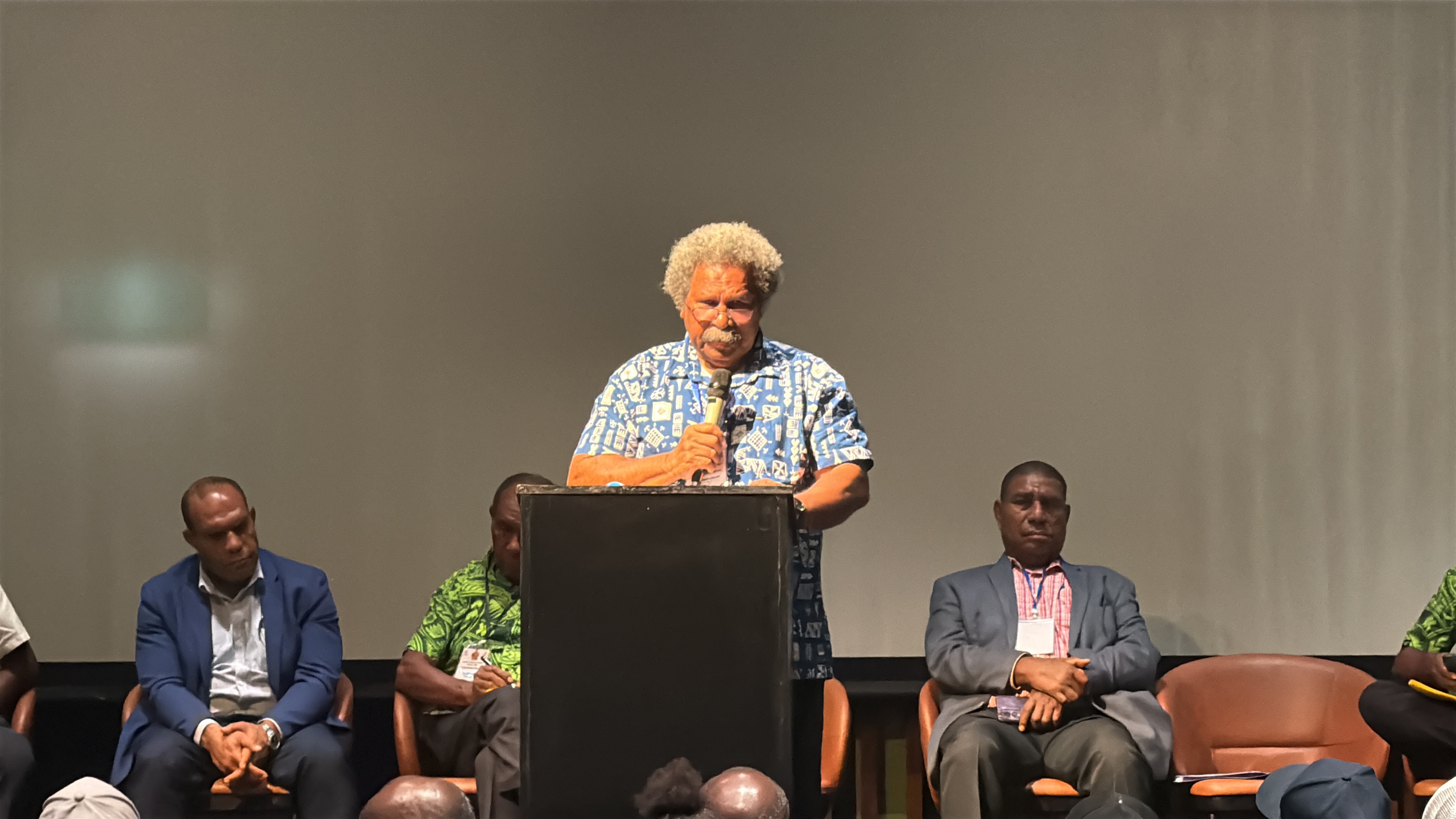

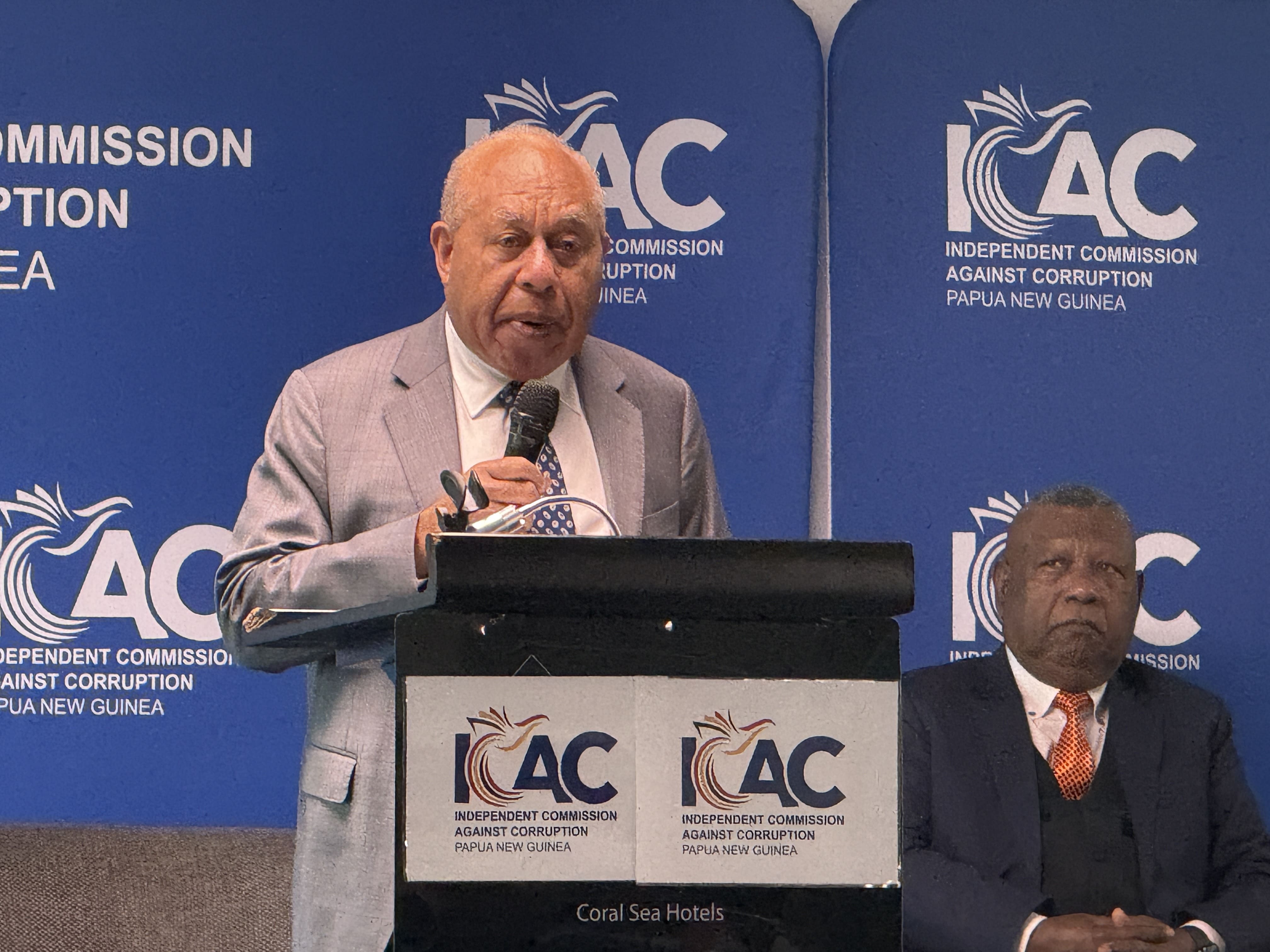
Provincial Administrators and other Provincial Executives from the Southern Region, received a reality check on their integrity, performance and leadership priorities during the Independent Commission Against Corruption (ICAC) Commissioners’ Breakfast held on Tuesday at the Gateway Hotel in Port Moresby.
Acting Commissioner Don. Sawong, in his opening remarks, emphasized that the role of ICAC deals with corruption in a criminal sense.
Although there may be different perspectives or meanings of common understanding of what the word “corruption” means, it is simply defined as the use of power and failure for personal benefit, rather than the benefit of the public.
Mr. Sawong reassured the administrators and other provincial officers that ICAC's role is not to interfere with their daily duties and responsibilities.
Instead, ICAC’s objective will assess and examine individuals on all practical levels and to investigate any form of practices that lead to corruption.
He noted that the provincial and Local Level Governments (LLGs) are at the forefront of delivering services to the people.
“In order for us to deliver better service, build strong institutions, and master public support and trust, we must avoid corruption and build integrity in the history that we administer.”
“50 years ago, government services were guided by integrity, loyalty, and discipline in how they conducted the business of government.”
“Government services were generally delivered through systems that were clear, that were structured, that were intended to serve the public.”
“Corruption existed, but the nature and spirit of that risk was either non-existent or very small.”
Over the years, the public administration has become more complex, where there were oversight, accountability, and administrative controls that have weakened, and gaps emerged.
“Those gaps have created opportunities for repetition, rivalry, conflict of interest, and abuse of authority.”
Mr. Sawong pointed out that corruption is no longer just a concept, as its consequences are visible every day in hospitals, schools, roads, and other public services.
It undermines national development, waste partner resources, and limits opportunities for the people.
“We cannot put an edged figure on the total value of family funds lost through corruption in Papua New Guinea.”
“But when we consider the value of government spending procurement, infrastructure, and public services affected by corrupt behavior over many years, the potential loss to the country is very significant, and could, and I dare say, run into billions.”
Furthermore, Mr. Sawong clarified that ICAC was established simply to be another government institution.
It was established to centralize the integrity of public administrations and ensure the public funds are used for their internal purposes and in the best interest of the nation.
Their role is to help ensure that the system processes and controls are effective in preventing the use of public resources, abuse of authority, and corrupt practices.
In addition, by preventing, reducing, and combating corruption, the commission helps ensure that the government serves with honesty, fairness, integrity, and responsibility.
In conclusion, Commissioner Sawong reiterated that provincial and district administrations are at the forefront of delivering government services effectively, fairly to the people.