

Kairuku District has drawn a firm line on the Papua LNG Project, demanding a bigger and fairer share of project benefits and warning that the district will not again be sidelined in a major resource development taking place within its traditional territory.
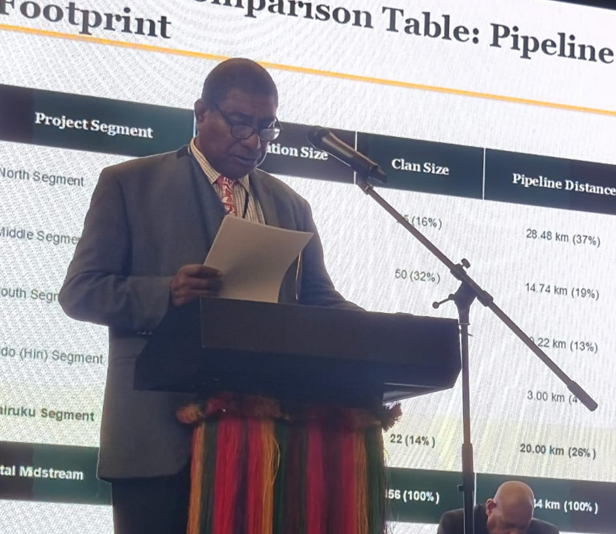
Energy Minister and Kairuku MP Peter Namea Isoaimo made the position clear at the Papua LNG Development Forum in Port Moresby on Friday (04 September 2026), presenting the District’s Proposed Benefit-Sharing Framework to the National Petroleum Authority, State representatives and project facilitators.
Mr. Isoaimo said Kairuku’s demands were based on its actual geographical, social, and economic footprint in the project, particularly its involvement in the offshore midstream pipeline corridor.
He said Kairuku had been disadvantaged during the earlier PNG LNG Project when it was part of the former Kairuku-Hiri District, claiming the district received no meaningful recognition in the project’s benefit matrix despite its geographical and traditional interests.
“We will never again allow ourselves to be written off, left out, or buried under the administrative shadow of another district,” Mr. Isoaimo told the forum.
Under its proposed framework, Kairuku wants Central Province to receive 40 per cent of the provincial benefit allocation, compared with the State’s initial proposal of 38 per cent, with the remaining 60 per cent allocated to Gulf Province.
At the Central provincial level, Kairuku is proposing a revised split of 45 per cent for the Central Provincial Government, 30 per cent for District Development Authorities, and 25 per cent for Rural Local Level Governments.
Mr. Isoaimo said the adjustment was intended to ensure a more equitable distribution of benefits and recognize the statutory responsibilities of DDAs in delivering services and infrastructure across their districts.
Kairuku is also proposing a 70:30 split between Hiri Koiari and Kairuku, giving Kairuku a 30 per cent share across the relevant district and LLG benefit allocations.
The district’s technical assessment puts its midstream footprint at 20 kilometres of offshore pipeline, representing about 26 per cent of the total midstream pipeline length. It estimates Kairuku’s apportioned capital expenditure at K2.86 billion, or 26.2 per cent of total midstream Capex.
The assessment identifies three affected villages, 22 recognized clans and about 8,084 residents, while also highlighting a substantial marine project footprint.
For landowners along the midstream pipeline, Kairuku has presented five possible benefit-sharing formulas based on factors including pipeline length, population, clan numbers, capital expenditure and spatial footprint. The proposed Kairuku landowner share ranges from 19 to 31 per cent, depending on the methodology applied.
Mr. Isoaimo said the figures were the result of 60 days of technical work involving engineering data, clan census information, and geographic mapping.
“Kairuku is not asking for special treatment, nor are we asking for charity,” he said, insisting the district was seeking what it regarded as its fair and legally earned share of the Papua LNG Project.
Kairuku is expected to formally submit its detailed counterproposal to the National Petroleum Authority and facilitators as the Papua LNG, benefit-sharing negotiations continue.