Posts by Tasminnie ISIMELI | PNG Haus Bung
POSTS BY AUTHOR
Tasminnie ISIMELI
Author

Tasminnie ISIMELI

PNGDF CHIEF CALLS FOR STANDING RUGBY TEAMS TO RESTORE SPORTING PRIDE
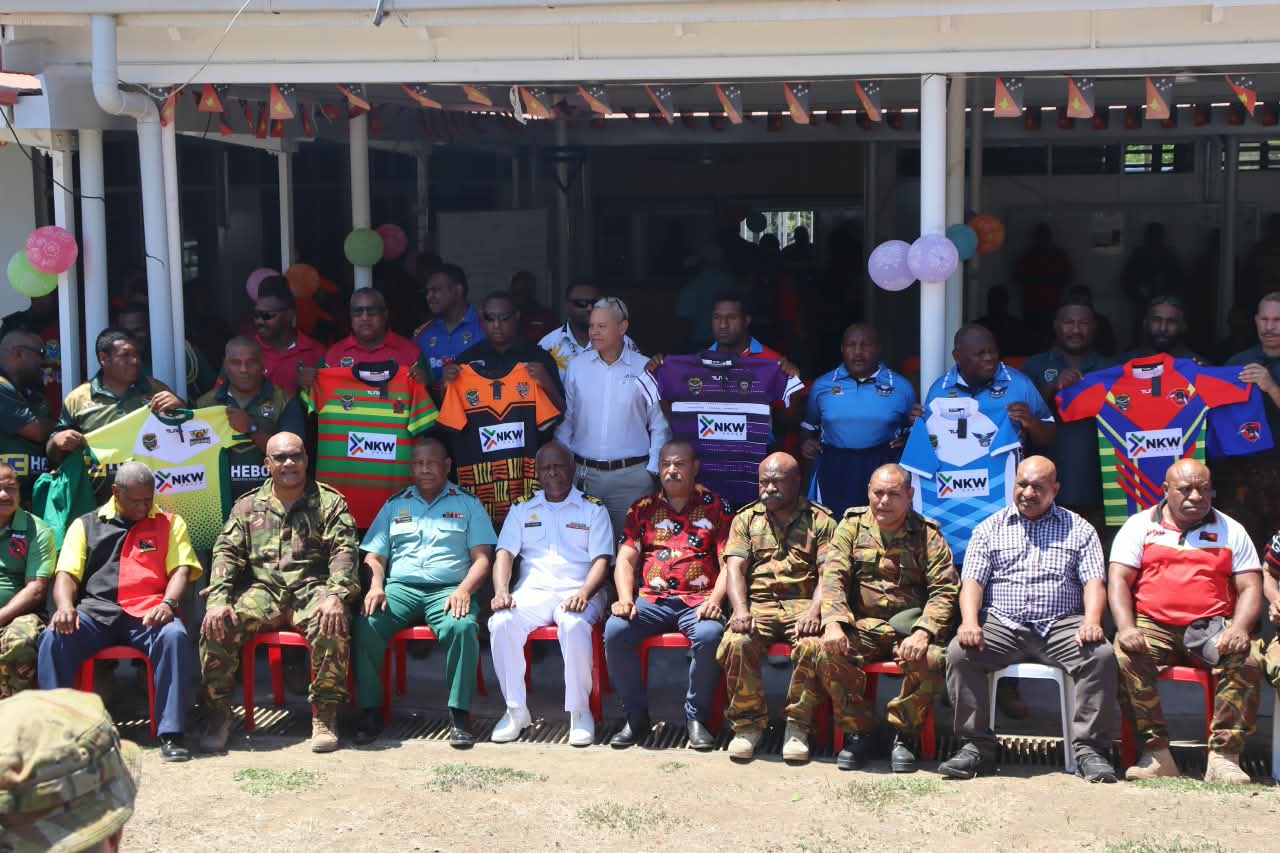
Chief of Defence Force Rear Admiral Philip Polewara has called for the establishment of permanent Papua New Guinea Defence Force rugby union teams as part of efforts to improve fitness and restore the force’s sporting reputation.Speaking at the PNGDF rugby tournament, Rear Admiral Philip Polewara said the Defence Force had historically dominated athletics, rugby league and rugby union, but that was no longer the case.He has directed the Defence Force leadership to establish standing 15-a-side and sevens rugby union teams, including a women’s team.“After this tournament, Deputy Commander, I want to see the seven (7) rugby union Defence team standing. Rugby union Defence, 15 men’s team standing and women’s too,” he said.Rear Admiral Polewara said maintaining permanent teams would also require Defence personnel to remain physically fit throughout the year, rather than only training when tournaments were approaching.He said declining participation in sport was contributing to poor fitness among personnel and highlighted the need for members to take greater responsibility for their physical wellbeing.“You have to keep yourself fit. I don’t control your fitness. I don’t control the tracks. I don’t control the ropes. They are within your control. Find time,” he said.He also challenged commanding officers to ensure both male and female personnel remained fit and ready to represent the Defence Force when called upon.Major General Polewara said the Defence Force should also aim to produce athletes capable of representing PNG at the highest level, including the national men’s and women’s rugby teams.“I want to see after this game going forward, some of our members to be in the Kumuls, some of our members to be in the Kukus, and that is the highest we can go,” he said.He said the same approach was being applied to military training, pointing to recent paratrooper training where 11 of 20 personnel successfully qualified, with another group expected to undertake training in November.Major General Polewara said Defence personnel were highly educated and capable of competing with human resources around the world.“So, let’s show the world we are no longer in the caves. We are out there with the rest of the world moving forward,” he said.He also reminded teams that while competition and rivalry were important on the field, personnel remained part of one Defence Force once the game ended.“Whatever happens on the field, I leave it to the teams and the COs. I’m referring to the rivalry on the field. Leave it on the field. Once you come out, we are one Defence Force,” he said.Major General Polewara thanked the tournament sponsors for supporting the event, particularly during difficult economic times.He also acknowledged the service of Defence personnel during the Black Wednesday events in Port Moresby, saying the support from businesses was one way companies were recognising the role of soldiers in protecting businesses and communities during the unrest.He urged players to compete safely, work together and uphold the Defence Force’s leadership values.“If you play individually, I doubt it. It is a team effort. But play safe and all the best, everyone, and God bless you,” he said.
Published on September 15, 2026
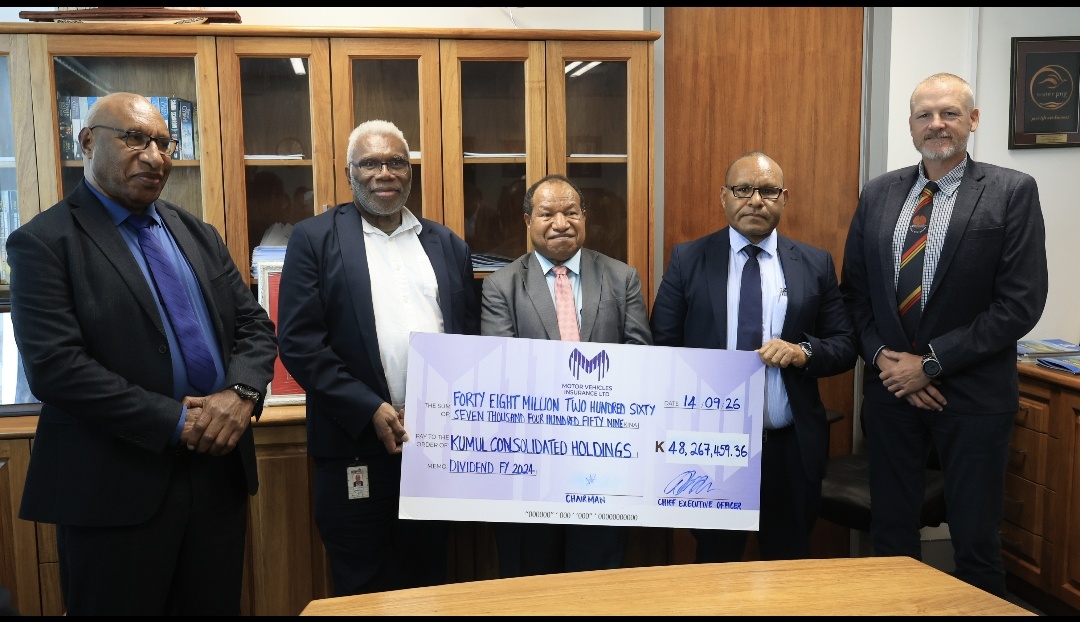
MVIL PAYS DIVIDEND TO KCH
Motor Vehicle Insurance Limited has declared a K48.2 million annual cash dividend to Kumul Consolidated Holdings, following strong performance in its 2024 financial year.The MVIL Board declared a dividend of K1.44 per share, amounting to K48,267,459.36, at its meeting on September 2, 2026.The dividend is being paid to KCH, MVIL's shareholder, in line with the shareholder dividend policy and the company's achievement of its performance targets.MVIL Chairman Dr John McKup said the dividend reflects the company's strong financial position and continued performance across its business operations.“Our investment portfolio and our core third-party motor vehicle insurance business continues to perform strongly,” Dr McKup said.He said this has been achieved through “prudent underwriting discipline, claims management and sound financial stewardship.”Dr McKup said the K48.2 million dividend reflects both MVIL's strong capital position and its commitment to providing sustainable returns to the State.“This $48.2 million dividend reflects two things. One is MVIL's solid capital position. And second, our commitment to delivering sustainable returns to the shareholder while maintaining the financial strength required to meet our obligations to every third-party policyholder across Papua New Guinea,” he said.The dividend is based on 50 percent of MVIL's Net Operating Profit After Tax for the 2024 financial year, excluding revaluation gains.Dr McKup said the dividend was also supported by a solvency assessment conducted by Deloitte. He said MVIL's financial performance demonstrates the importance of maintaining strong internal controls and responsible financial management.“This result is built on discipline, basically,” Dr McKup said.The latest payment brings MVIL's dividends to KCH over the past three years to K128.038 million. MVIL paid K36.839 million in dividends in 2022 and K42.931 million in 2023.Dr McKup said the company's continued dividend payments demonstrate the board's focus on profitability, good governance and creating long-term value for the State.“The fact that MVIL has paid dividends for many consecutive years is a testament to the board's focus, consistent profitability, good governance and long-term value creation for the State,” he said.He said MVIL's mandate remains focused on protecting motorists through compulsory third-party insurance while maintaining its financial capacity to meet policyholder obligations.“Our mandate is clear and that is to provide protection to motorists and ensure regulatory compliance with the Insurance Commissioner and ICCC and deliver quality services to the people of Papua New Guinea,” Dr McKup said.KCH Managing Director Professor David Kavanamur said MVIL has demonstrated strong financial discipline through its consistent dividend payments to the State.He said KCH has strengthened the process around dividend payments, including requiring state-owned enterprises to hold Annual General Meetings, declare dividends and complete solvency assessments and audited accounts before payments are made.Professor Kavanamur thanked MVIL's board and management for maintaining the company's dividend record.The K48.2 million cheque was presented by Dr McKup to Professor Kavanamur in Port Moresby in the presence of State-Owned Enterprises Minister William Duma.The dividend is scheduled to be paid to KCH on September 15, 2026.
Published on September 14, 2026
FORMER PNGDF OFFICER GIVES BACKING TO FSB TIGERS
For Murray Oa, supporting the Force Support Battalion (FSB) Tigers in this year’s PNG Defence Force Commander’s Cup is about more than putting a company name on a rugby jersey.It is personal.Oa, the Managing Director of Zero Alpha Group and a former PNG Defence Force officer, knows what the Commander’s Cup means to servicemen. He played in the competition during his time in the PNGDF before later moving into coaching.His connection with military rugby continued in 2019 when he was part of the coaching staff of a PNGDF select team that competed at the Defence Force International Rugby competition in Tokyo, Japan.So, when the FSB Tigers approached Zero Alpha Group for support ahead of this year’s Commander’s Cup, Oa said it was an easy decision.“When FSB approached Zero Alpha Group for assistance, I did not hesitate to support the team,” he said.Oa then reached out to BeSelect Transport Managing Director Victor Aisa, who also has longstanding connections with members of the PNGDF, and invited him to come on board as a sponsor.Together, Zero Alpha Group and BeSelect Transport are backing the Tigers as they prepare for the 2026 Commander’s Cup, which runs from September 15 to 28.For Oa, the sponsorship is a way of giving back to an institution and a competition that played an important part in his own life.“It is about supporting our servicemen, promoting teamwork and discipline, and contributing to a competition that has a proud tradition within the PNG Defence Force,” he said.The FSB Tigers will have some experienced players in their ranks, including PNG Pukpuks representatives Limbert Suang and Baba Noga.Oa believes their experience at the representative level will be important, particularly in helping guide some of the younger players in the squad.But he also pointed to the people working behind the scenes, the coaches, team management and support staff, whose efforts often go unnoticed once the players take the field.He said he hopes the Tigers will play with confidence, discipline and professionalism while showing the fighting spirit expected of a PNGDF team.The Tigers will face strong competition as they chase the Commander’s Cup from defending champions IGAM 1134 CROCS.For Oa, however, winning is only part of the bigger picture.The Commander’s Cup gives PNGDF units an opportunity to come together, build friendships and strengthen the sense of camaraderie that exists within the Force.“It is more than a rugby competition,” Oa said.“It strengthens camaraderie between PNGDF units and provides an opportunity for servicemen to showcase their sporting talent while building teamwork and esprit de corps.”As the Tigers take the field, their sponsors will be hoping to see them make a strong run towards the finals.But whatever the final result, Oa wants the players to walk away knowing they represented the Force Support Battalion with pride.For a former serviceman who once played in the same competition, backing the Tigers is ultimately about helping the next generation of PNGDF rugby players have their own chance to compete, grow and make their mark.
Published on September 14, 2026
PARKOP URGES PNG TO PROTECT ITS NATURAL HERITAGE
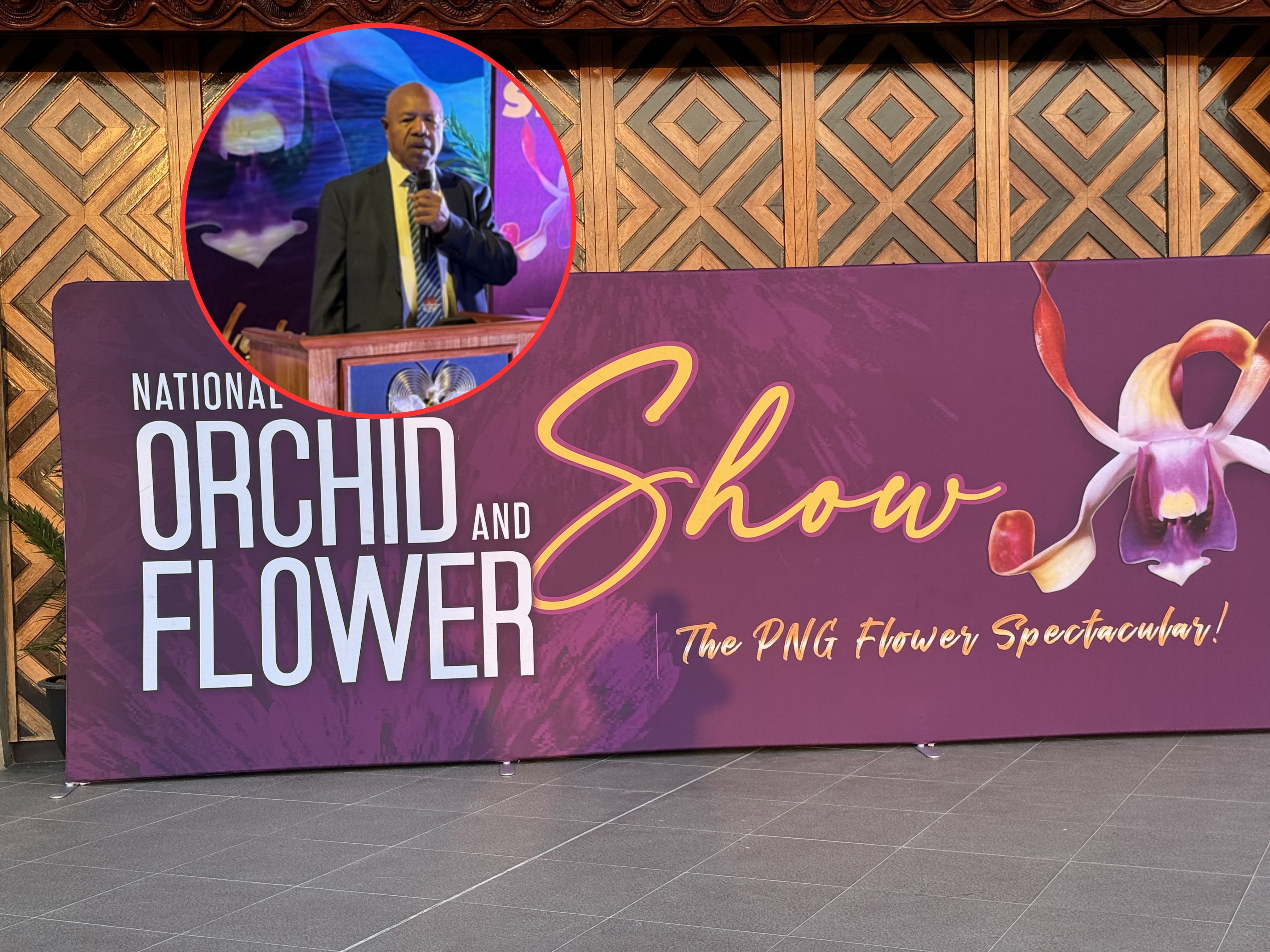
NCD Governor Powes Parkop is urging Papua New Guineans to do more to protect the country’s rich biodiversity as PNG enters its 51st year of independence.Parkop made the call while officially opening the 2026 National Orchid and Flower Show, saying the event provides an opportunity to appreciate not only the country’s orchids and flowers but its wider natural heritage. He said Papua New Guinea’s rainforests, lowlands, swamps, islands and atolls have sustained generations of people for thousands of years.According to Parkop, these natural environments are part of a proven system that has supported communities for generations and must now be protected for the future and that the responsibility is not only to respect PNG’s heritage but to ensure its natural resources are maintained and passed on to the next generation.“We need to value and protect and maintain” the natural environment, Parkop said.Parkop described PNG’s biodiversity as a national treasure inherited from the country’s ancestors.Stating more that the current generation has a responsibility to protect that inheritance while recognising its importance to the rest of the world.The Governor aso added tha the National Orchid and Flower Show helps remind Papua New Guineans of the natural beauty that makes the country unique.He said the country’s 51st Independence anniversary should also be a time for reflection and a challenge to do better in the years ahead.Parkop said PNG has an opportunity to build on its achievements over the past 50 years and address the challenges that have held the country back. He further encouraged Papua New Guineans to appreciate the country’s culture, arts, flora and fauna as part of its national identity.He also linked the need for greater environmental protection to the country’s future, saying natural resources must be preserved so that future generations can continue to benefit from them.Parkop said the celebration of independence should therefore go beyond culture and entertainment and include greater appreciation of the natural environment that has sustained Papua New Guineans for generations.He urged the public to support conservation and appreciate the orchids, flowers, artwork and other cultural displays featured at the National Orchid and Flower Show.
Published on September 12, 2026
PARKOP CALLS FOR PNG ORCHIDS TO GO GLOBAL
NCD Governor Powes Parkop has challenged the PNG Orchid Society to take Papua New Guinea’s orchid and flower industry to the international stage. Speaking at the opening of the 2026 National Orchid and Flower Show, Parkop said the annual event has reached a higher standard and should now be taken beyond Papua New Guinea. He called on the PNG Orchid Society to explore partnerships with tourism organisations and international stakeholders to showcase the country’s orchids, flora, fauna and biodiversity to the world. Parkop suggested taking the show to countries including Singapore, Thailand, Japan and the United States. He said international exposure would not only promote PNG’s natural beauty but could also help generate greater support for protecting the country’s natural resources. “Let’s bring the beauty of Papua New Guinea to the rest of the world,” Parkop said. He said Papua New Guinea’s rainforests, orchids, flowers and diverse wildlife are valuable resources that have been passed down through generations. Parkop said while these resources belong to Papua New Guinea, they also have importance for the wider world. He urged the Orchid Society and other stakeholders to build on the success of the annual show and look at new ways of promoting the country’s natural heritage. Parkop also acknowledged Foreign Affairs Minister and PNG Orchid Society President Justin Tkatchenko for his continued commitment to promoting PNG’s orchids, flora and fauna, highlighting Tkatchenko’s passion for the sector still continues despite his political responsibilities. Parkop said greater international promotion of PNG’s natural environment could also contribute to conservation efforts by increasing awareness of the country’s unique biodiversity. He encouraged visitors to support the exhibitors by purchasing orchids, artwork and other products displayed at the show. Parkop officially declared the 2026 National Orchid and Flower Show opened.
Published on September 12, 2026
PNG MUST SHIFT FROM REACTIVE DISASTER RESPONSE TO PREPAREDNESS
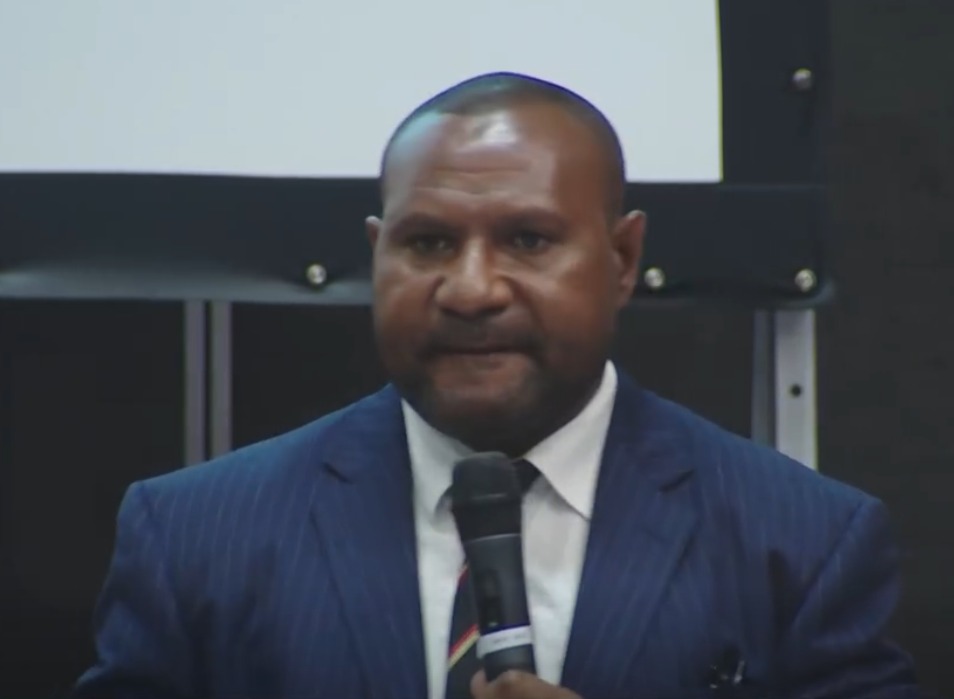
Papua New Guinea (PNG) must move away from a predominantly reactive approach to disasters and invest more heavily in preparedness, early action and risk reduction.This is according to Minister for Health and National Emergency Services Dr Billy Joseph, who said PNG has become accustomed to responding once disasters occur, but responses can be delayed or inadequate when communities and authorities have not prepared beforehand.He said disaster management should instead be treated as a continuous cycle involving awareness, preparedness, response and recovery.“Response is important, but that response is done properly and adequately when we are aware and when we prepare.”Dr Joseph said preparedness involves far more than having money available once an emergency strikes.It requires trained personnel, logistics, warehouses for relief supplies, communication systems, emergency plans and clearly established procedures that can be activated when needed.He used his experience as a doctor to explain the importance of detailed emergency planning.He referred to a Medical Emergency Response Plan, which establishes who should be contacted, what procedures should be followed and who has authority to activate a response.Dr Joseph said this level of detailed planning does not yet exist consistently across PNG’s provincial and national disaster-management structures.“That kind of level of detailed preparedness doesn't exist in our provincial disaster management centers.”He said international partners, including Australia, the United States and New Zealand, are helping PNG strengthen its preparedness infrastructure.This includes support for warehouses and a new national facility intended to bring key emergency-response functions together.Dr Joseph said the National Government is also seeking to address fragmentation across emergency services by creating a more coordinated system.He said the National Security Council has decided not to establish a separate National Emergency Management Authority, but instead to strengthencoordination across existing emergency functions.The Minister said dedicated disaster personnel are needed at national, provincial and district levels because disasters can occur at any time.“Disaster can happen any time. And when we are ready or not, it doesn't care.”The need for stronger preparedness has been highlighted by recent emergencies, including Cyclone Maila, El Niño and landslides.Dr Joseph said disasters are first experienced at the community, district and provincial levels, making strong local systems critical to an effective national response.The Provincial Disaster Centre Institutional Capacity Assessment is expected to help identify where those systems need to be strengthened.Dr Joseph said the assessment should lead to a practical roadmap covering immediate, medium- and long-term priorities.He is also calling for the findings to be used in government planning and budgeting rather than being left as a report.“The assessment gives us the evidence. Our responsibility now is to use that evidence to help our communities.”He said the country must ensure that disaster-management plans are supported by capable people, financing, information systems, leadership and established procedures.The Minister said PNG’s objective should be a disaster-management system capable of anticipating risks, understanding community needs and acting before emergencies escalate.That shift, he said, will be critical as PNG continues to face earthquakes, volcanic eruptions, tsunamis, floods, landslides, droughts, severe weather events, cyclones and other emergencies.“A stronger disaster management system that can better anticipate risks, understand needs” is the objective for the country.
Published on September 7, 2026
IOM-LED EL NIÑO ASSESSMENT TO IDENTIFY COMMUNITIES MOST IN NEED
A new multi-agency assessment is being rolled out across Papua New Guinea to establish how El Niño and its impacts are affecting communities and where assistance is most urgently required.Minister for Health and National Emergency Services Dr. Billy Joseph says the assessment, led by the International Organization for Migration in partnership with the National Disaster Centre, is aimed at ensuring government responses are based on evidence gathered from affected communities.The assessment comes as PNG continues to deal with the impacts and risks associated with El Niño, including effects on communities, livelihoods and essential services.Dr. Joseph says the exercise will collect information across several key sectors, including water and sanitation, food security and livelihoods, health, education, shelter, displacement and protection.“It will collect information across key sectors, including water and sanitation, food security and livelihoods, health, education, shelter, displacement and protection, so that decisions on preparedness and responses are based on evidence from affected communities across the country.”The Minister says the assessment is particularly important because it is not simply intended to measure the current effects of El Niño.It is also designed to strengthen the ability of provincial and district authorities to conduct assessments, analyse needs, report emerging risks, and contribute to future disaster responses.Dr . Joseph says provincial and district authorities will have a central role in collecting data and coordinating the assessment process.He is urging provincial administrators and disaster centres to give the rollout their full support and ensure the information collected is timely, reliable and representative of conditions on the ground.The information will then help governments identify areas experiencing the greatest levels of need and determine where limited resources should be directed.“The results should help governments identify priority locations that demand a scale and severity of needs and ensure that limited resources are directed to communities that require assistance the most.”Dr. Joseph says provincial El Niño assessment reports will also provide the National Government and provinces with information that can support preparedness and response decisions.The International Organization for Migration is being recognised for its technical support, alongside the governments of the United States, Australia and New Zealand and other development and humanitarian partners.Dr. Joseph says IOM’s involvement demonstrates the organisation’s broader role within PNG’s disaster-management framework.He recalled the recent Cyclone Maila response, saying IOM personnel were already present when he and the Prime Minister travelled to the area where the cyclone’s eye had remained for several days.“When we went there, IOM was already there.”He says the presence of IOM and other international partners during the response demonstrated the practical value of partnerships during emergencies.However, Dr. Joseph stressed that disaster assessments must ultimately translate into action.He says the government needs to use the evidence collected to determine where communities need greater support and where investment in disaster preparedness should be prioritised.The El Niño assessment is therefore being positioned not only as an emergency response tool, but also as part of a longer-term effort to strengthen provincial and district disaster-management capabilities.
Published on September 5, 2026
PROVINCIAL DISASTER CENTRES FACE STAFFING, FUNDING AND EQUIPMENT GAPS
A nationwide assessment has identified significant differences in the capacity of Papua New Guinea’s Provincial Disaster Centres, with some provinces continuing to face major challenges in staffing, funding, infrastructure and operational resources.The Provincial Disaster Centre Institutional Capacity Assessment covers all provinces and provides the national government with what Minister for Health and National Emergency Services Dr. Billy Joseph describes as a national picture of the strengths, gaps, and priorities of provincial disaster-management systems.He said that some of the provinces have established systems, experienced personnel, and strong relationships with provincial administrations and development partners.However, others continue to operate under significant constraints.“Others continue to face significant constraints in staffing, funding, office infrastructure, transportation, communication, information management, emergency planning and of course, operational resources.”The assessment is intended to establish a consistent national baseline for understanding those differences.Dr. Joseph said that the country has previously lacked a common framework that could be used to compare the capacity of Provincial Disaster Centres and identify where support is most urgently needed.The assessment now provides individual provincial findings that can be used by provincial administrations to determine where improvements and investment should be prioritized.The Minister stated that this includes looking at staffing levels, operational budgets, offices and emergency operations centres, transportation, and communication systems.Preparedness and contingency planning, information management, early-warning systems, standard operating procedures, and the training and professional development of disaster personnel are also highlighted as areas requiring attention.Dr. Joseph emphasized that the findings should not simply be treated as a list of weaknesses. Instead, he acknowledged the dedication of the provincial disaster personnel who continue to respond to emergencies despite operating with limited resources.“It also recognizes the commitment and resourcefulness of our provincial disaster offices and the provincial administrators and the offices, many of whom continue to respond to emergencies under very difficult conditions and with limited resources.”He further added that the assessment gives government and its development partners an opportunity to determine where investment will have the greatest impact.A practical capacity-development roadmap is expected to follow the assessment, identifying immediate priorities as well as medium and long-term investments.Dr. Joseph also urged the development partners to use the assessment when deciding where future disaster-risk-management support should be directed, while cautioning that providing equipment alone will not solve the capacity problems that the provincial disaster centres face.“Equipment is important, but equipment alone will not create an effective disaster management system,” he said, explaining that effective disaster management also requires capable personnel, clear responsibilities, coordination mechanisms, adequate financing, reliable information systems, leadership, and procedures that can be activated before, during, and after an emergency.The assessment therefore provides an opportunity for PNG to move beyond isolated projects and towards sustained investment in provincial disaster-management institutions.Dr. Joseph concluded that the ultimate measure of the assessment will be whether its findings are turned into planning, budgeting, training, and practical improvements at the provincial level.
Published on August 31, 2026
PROVINCIAL AUTHORITIES REMINDED OF THEIR LEGAL DISASTER RESPONSIBILITIES
Papua New Guinea’s provincial administrations have been reminded that they already have a legal responsibility to lead disaster management in their respective provinces under the National Disaster Act of 1984.Speaking at the presentation of the Provincial Disaster Centre Institutional Capacity Assessment, Minister for Health and National Emergency Services Dr. Billy Joseph said the responsibility of provincial authorities is clearly established in law.He said the Act provides for a Provincial Disaster Committee in every province, with the Provincial Administrator serving as its chairman.The Minister said provincial disaster management should therefore not be treated as a new responsibility arising from recent government decisions.“It is not a new creature,” Dr. Joseph said.He said the provincial disaster committees have existed under the legislation for decades and were established specifically to ensure disaster response is managed as close as possible to affected communities.“You have always been existing since 1994 pursuant to this Act.”According to Dr. Joseph, the National Disaster Centre is not intended to take over the responsibilities of provincial authorities, but to coordinate support to them.“At the National Disaster Center, we are supposed to coordinate all support to you.”He said information about disasters must begin at the community and district levels, with provincial authorities responsible for collecting and reporting information before assistance is coordinated nationally.Dr Joseph also stated that the decentralized structure means provinces must take greater ownership of their disaster management responsibilities.“I think by this Act, the management of disaster is now a decentralized function.”He also called on provincial governments to ensure disaster management is reflected in their planning, budgeting and administrative structures.He said provincial authorities need to be aware that they are among the first responders when disasters occur.“The first respondents in any disaster, whether it be a serious issue like El Nino, or Cyclone Maila, or landslide in Mulitaka or any disaster, the Provincial Disaster Management Committee led by the Provincial Administrator, you must be aware, it is your job to be ready.”He acknowledged that provinces face different challenges, however, stronger local capacity is essential because disasters are first experienced at the community and provincial levels.The Minister’s comments come as government, and its development partners work to strengthen provincial disaster management systems across the country.The first-ever national institutional capacity assessment covers all 22 provinces and is intended to identify areas where provincial systems require greater support.
Published on August 31, 2026
UN URGES GREATER INVESTMENT IN PNG’S DISASTER RESPONSE CAPACITY
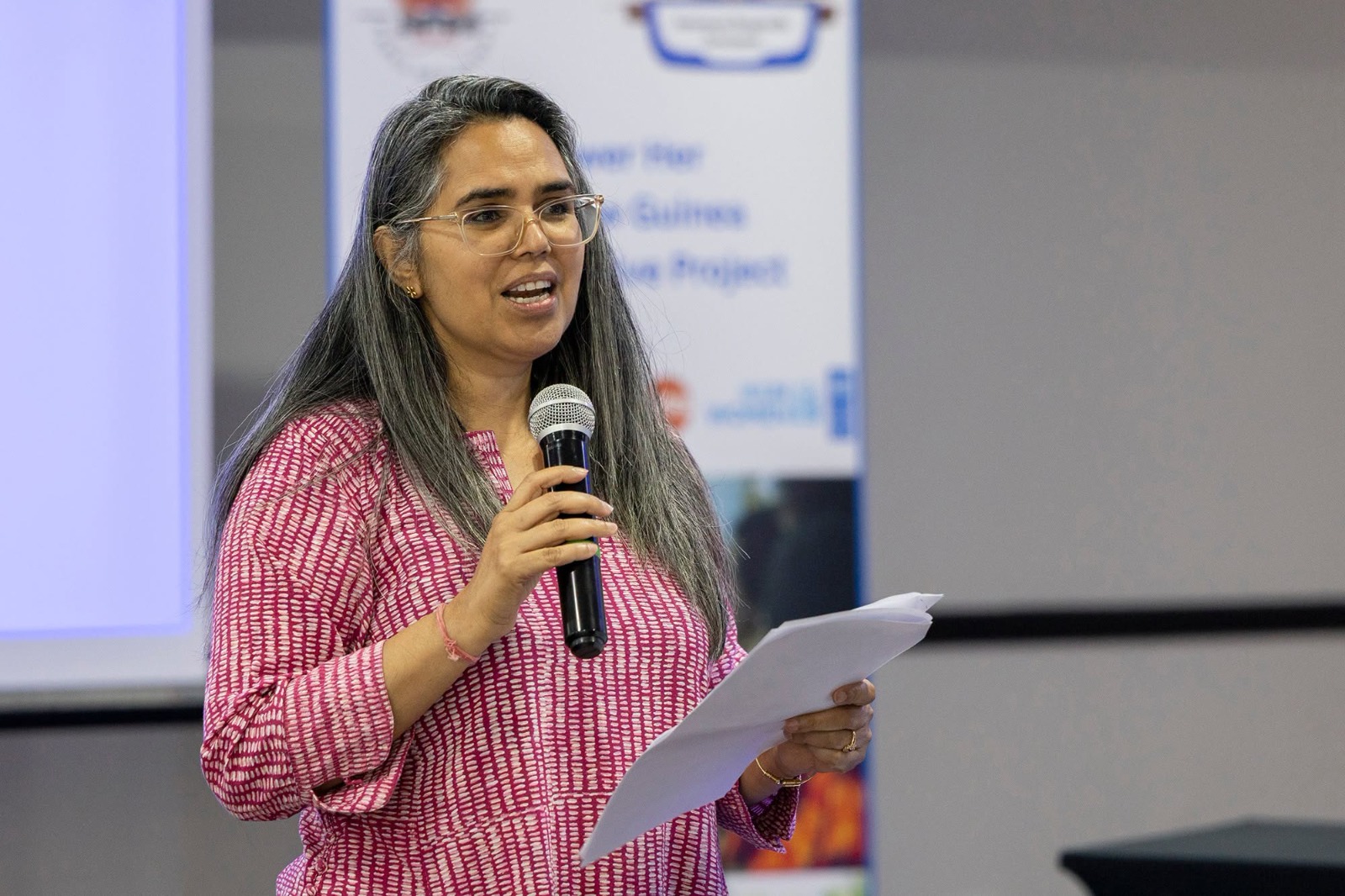
UN Resident Coordinator in Papua New Guinea Shalini Bahuguna has called for stronger provincial disaster management institutions and greater investment in local capacity to help the country better prepare for and respond to disasters.Speaking at the recent launch of the Provincial Disaster Office Institutional Capacity Assessment Report, Bahuguna emphasized that Provincial Disaster Officers are at the frontline of disaster response, playing a critical role in linking national authorities with communities.The assessment highlights several critical challenges facing Provincial Disaster Offices, ranging from limited staffing, inadequate infrastructure, and equipment shortages to a lack of technical expertise, weak information management systems, and severe resource constraints.Despite these obstacles, Bahuguna acknowledged the deep commitment of provincial officers who continue working around the clock during disaster responses.Stressing that strengthening local capacity must remain a national priority, Bahuguna called for greater investment in institutions rather than solely relying on physical infrastructure such as vehicles, satellite equipment, warehouses, and buildings.Effective disaster management, she argued, equally depends on skilled personnel, clear policies, strong leadership, reliable information systems, and seamless coordination.“Investing in strong institutions means investing in a PNG of today and tomorrow, to stand in its 50th year of independence in an independent and self-reliant way.”Bahuguna urged the government, humanitarian organizations, financial institutions, and development partners to align their support around shared priorities and direct resources to the areas of greatest need.She noted that the immediate focus must shift from assessment to action through strong partnerships, pointing to the response to Cyclone Maila in East New Britain as a prime example.In that instance, strong communication enabled local-level officials to quickly relay critical information to Provincial Disaster Offices, allowing targeted assistance to be mobilized as soon as blocked access roads were cleared.To sustain this progress, the UN Resident Coordinator presented three key requests to the Government of Papua New Guinea.She called for continued progress on reviewing and strengthening the Emergency Management Act so the legislation can be brought before Parliament.She urged the development of stronger, interconnected health and emergency response systems deeply linked to local communities.Lastly, she welcomed the Government's commitment to a coordinated response plan that prioritizes reaching vulnerable populations while building long-term resilience.Bahuguna reaffirmed the United Nations’ ongoing commitment to supporting the Government, the National Disaster Centre, provincial administrations, and development partners in building disaster preparedness across the nation.“The way forward is clear,” she said, stressing the importance of continued partnership to build resilient institutions and communities across PNG.
Published on August 31, 2026
AUSTRALIA COMMITS TO STRENGTHENING PNG’S DISASTER RESPONSE
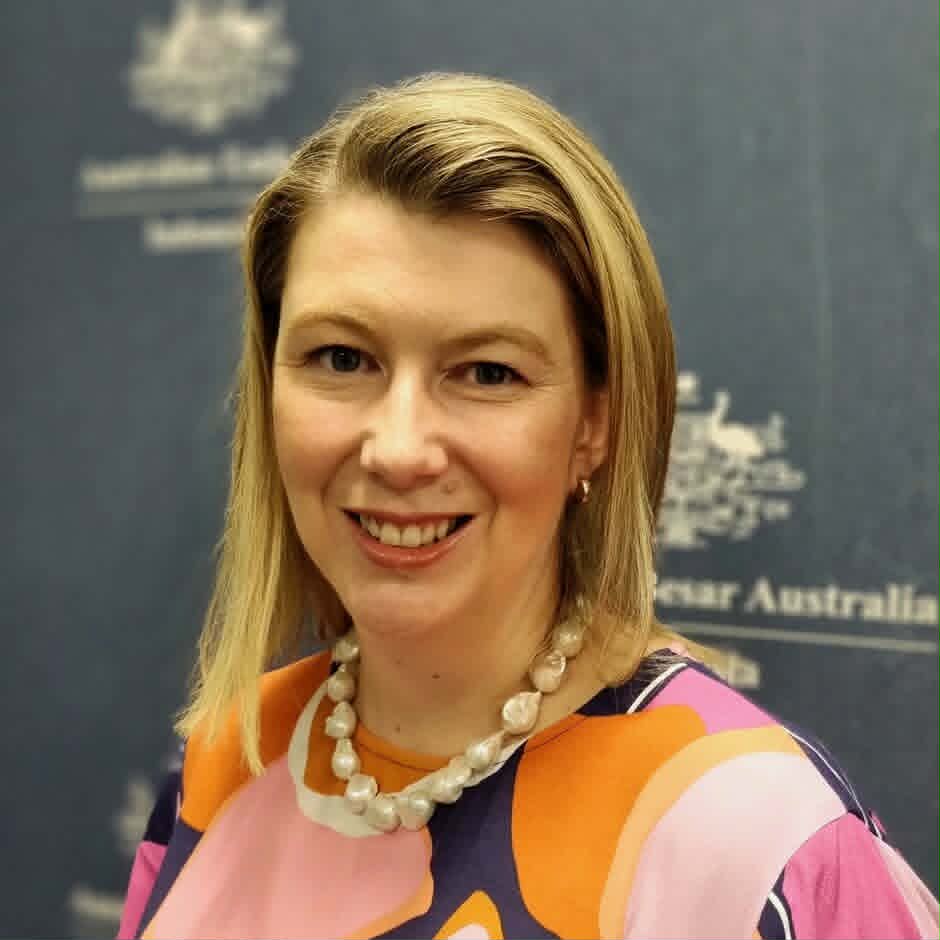
Australia remains committed in helping Papua New Guinea strengthen its disaster preparedness and response systems, particularly at the provincial level.Australian High Commission Minister-Counsellor Madeleine Moss made the commitment during the launch of the Provincial Disaster Office Institutional Capacity Report.Moss said the report provides an important opportunity for the PNG Government and its partners to identify weaknesses, address capacity gaps and improve disaster preparedness across the country.She stressed that the assessment should not be viewed as a measure of performance, but as a practical tool to guide future improvements.“It is not a scorecard, it is a tool,” she said.Moss acknowledged the work of Health and National Emergency Services Minister Dr. Billy Joseph, the National Disaster Centre, provincial disaster offices and international partners, involved in strengthening PNG’s disaster management systems.She said Australia, together with the United States, the International Organization for Migration, (IOM) and other partners, would support PNG as it considers and implements the recommendations of the report.The Minister-Counsellor also highlighted Australia’s broader humanitarian partnership with PNG, including assistance in strengthening early warning systems through cooperation with the National Weather Service, the Minerals Resources Authority and Geoscience Australia.She said an enhanced humanitarian assistance and disaster relief package announced during the 2025 Australia-PNG Ministerial Forum would focus on infrastructure, coordination and partnerships.The package also includes professional exchanges between Australia’s National Emergency Management Agency and PNG’s National Disaster Centre.Moss said Australia’s Australia Assists program continues to provide technical support by deploying specialists to disaster management offices when required.She noted that Australian experts are currently supporting the National Disaster Centre and the Bougainville Disaster Office.During recent cyclone responses, she said Australia also deployed additional specialists, including an Australian Defence Force liaison officer who worked alongside the PNG Defence Force to support coordination and relief operations.Australia, together with the United States, New Zealand and the United Kingdom, also assisted in delivering food and other relief supplies to disaster-affected communities.Moss said strengthening disaster preparedness was particularly important as PNG and other Pacific countries continue to experience challenges linked to El Niño conditions.She said Australia would continue to stand ready to support the PNG Government and disaster authorities when emergencies occur.“PNG is a great, resilient country, but even the most resilient communities can be challenged during these times,” Moss said.Moreover, she stated that disaster preparedness must ensure that the effects of emergencies are reduced, particularly for vulnerable people relying on schools, hospitals and community services. Moss also reflected on her recent visit to Southern Highlands Province, where she witnessed the resilience of local communities and Australia’s assistance following an earthquake.She recalled being told by a school headmaster that the community had raised funds to support Australians affected by the devastating 2019 bushfires.She also said that the gesture highlighted the strong and reciprocal relationship between PNG and Australia.“Australia helps PNG and PNG helps Australia,” she said.She further stated that this partnership had become even more significant following the signing of the Mutual Defence Treaty between the two countries last year.Australia would continue working with PNG and other development partners to strengthen disaster management capacity and help communities better prepare for future emergencies.In concluding, she expressed confidence that through stronger coordination and partnerships, PNG would be better positioned to respond to future disasters.
Published on August 30, 2026
ABUS NA KUMU PLEDGES K20, 500 FUNDING SUPPORT TO PNG TEAMS HEADING TO CAIRNS
Community organization Abus Na Kumu is supporting three Papua New Guinean sporting teams preparing to compete in Cairns, Australia, with a combined contribution of K20, 500.The support is being provided through its Friends of Abus Na Kumu community outreach initiative, which aims to give back to communities and support local sporting teams.As part of this effort, the organization has donated K5, 000 each to the Matupit Diggers, Newtown Chiefs, and KA Brothers, totaling K15, 000 in direct financial support.The three teams are preparing for the Cairns tournament, scheduled for October 29th to 31st.In addition to the direct donations, Abus Na Kumu also successfully bid K5, 500 for signed Queensland Reds memorabilia, further increasing its overall support to K20, 500.Owner of Abus Na Kumu, Richard Mark, highlighted that community support remains a core part of the organization’s commitment to making a positive contribution to Papua New Guineans.“Our community is important and we try to do our part to contribute positively towards our people.”“It is part of us paying forward with the blessings others have been kind enough to share with us.”Mr. Mark explained that the initiative reflects the organisation’s belief that success and blessings should also be shared with others.The funding will directly assist the three teams with their preparations and participation in the Cairns tournament, while highlighting the role of community and private-sector support in helping PNG sporting teams compete overseas.Wishing the Matupit Diggers, Newtown Chiefs, and KA Brothers the best of luck in the tournament, Abus Na Kumu reiterated the guiding principle behind its outreach effort:“Pasin Stap. We must share our blessing and pay it forward.”
Published on August 26, 2026