
The wings of an Oro butterfly became the centrepiece of a much bigger idea.
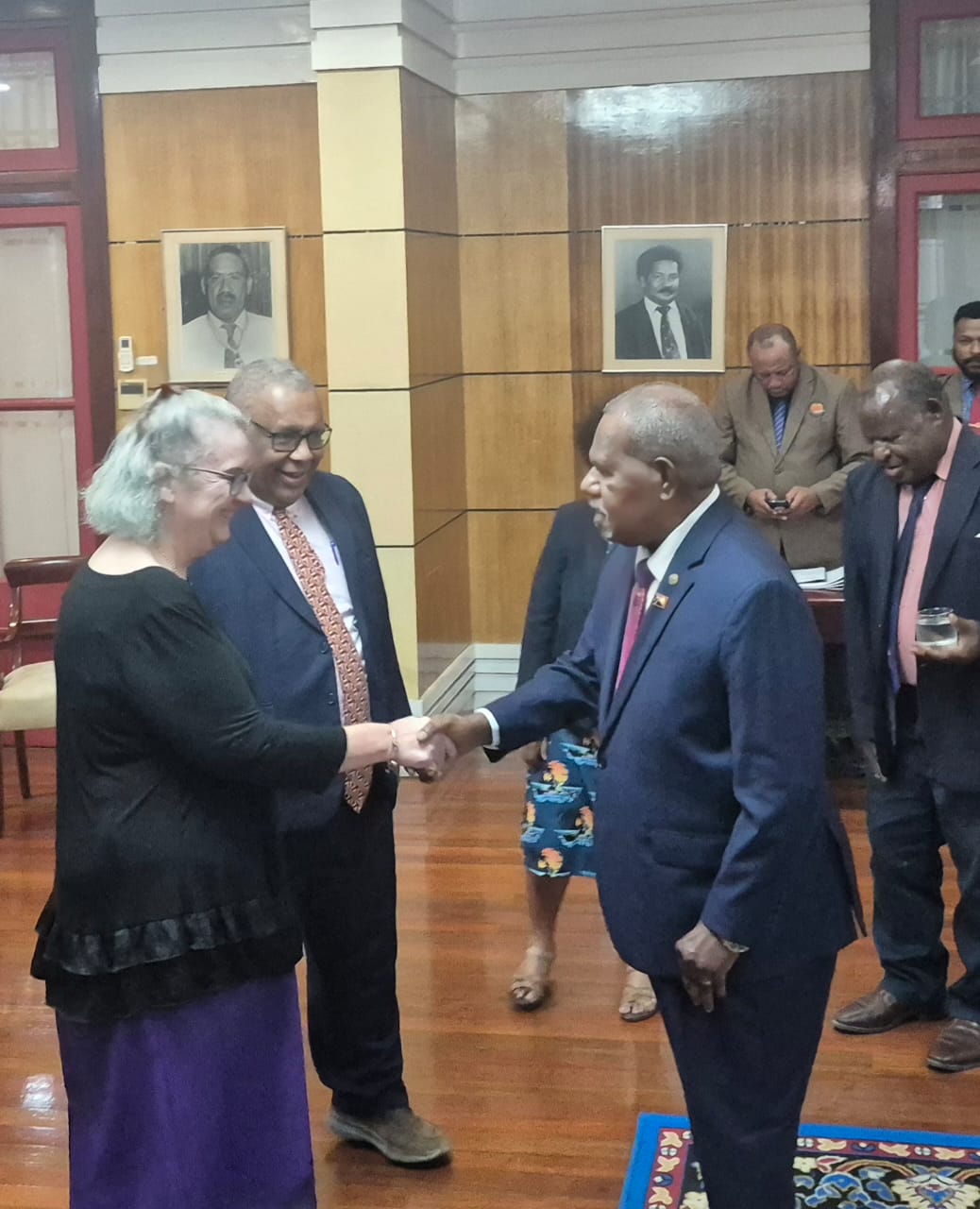
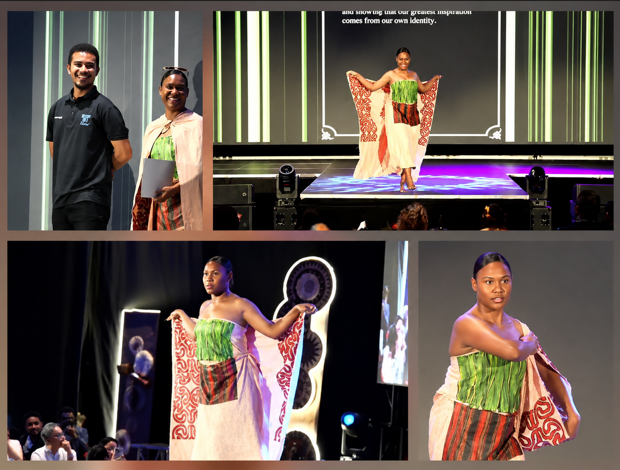
At the inaugural Miss Bird of Paradise (MBOP) Talent Show, George Kurokuro turned Papua New Guinea's diverse cultural identity into fashion, winning the first ever MBOP Sarong Category before a packed audience that included Prime Minister James Marape and the wife of Governor General Sir Bob Dadae, who was among the night's judges.
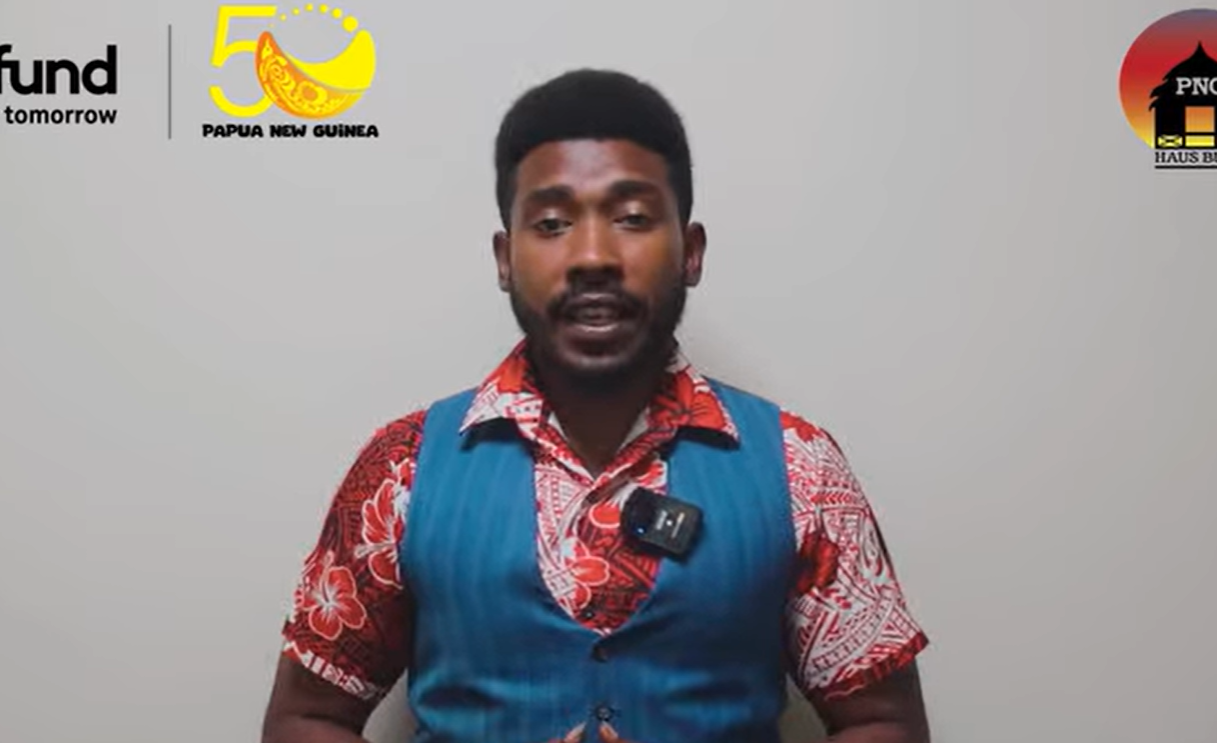
Following the event, PNG Haus Bung caught up with Kurokuro to learn the story behind the winning design and the creative thinking that brought it to life.
For Kurokuro, the sarong was more than a costume on a stage, it was his way of bringing Papua New Guinea's diverse cultures together through fashion.
The idea began with a simple story.
A tourist arrives in Papua New Guinea and travels through the country's regions, discovering the different designs and cultural expressions along the way.
"We took them through the four regions. We got one design from each region and we put them on the cloth," Kurokuro explained.
"Everything that you saw there was representing the entire Papua New Guinea on the sarong."
The finished piece brought together cultural elements from different parts of the country. The grass skirt represented the Momase region, the top came from East New Britain, while the wings drew inspiration from Oro Province and a Bilou feature was also incorporated to represent the islands. But among all those elements, the Oro butterfly became the heart of the design.
Kurokuro said the butterfly immediately gave him the visual direction he needed.
"Oro was the main topic, the butterfly. Just looking at the butterfly, I thought, wings and Oro. So that's why the main highlight was the wings and the Oro butterfly," he added.
Turning the idea into something that could actually walk onto a pageant stage, however, was not as easy as imagining it. The cloth had to be printed, assembled and eventually given to the contestant to tie according to the design.
"The main thing was the cloth itself, getting it printed and all of that," Kurokuro said.
"We had our own difficulties on the side, but putting it together and then giving it to the contestant to actually tie according to those designs was the difficult part of it. But we managed to pull it off."
For Kurokuro, the effort reflects something he has always believed about Papua New Guinea's culture. Art and culture are not things that belong only in traditional settings. They can be reimagined through fashion and presented to new audiences without losing their identity.
"I've always loved all of this, and fashion is a really good place to output all of this," he said. "I really wanted to put our culture on a sarong and see how good it looks."
That instinct has shaped much of Kurokuro's creative journey.
With a background in Arts from the University of Papua New Guinea, he has developed interests across fashion, dance, choreography and digital content, creating a style that brings contemporary influences together with Papua New Guinean culture.
His work has already found a place in the country's pageant and creative industry.
Kurokuro was involved in the designs and choreography behind Iampela Popena during her Miss Western Highlands campaign before she went on to become Miss Bird of Paradise and represent Papua New Guinea.
His creative work is now continuing with the Miss Bird of Paradise platform, where he will be part of the 2026 to 2027 creative team as the PNG queen prepares for the Miss Pacific Islands pageant.
Away from the pageant stage, Kurokuro has another creative outlet that has become part of his professional life. He is a content creator, using social media to promote people, businesses, fashion and events.
In a previous role, his work helped BMBN Hardware strengthen its marketing presence and gain significant attention online.
For Kurokuro, content creation is not simply about posting pictures or videos. It is another form of performance.
"Content creation is also one of my biggest hobbies, and I make a living out of it too," he said.
He believes social media has changed how creatives can connect with audiences, particularly in Papua New Guinea.
"The biggest way to get to people is through content creation," he said.
That belief has encouraged him to use his own platforms to showcase the creative work happening around him.
"What I do for my hobby, for fashion and all that stuff, I also do the same, and I put the same energy into content creation."
His background in dancing has also naturally found its way into his work. Choreography was part of the presentation, drawing on a skill he developed through his passion for dance.
"Dancing is part of my hobby, so choreography was part of that process as well," he said.
For Kurokuro, these creative disciplines are not separate worlds. Fashion gives culture a visual form, choreography gives it movement, content creation gives it an audience and together, they provide him with a way to tell Papua New Guinea's story in a language that feels both modern and familiar.
His journey also challenges an assumption about who belongs in the creative and fashion industry.
While much of the beauty and pageant space is often associated with women, Kurokuro's growing body of work shows that there is room for men who are willing to design, create, choreograph and tell stories through fashion.
His work is not about competing with anyone; it is about finding a space where his own talents can speak.
And perhaps that is what makes the Oro butterfly on his winning sarong so fitting. Its wings became the visual center of a design that brought different parts of Papua New Guinea together.
Kurokuro is doing something similar with his own career, he is bringing together art, fashion, dance, culture and digital media, creating a path that is uniquely his own.
From a piece of cloth carrying the colours and symbols of Papua New Guinea to the stage of the inaugural MBOP Talent Show, George Kurokuro is showing that culture does not have to remain frozen in the past to be preserved