

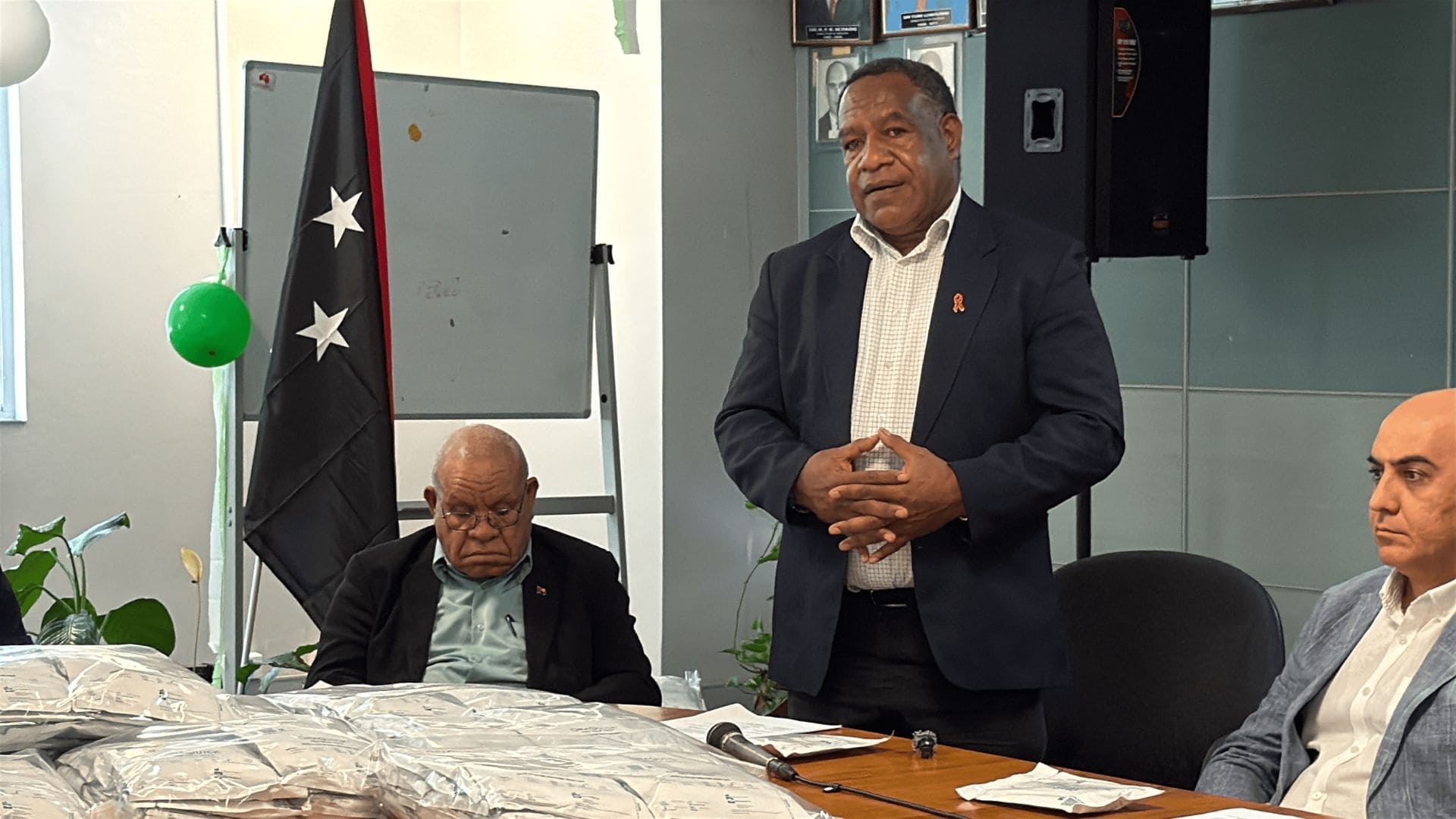
The National Department of Health will roll out HIV self-testing kits across four (4) provinces as part of efforts to reach more people and increase early diagnosis of HIV, according to HIV/STI Program Manager Dr. Nano Gideon.
Dr. Gideon said the self-testing kits will initially be introduced in the National Capital District, Morobe Province, Eastern Highlands Province, and Western Highlands Province.
The rollout follows a successful pilot program in NCD, where self-testing provides a more accessible and less invasive option for individuals seeking to know their HIV status.
"There are no pain and no blood drawn," Dr. Gideon said.
"A person can simply do a swab of the buccal mucosa and perform the test within a safe and private environment and get the results after 20 minutes."
He said the initiative aligns with the National STI and HIV Strategy 2024–2028, which aims to expand HIV testing services and reach populations that have traditionally been difficult to access.
Dr. Gideon said, "We want to reach the unreached in a safe space. You cannot treat unless you test. HIV is diagnosed through testing, so testing is very important."
According to Dr. Gideon, Papua New Guinea has approximately 500 HIV testing sites operating across the country's 22 provinces.
In 2024, more than 281,000 people were tested for HIV. However, he said significant gaps remain among key populations considered at higher risk of infection.
Traditionally, HIV testing has relied on blood samples collected by trained health workers, a process that can create barriers for some individuals.
"Drawing blood has been a challenge," he said. "This new approach allows people to access a test kit, perform the test themselves and know their status."
Individuals who receive a reactive result will be encouraged to visit a health facility for confirmatory testing and further medical support.
Dr. Gideon said the program would complement existing facility-based services while expanding testing opportunities within communities.
"We will sustain health facility-based interventions, but we are moving into communities to link and reach the unreached so that women, girls and others who may be at risk are better served," he said.
The initiative is being supported by development partners, including Australia's Department of Foreign Affairs and Trade (DFAT), as part of broader efforts to strengthen HIV prevention and treatment services in Papua New Guinea.