

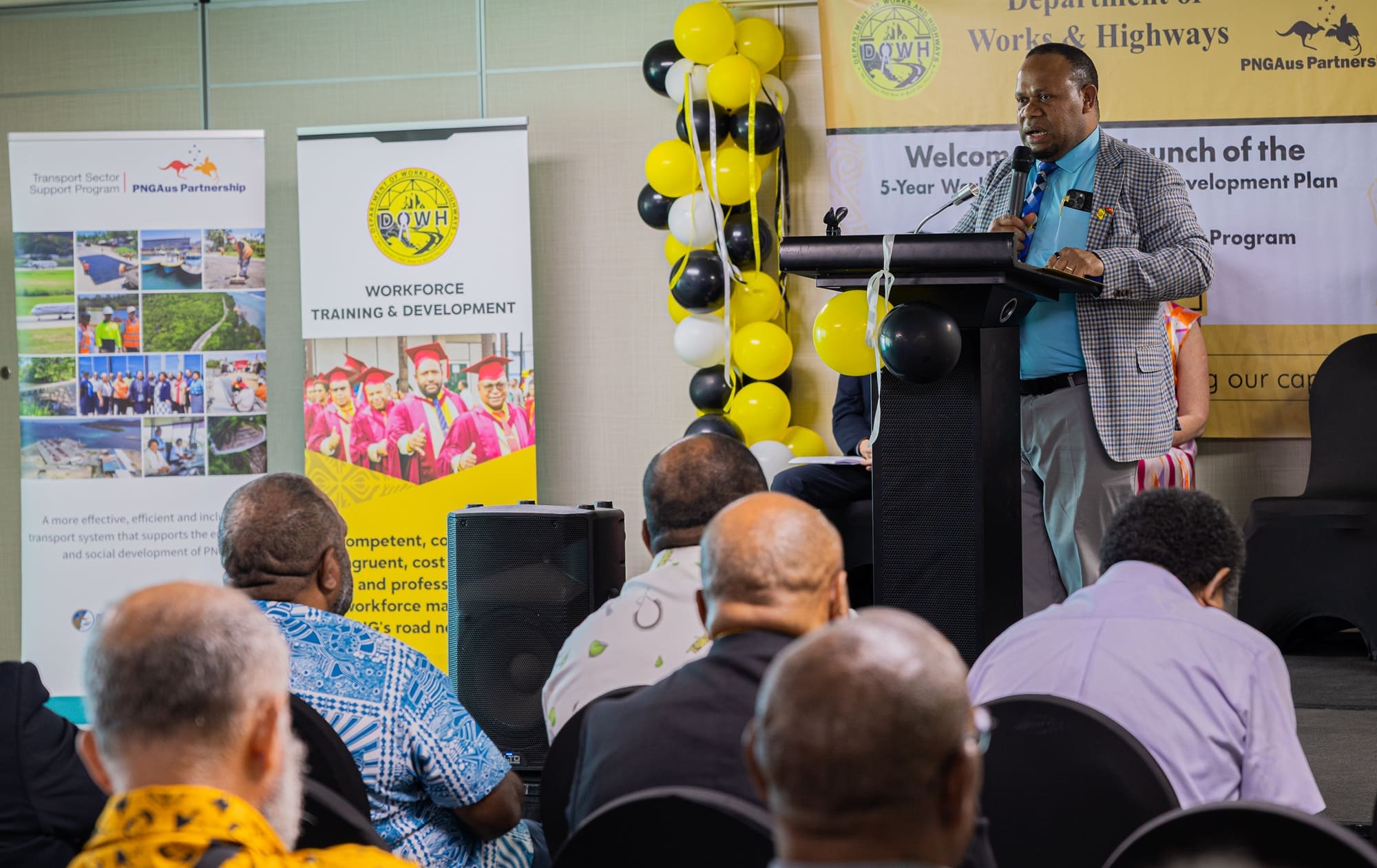
The Papua New Guinea Department of Works and Highways (DoWH) is strengthening the capacity of the country’s future road engineers through a new workforce development initiative supported by the PNG-Australia Partnership.
The initiative includes the launch of DoWH’s Five-Year Training Plan (2025–2029) and Graduate Development Program, designed to address critical skills gaps and develop a new generation of engineering professionals responsible for planning, managing and delivering road infrastructure across Papua New Guinea.
With technical support from Australia, DoWH identified priority areas for professional development that informed the Five-Year Training Plan, providing a long-term framework to strengthen the department’s workforce and improve infrastructure outcomes.
The Graduate Development Program will recruit and develop up to 20 graduate engineers per cohort from 2027. Participants will undertake structured training, receive professional mentoring and complete 24 months of practical workplace experience to prepare them for careers as registered engineering professionals.
As part of the program, DoWH has also introduced a Standard Operating Procedures (SOP) Manual to provide graduates with a clear development pathway, outlining the skills, training requirements and milestones needed for professional growth.
For Principal Engineer Roads for the Highlands Region, Sophie Ere, the new system represents a significant improvement in supporting young engineers entering the profession.
Ms. Ere joined the department’s graduate program in 2020 and was mentored by Leka Bonoro, Assistant Secretary of the Materials Science and Technology Branch. In August 2023, she became part of the first graduate cohort to complete the program in more than 20 years.
“I didn't have a Training Plan or a GDP Manual. I had a good mentor who showed me the way,” Ms. Ere said.
“A documented pathway makes all the difference. It tells you exactly what skills and milestones you need, instead of learning by trial and error.”
Ms. Ere encouraged future graduates to gain broad experience by rotating through different sections of the department, understanding the full scope of its work and seeking mentorship early in their careers.
Secretary for Works and Highways Gibson Holemba said Ms. Ere’s success demonstrated the value of investing in professional development and building local technical expertise.
“Our road network is only as strong as the people responsible for planning, designing, building and maintaining it,” Mr. Holemba said.
“Sophie shows exactly what this program can do. With the Training Plan and the SOP Manual now in place, the graduates who follow her will have the pathway she didn't.”
Australian High Commission Minister Counsellor Dr Cate Rogers said Ms. Ere’s journey highlighted the long-term benefits of investing in people and strengthening local capability.
“Roads and bridges create opportunities for communities, but they rely on skilled people like Sophie to keep them safe and serviceable for years to come,” Dr Rogers said.
“Australia is proud to support the PNG Government's commitment to building local capability like Sophie’s and others who follow in her footsteps.”
Through the new training framework and graduate pathway, DoWH and the PNG-Australia Partnership are working to develop a stronger engineering workforce capable of supporting Papua New Guinea’s infrastructure needs into the future.