

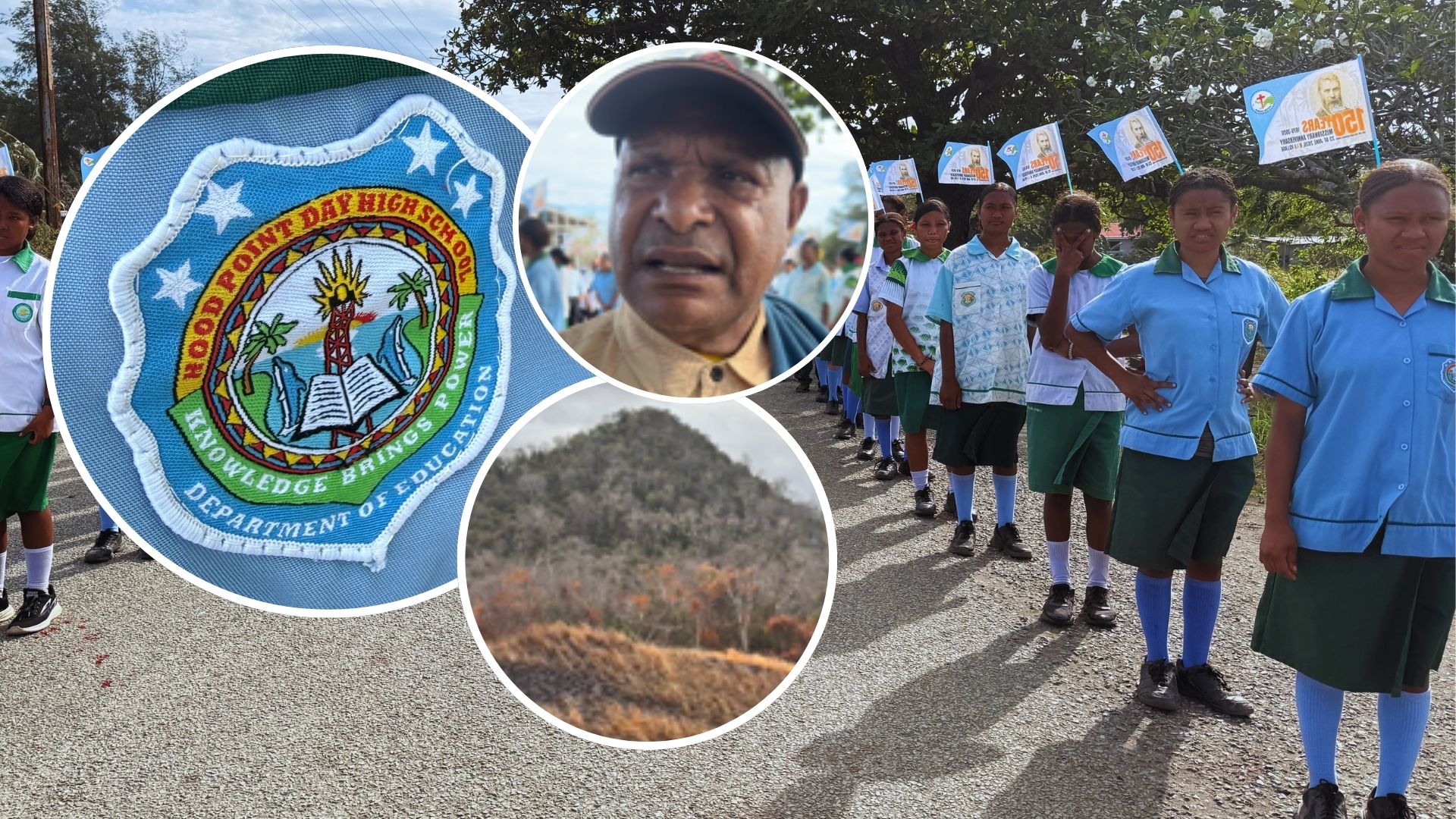
As schools begin Term Three today, Hood Point Junior High School in Hula, Central Province is preparing for lessons while also awaiting further guidance on how to manage ongoing El Niño dry condition, which has already caused brown vegetation and dusty soil across the area.
Speaking to PNG Haus Bung, Principal Simon Suji said the school has not yet finalised a full response plan but will work with staff and senior management to develop measures to manage the dry conditions while teaching continues.
“With the second term ending, we didn’t feel much effect of El Niño. But now as we return for Term Three, we have to sit down with academic staff and senior executives of the institution and plan how we can manage the effects of El Niño while school operations continue,” he said.
During Term Two, students were advised to carry water bottles due to dry conditions; a measure the principal said will continue while longer-term solutions are being developed.
The school currently relies on a Southern Cross water supply system powered by solar energy, which the principal said is not sufficient for daily needs and has called for additional support.
“We have only one source of power and we would like to connect Southern Cross to PNG Power so that we have water running through the staff area on a daily basis,” he said.
The school has also implemented contingency measures, including three bore-water tanks to support teacher accommodation and water supply. However, with months of no rain, water levels have continued to drop.
“With the last lot of rains, we experienced about two to three months back, we still had some water left and now we are down to two tanks,” he said.
Principal Suji said the school’s coastal location is worsening the situation, with sandy soil becoming increasingly dry and dusty during the prolonged dry season.
“With the El Niño effects, unlike other schools, this is a coastal school, and our soil is made up of sand. So now with the dry conditions the entire country is facing, we tend to have more dust around, even getting into the classrooms,” he said.
He added that the dust conditions may also pose health concerns for students and staff as the dry season continues, with the school now closely monitoring the situation while developing further response plans.