

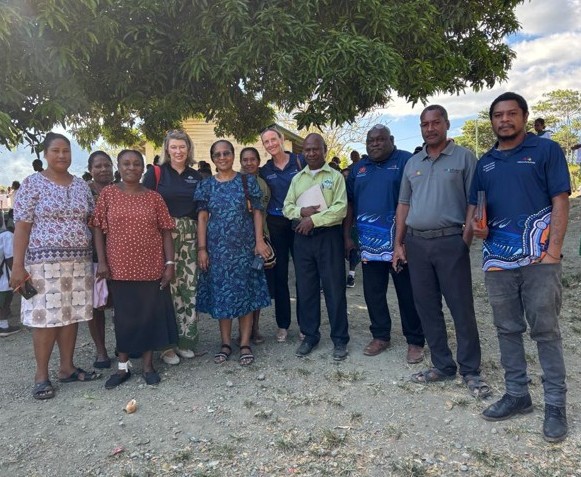
Teachers at Iobuna Kouba Primary School in Central province are being recognised for their efforts in delivering quality early childhood education, following a recent visit by education officials and representatives from the Australian High Commission.
The visit highlighted the school's locally led approach to improving literacy and numeracy outcomes, with teachers showcasing interactive lessons in Grade 1 Mathematics and Grade 2 English.
Officials from the Central Provincial Division of Education and the Australian High Commission observed students actively participating in reading, listening and group learning activities.
Teachers used Bilum Books and a growing classroom library to support engaging and inclusive learning experiences.
Australian High Commission Minister-Counsellor Madeleine Moss commended the school's teachers and leadership team for creating positive learning environments that encourage student participation.
"It is clear that teachers at Iobuna Kouba are creating positive and inclusive classrooms where students are actively engaged in learning.”
The visit also brought to light how teachers are implementing Papua New Guinea's 1-6-6 education reform, which integrates Prep, Grade 1 and Grade 2 into the primary school system.
The reforms aim to strengthen foundational literacy and numeracy skills during the critical early years of education.
Head Teacher Joseph Buka said the school's progress is driven by the commitment and dedication of its teaching staff.
"Our teachers are working hard to make learning active and inclusive for every child.”
"We are seeing students becoming more confident in reading, speaking and working together."
He added that while support from education partners is appreciated, it is the daily efforts of teachers that continue to improve learning outcomes for students.
The school has also invested in improving its learning environment through funding provided under the Achieving Quality Education for All (AQEFA) grant, managed through Australia's Partnerships for Improving Education (PIE) program.
Using the funding, the school community constructed fencing, installed water tanks, built footpaths, and refurbished classrooms. School leaders say these improvements have contributed to better attendance, increased safety, and improved classroom conditions.
The visit reinforced the importance of collaboration between schools, education authorities and development partners in strengthening education outcomes across Central Province.
Through the Australia–Papua New Guinea partnership, teachers in the province continue to receive in-service training and access to teaching and learning resources, complementing the work already being led by schools such as Iobuna Kouba Primary to improve enrolment, attendance and student achievement.