

The Moripi Tribe in the Gulf Province says the latest Social Mapping and Landowner Identification study conducted for the Papua LNG to exclude them as recognized direct beneficiaries of the project - is inconclusive.
They maintain that once that study when properly completed as required by the Oil & Gas Act 1998, the findings will indicate that the buffer zones evidence, currently used by the State and its agency National Petroleum Authority to exclude them, are contestable.
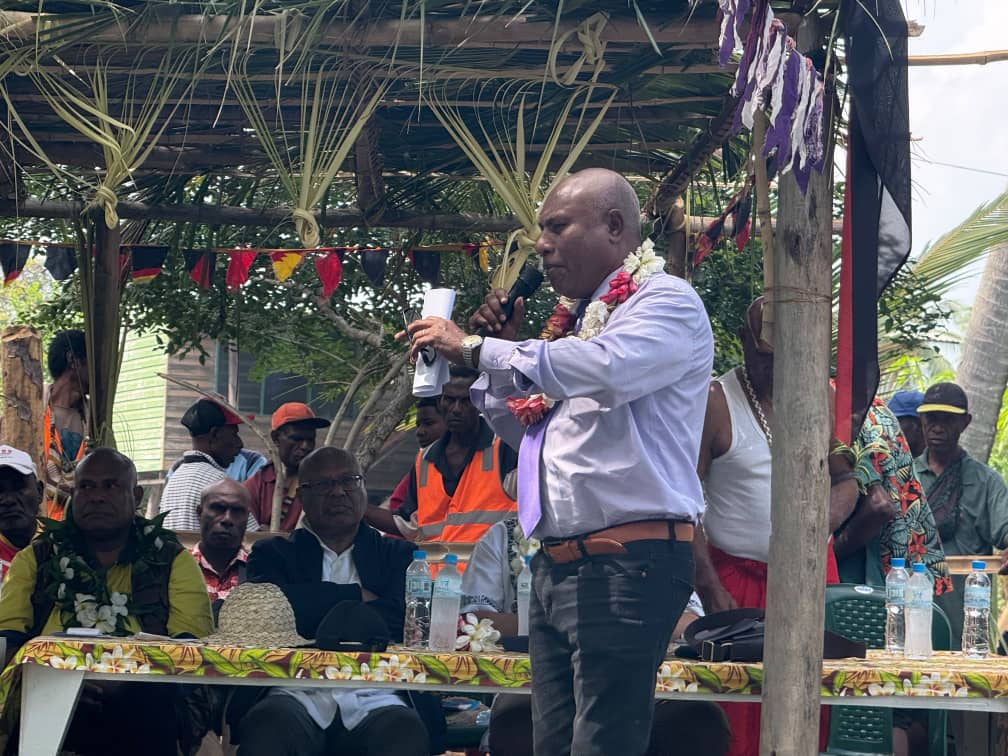
Marcel Karukuru, from Lese Kavora, made these remarks following the NPA acting Managing Director David Manau and Minister for Petroleum Jimmy Maladina’s recent visit to Iokea village last weekend for a consultative meeting with the Moripi Tribe.
Clan representatives from other Moripi villages of Miaru, Lese villages of Kavora, Avihara, Marekea, Ilava, Oalai, and Sepoe – which consider themselves as the Oiapu Tribe and covers several villages and clans, converged at Iokea, for last Saturday’s meeting.
Each village made presentations through their respective representatives on why Moripi, should be included. The Moripi Council of Chiefs through interim chairman Hasu Lokoloko, guided by studies and findings from the Gulf Provincial Government’s Oil & Gas Task Force, made a comprehensive presentation as well.
They were responding to statements from the Government delegation that Moripi is not a direct beneficiary, according to the Oil & Gas Act, 1998.
Maladina and Manau were accompanied by Finance Minister Thomas Opa, a Iokea son who is also MP for Kerema Open, which the Moripi LLG is part of. Opa was responsible for organizing the meeting.
“Remember that this is a consultation process. That’s not the end of it. I have your best interests,” Opa told his Moripi people.
He said another consultative meeting will be organized in Port Moresby for ‘elites’ to look at ways forward following the latest information from the Iokea meeting.
This is the fourth time since 2023, Iokea village has hosted meetings related to the Papua LNG project. The previous ones were organized by Gulf Governor Sir Chris Haiveta, who has determinedly pushed for his people’s inclusion, the same stance he has taken for other parts of his province who have been left out. Other impacted areas have also organized themselves and protested to the State – some using the mainstream and social media.
This time Gulf Provincial Government was represented by Moripi LLG President Ross Miva, who is also GPG MP assisting the Governor.
Both leaders Opa and Miva encouraged their people to continue to push for inclusion if they felt aggrieved by the decision of the state which relies heavily on a Ministerial Determination gazetted in 2023, when Kerenga Kua was the former Petroleum Minister.
Minister Maladina spoke at length that while he understood the situation of the Moripi people – his Ministry was guided by the Oil & Gas 1998, with advice from the State Solicitor not to deviate from the gazettal notice.
Iokea is also where a Pre-Forum Papua LNG Project Benefits Sharing Arrangements Memorandum of Understanding (MOU) was signed between the Gulf Provincial Government, Moripi LLG and the Moripi clans in 2023.
The offshore Papua LNG gas pipeline that will be the mode used to move the natural gas from the upstream project site in Gulf Province to the coast, is expected to run through the customary fishing grounds of the Moripi Tribe.
The PNG LNG pipeline runs through the same route all the way to the Caution Bay in Central Province where the natural gas is processed into finished products, LNG and condensate, for export.
The Moripi Tribe has also been advised by the Task Force team that the Papua LNG gas pipeline buffer zone may affect their customary fishing activities.
This is because it is possible the 5km buffer zone from the gas pipeline laydown area to the Moripi coastline may encroach the Moripi Tribe’s customary fishing grounds.
Other representatives submitted similar arguments with those from the Lese villages adamant that an independently conducted completed SMLI study will also bring into factors such as the pipeline encroaching on Isouposa, a traditional settlement now under water which is a significant heritage site for the Moripi Tribe.
The Moripi Tribe are predominantly descendants of Isouposa and can apply other laws that protect the heritage of Papua New Guineans.
Maladina explained that the Moripi Tribe would still benefit from grants and other incentives through the Gulf Provincial Government, which would be a direct beneficiary as would the Kerema District Development Authority and Moripi LLG.
However, the people disagree – they want to be direct beneficiaries so that they can be directly empowered financially which would provide them start-up capital to venture into business activities, if they choose to.
The Moripi people believe they have been and continue to be impacted by the PNG LNG pipeline built in 2012.
However, there are evidence of the impact of the PNGLNG pipeline affecting the usual abundant catches of fish and rock lobsters, reducing the quantity of the fish stocks for the local people since then.
Fishermen from the area have shared documented stories that indicate that rock lobsters during its season have virtually disappeared over the past decade.
Interestingly only this year, the lobster catches have improved, sending rather mixed reactions to those who have been following the trend.
Detailed studies are required to explain this scenario, and the likely impact the Papua LNG Pipeline may have on these food resources.
Michael Avosa, from Miaru, said there has never been baseline studies done on the social impact on the depletion of rock lobsters, and responsible authourities need to rectify this anomaly before bringing in the second pipeline.
Moripi accommodates a significant stretch of the total 320-kilometer portion of the pipeline that runs through Gulf Province to Caution Bay in Central Province.
The Moripi Tribe comprises over close to 30,000 people of the Gulf population and would be left out by its National Government which has promised so much to improving the lives of their people through the benefits that come with consequent to them allowing their land and waters to be used for these projects.
“One pipeline is already there in our waters, and we have missed out on any direct benefits. We cannot allow another one to transverse through 80 kilometres of Moripi waters and not be compensated through direct beneficiaries."
"It is totally unfair and the laws that are encourage depriving our people of meaningful participation in projects that use our resources for their profits must be changed through proper legislative processes.”
The Moripi Tribe following the recent Iokea meeting are considering several options and the last-ditch effort being floated among some is to seek court action, which depending on appropriate legal advice may include taking out an injunction to stop the laying of the pipeline in their waters, unless they are included as direct beneficiaries from the beginning and not later after years of the project’s operation.