
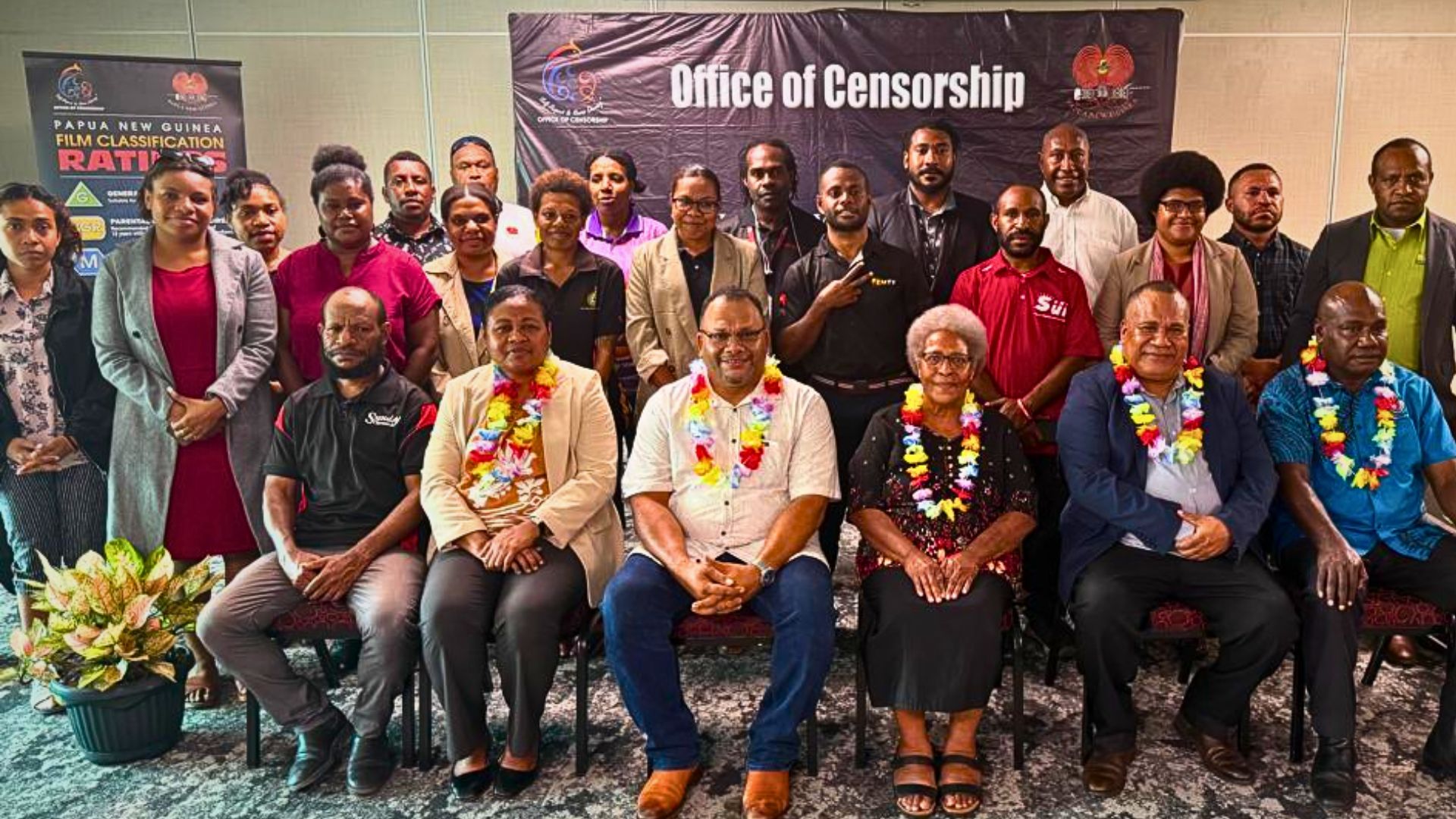
The Office of Censorship has held a media information session today to clarify the respective roles and functions of the Office and the National Censorship Board, while improving understanding of the country's censorship framework.
Held at the Gateway Hotel on Thursday, 9 July 2026, the session brought together 18 participants of journalists, editors and media operators from various media organizations to discuss the responsibilities of both institutions under the Classification of Publication (Censorship) Act 1989 and National Censorship Policy No. 2.
The session was organized to address misconceptions surrounding the different mandates of the National Censorship Board and the Office of Censorship, particularly as digital communication platforms, social media and online content continue to expand.
Opening the session, National Censorship Board Chairperson Karen Haive explained that the Board serves as the highest policy and strategic decision-making body, while the Office of Censorship functions as the administrative arm responsible for implementing decisions and carrying out regulatory responsibilities.
"The Censorship Board is the highest policy and strategic decision-making body of the Office of Censorship in Papua New Guinea. The Board directs the Office, as the administrative arm, to implement."
Ms Haive said the work of censorship authorities is aimed at protecting communities from content that may contribute to harm, social disorder or disrespect while maintaining the values and dignity of Papua New Guinea.
"Anything we do is for the best interest of our people, to uphold the integrity, the dignity of our country as a nation, and the integrity and dignity of our people."
Chief Censor Jim Abani provided an overview of the Office of Censorship's mandate, roles and functions, explaining the importance of media understanding the distinction between the Office and the National Censorship Board.
Mr Abani said misunderstandings about the two institutions remain common, including among media professionals.
"I have noticed that many people, including journalists, misunderstand the difference between the National Censorship Board and the Office of Censorship. Therefore, this session provides an important opportunity to clarify the respective roles of the Office of Censorship and the National Censorship Board, address misconceptions, and strengthen collaboration with the media and the wider community."
He said the Office has also received complaints from members of the public regarding disturbing content being published and shared, particularly material that may affect children.
"We have been receiving complaints from the general public that this kind of publicity is very disturbing, especially for our children."
Mr. Abani reminded journalists that media professionals also play a role in considering the impact and responsibility involved in publishing information.
"You are a journalist, but you are a censor also. You are a censor to help us."
He encouraged stronger cooperation between media organizations and the Office of Censorship to promote accurate, balanced and responsible dissemination of information.
While representing the media industry, Media Council of PNG President Neville Choi, who is also a member of the National Censorship Board, acknowledged that the term "censorship" can have different meanings within the media profession.
"When the media hears censorship, we hear something else. We hear a threat rather than a responsibility or obligation to country."
Mr. Choi said the media and censorship authorities share common values despite having different roles and responsibilities.
"Where we converge is on a platform of values, values like integrity, dignity and identity. Those are things that both the Censorship Board and the media are trying to protect."
He said the rapid growth of digital technology and social media has created new challenges for information management, with more people now able to publish content through online platforms.
Mr. Choi said professional media organizations continue to rely on editorial processes and ethical standards to assess information before publication.
The Office of Censorship said the session is expected to improve media understanding of censorship governance, strengthen stakeholder engagement and support ongoing awareness on digital safety and responsible media use.